Climate change made killer heat wave in Mexico, Southwest US even warmer and 35 times more likely
Advertisement
Read this article for free:
or
Already have an account? Log in here »
To continue reading, please subscribe:

Digital Subscription
One year of digital access for only $205*
- Enjoy unlimited reading on winnipegfreepress.com
- Read the E-Edition, our digital replica newspaper
- Access News Break, our award-winning app
- Play interactive puzzles
*First annual payment billed as $205.00 + GST for one year. This annual subscription will automatically renew at $233.00 + GST every 52 weeks (10% off the regular annual price of $259.35). Offer available to new and qualified returning subscribers only. Cancel any time.
To continue reading, please subscribe:
Add Free Press access to your Brandon Sun subscription for only an additional
$1 for the first 4 weeks*
- Enjoy unlimited reading on winnipegfreepress.com
- Read the E-Edition, our digital replica newspaper
- Access News Break, our award-winning app
- Play interactive puzzles
*Your next Brandon Sun subscription payment will increase by $1.00 and you will be charged $17.95 plus GST for four weeks. After four weeks, your payment will increase to $24.95 plus GST every four weeks.
Read unlimited articles for free today:
or
Already have an account? Log in here »
Hey there, time traveller!
This article was published 20/06/2024 (833 days ago), so information in it may no longer be current.
WASHINGTON (AP) — Human-caused climate change dialed up the thermostat and turbocharged the odds of this month’s killer heat that has been baking the Southwestern United States, Mexico and Central America, a new flash study found.
Sizzling daytime temperatures that triggered cases of heat stroke in parts of the United States were 35 times more likely and 2.5 degrees hotter (1.4 degrees Celsius) because of the warming from the burning of coal, oil and natural gas, World Weather Attribution, a collection of scientists that run rapid and non-peer reviewed climate attribution studies, calculated Thursday.
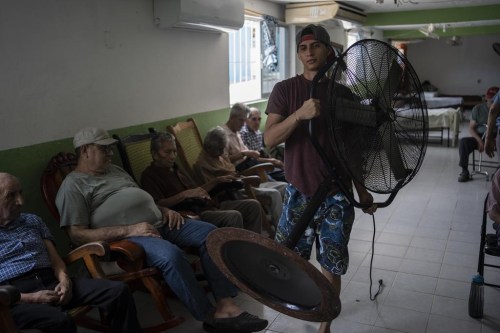
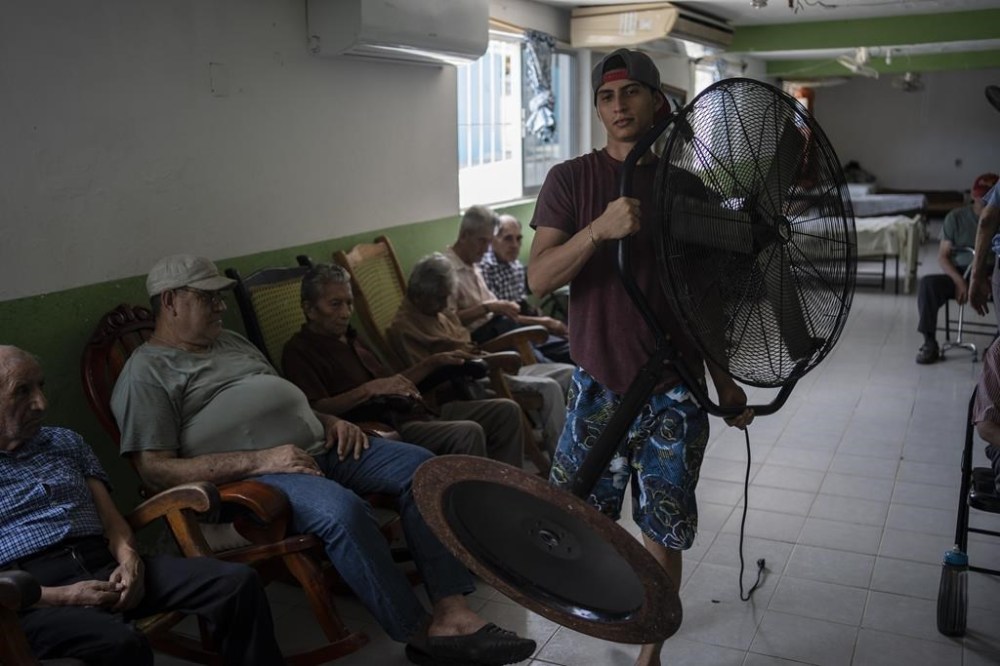
“It’s an oven here; you can’t stay here,” 82-year-old Magarita Salazar Pérez of Veracruz, Mexico, said in her home with no air conditioning. Last week, the Sonoran Desert hit 125 degrees (51.9 degrees Celsius), the hottest day in Mexican history, according to study co-author Shel Winkley, a meteorologist at Climate Central.
And it was even worse at night, which is what made this heat wave so deadly, said Imperial College of London climate scientist Friederike Otto, who coordinates the attribution study team. Climate change made nighttime temperatures 2.9 degrees (1.6 degrees Celsius) warmer and unusual evening heat 200 more times more likely, she said.
There’s just been no cool air at night like people are used to, Salazar Pérez said. Doctors say cooler night temperatures are key to surviving a heat wave.
At least 125 people have died so far, according to the World Weather Attribution team.
“This is clearly related to climate change, the level of intensity that we are seeing, these risks,” said study co-author Karina Izquierdo, a Mexico City-based urban advisor for the Red Cross and Red Crescent Climate Centre.
The alarming part about this heat wave, which technically is still cooking the North American continent, is that it’s no longer that out of the ordinary anymore, Otto said. Past studies by the group have looked at heat so extreme that they found it impossible without climate change, but this heat wave not so much.
“From a sort of weather perspective in that sense it wasn’t rare, but the impacts were actually really bad,” Otto told The Associated Press in an interview.
“The changes we have seen in the last 20 years, which feels like just yesterday, are so strong,” Otto said. Her study found that this heat wave is now four times more likely to happen now than it was in the year 2000 when it was nearly a degree (0.5 degrees Celsius) cooler than now. “It seems sort of far away and a different world.”
While other groups of international scientists — and the global carbon emissions reduction target adopted by countries in the 2015 Paris climate agreement — refer to warming since pre-industrial time in mid 1800s, Otto said comparing what’s happening now to the year 2000 is more striking.
“We’re looking at a shifting baseline – what was once extreme but rare is becoming increasingly common,” said University of Southern California Marine Studies Chair Carly Kenkel, who wasn’t part of the attribution team’s study. She said the analysis is “the logical conclusion based on the data.”
The study looked at a large swath of the continent, including southern California, Arizona, New Mexico, Texas, Oklahoma, Mexico, Guatemala, El Salvador, Belize and Honduras and the hottest five consecutive days and hottest five consecutive nights. For most of the area, those five days ran from June 3 to 7 and those five nights were June 5 to 9, but in a few places the peak heat started May 26, Otto said.
For example, San Angelo, Texas, hit a record 111 degrees (43.8 degrees Celsius) on June 4. Between June 2 and June 6 the night temperature never dipped below 80 degrees (26.7 degrees Celsius) at Corpus Christi airport, a record each night, with two days when the thermometer never dropped below 85 (29.4 degrees Celsius) according to the National Weather Service.
Between June 1 and June 15, more than 1,200 daytime high temperature records were tied or broken in the United States and nearly 1,800 nighttime high temperature records were reached, according to the National Center for Environmental Information.
The attribution team used both current and past temperature measurements, contrasting what is happening to what occurred in past heat waves. They then used the scientifically accepted technique of comparing simulations of a fictional world without human-caused climate change to current reality to come up with how much global warming factored into the 2024 heat wave.
The immediate meteorological cause was a high pressure system parked over central Mexico that blocked cooling storms and clouds, then it moved to the U.S. Southwest and is now bringing the heat to the U.S. East, Winkley said. Tropical Storm Alberto formed Wednesday and is heading to northern Mexico and southern Texas with some rains, which may cause flooding.
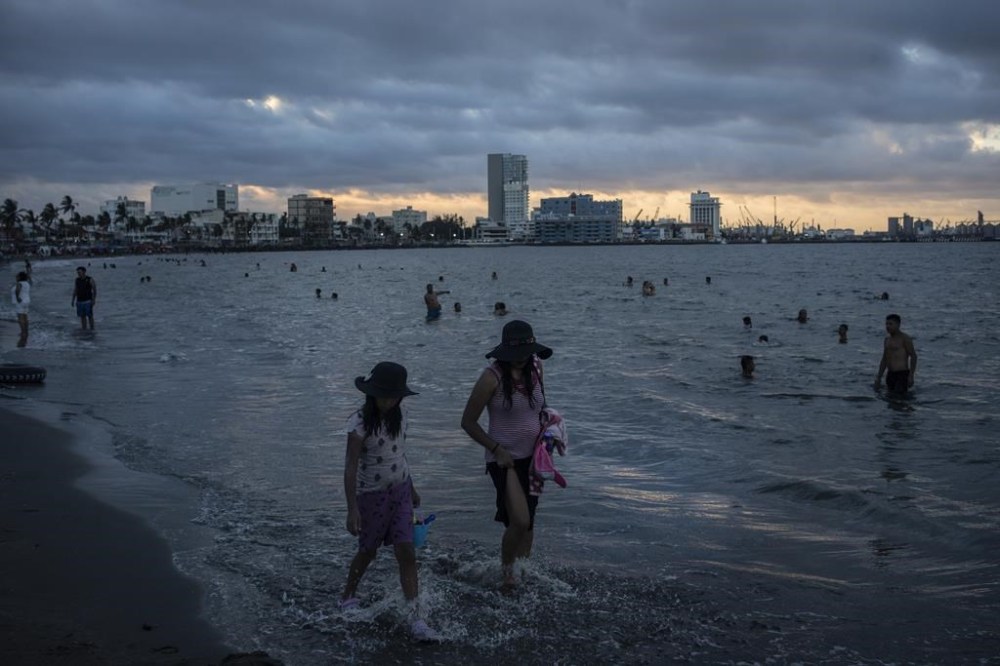
Mexico and other places have been dealing for months with drought, water shortages and brutal heat. Monkeys have been dropping from trees in Mexico from the warmth.
This heat wave “exacerbates existing inequalities” between rich and poor in the Americas, Izquierdo said, and Kenkel agreed. The night heat is where the inequalities really become apparent because the ability to cool down with central air conditioning depends on how financially comfortable they are, Kenkel said.
And that means during this heat wave Salazar Pérez has been quite uncomfortable.
___
Félix Márquez in Veracruz, Mexico and Teresa de Miguel in Mexico City contributed to this report.
___

Read more of AP’s climate coverage at http://www.apnews.com/climate-and-environment
___
Follow Seth Borenstein on X at @borenbears
______
The Associated Press’ climate and environmental coverage receives financial support from multiple private foundations. AP is solely responsible for all content. Find AP’s standards for working with philanthropies, a list of supporters and funded coverage areas at AP.org.