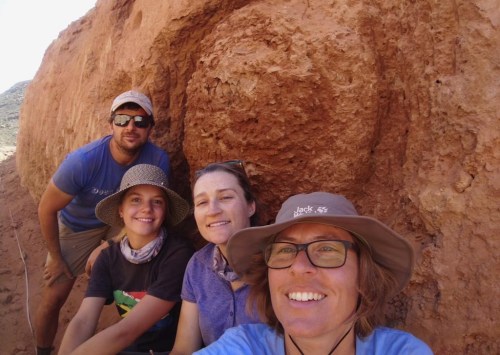
These oldest inhabited termite mounds have been active for 34,000 years
Advertisement
Read this article for free:
or
Already have an account? Log in here »
To continue reading, please subscribe:

Digital Subscription
One year of digital access for only $205*
- Enjoy unlimited reading on winnipegfreepress.com
- Read the E-Edition, our digital replica newspaper
- Access News Break, our award-winning app
- Play interactive puzzles
*First annual payment billed as $205.00 + GST for one year. This annual subscription will automatically renew at $233.00 + GST every 52 weeks (10% off the regular annual price of $259.35). Offer available to new and qualified returning subscribers only. Cancel any time.
To continue reading, please subscribe:
Add Free Press access to your Brandon Sun subscription for only an additional
$1 for the first 4 weeks*
- Enjoy unlimited reading on winnipegfreepress.com
- Read the E-Edition, our digital replica newspaper
- Access News Break, our award-winning app
- Play interactive puzzles
*Your next Brandon Sun subscription payment will increase by $1.00 and you will be charged $17.95 plus GST for four weeks. After four weeks, your payment will increase to $24.95 plus GST every four weeks.
Read unlimited articles for free today:
or
Already have an account? Log in here »
Hey there, time traveller!
This article was published 04/07/2024 (805 days ago), so information in it may no longer be current.
CAPE TOWN, South Africa (AP) — Scientists in South Africa have been stunned to discover that termite mounds that are still inhabited in an arid region of the country are more than 30,000 years old, meaning they are the oldest known active termite hills.
Some of the mounds near the Buffels River in Namaqualand were estimated by radiocarbon dating to be 34,000 years old, according to the researchers from Stellenbosch University.
“We knew they were old, but not that old,” said Michele Francis, senior lecturer in the university’s department of soil science who led the study. Her paper was published in May.
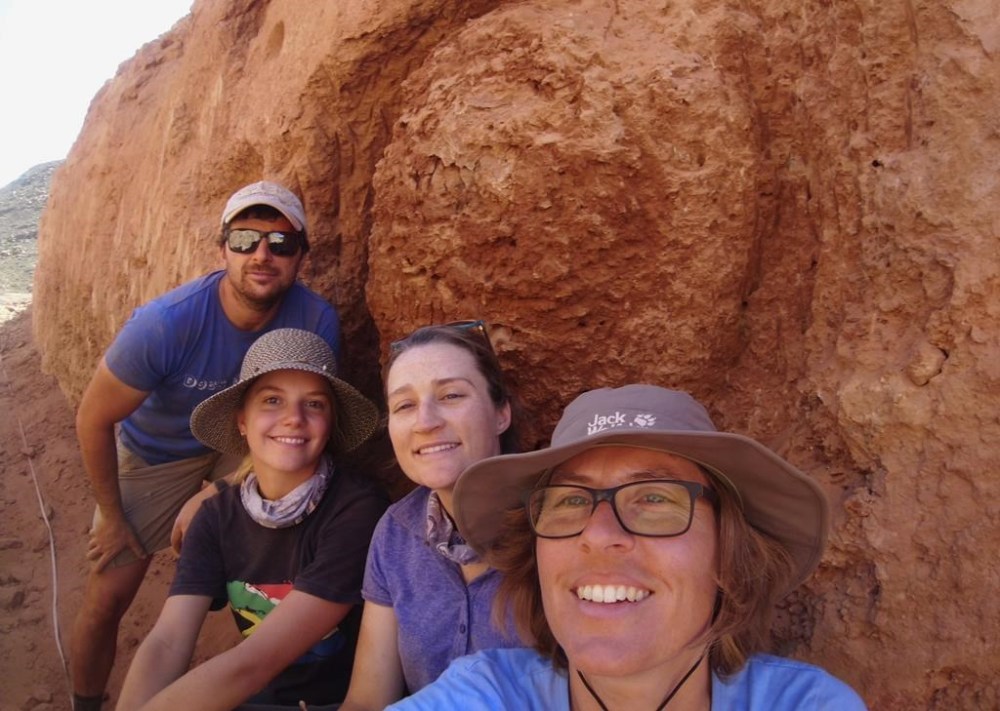
Francis said the mounds existed while saber-toothed cats and woolly mammoths roamed other parts of the Earth and large swathes of Europe and Asia were covered in ice. They predate some of the earliest cave paintings in Europe.
Some fossilized termite mounds have been discovered dating back millions of years. The oldest inhabited mounds before this study were found in Brazil and are around 4,000 years old. They are visible from space.
Francis said the Namaqualand mounds are a termite version of an “apartment complex” and the evidence shows they have been consistently inhabited by termite colonies.
Termite mounds are a famous feature of the Namaqualand landscape, but no one suspected their age until samples of them were taken to experts in Hungary for radiocarbon dating.
“People don’t know that these are special, ancient landscapes that are preserved there,” Francis said.
Some of the biggest mounds — known locally as “heuweltjies,” which means little hills in the Afrikaans language — measure around 100 feet (30 meters) across. The termite nests are as deep as 10 feet underground.
Researchers needed to carefully excavate parts of the mounds to take samples, and the termites went into “emergency mode” and started filling in the holes, Francis said.
The team fully reconstructed the mounds to keep the termites safe from predators like aardvarks.
Francis said the project was more than just a fascinating look at ancient structures. It also offered a peek into a prehistoric climate that showed Namaqualand was a much wetter place when the mounds were formed.
The southern harvester termites are experts at capturing and storing carbon by collecting twigs and other dead wood and putting it back deep into the soil. That has benefits in offsetting climate change by reducing the amount of carbon emitted into the atmosphere.

It’s also good for the soil. Masses of wildflowers bloom on top of the termite mounds in a region that receives little rain.
Francis called for more research on termite mounds given the lessons they offer on climate change, sustaining ecosystems and maybe even for improving agricultural practices.
“We will do well to study what the termites have done in the mounds. They were thought to be very boring,” she said.
___
AP Africa news: https://apnews.com/hub/africa