Meta agrees to $1.4B settlement with Texas in privacy lawsuit over facial recognition

Advertisement

Advertise with us

AUSTIN, Texas (AP) — Meta has agreed to a $1.4 billion settlement with Texas in a privacy lawsuit over allegations that the tech giant used biometric data of users without their permission, officials said Tuesday.

Read this article for free:


or

Already have an account? Log in here »

To continue reading, please subscribe:

Subscribe and receive a limited-edition Free Press branded hat or tote.

Digital Subscription

One year of digital access for only $205*

  • Enjoy unlimited reading on winnipegfreepress.com
  • Read the E-Edition, our digital replica newspaper
  • Access News Break, our award-winning app
  • Play interactive puzzles

*First annual payment billed as $205.00 + GST for one year. This annual subscription will automatically renew at $233.00 + GST every 52 weeks (10% off the regular annual price of $259.35). Offer available to new and qualified returning subscribers only. Cancel any time.

To continue reading, please subscribe:

Add Free Press access to your Brandon Sun subscription for only an additional

$1 for the first 4 weeks*

  • Enjoy unlimited reading on winnipegfreepress.com
  • Read the E-Edition, our digital replica newspaper
  • Access News Break, our award-winning app
  • Play interactive puzzles
Start now

*Your next Brandon Sun subscription payment will increase by $1.00 and you will be charged $17.95 plus GST for four weeks. After four weeks, your payment will increase to $24.95 plus GST every four weeks.

Hey there, time traveller!
This article was published 30/07/2024 (795 days ago), so information in it may no longer be current.

AUSTIN, Texas (AP) — Meta has agreed to a $1.4 billion settlement with Texas in a privacy lawsuit over allegations that the tech giant used biometric data of users without their permission, officials said Tuesday.

Texas Attorney General Ken Paxton said the settlement is the largest secured by a single state. In 2021, a judge approved a $650 million settlement with the company, formerly known as Facebook, over similar allegations of users in Illinois.

“This historic settlement demonstrates our commitment to standing up to the world’s biggest technology companies and holding them accountable for breaking the law and violating Texans’ privacy rights,” Paxton, a Republican, said in a statement.
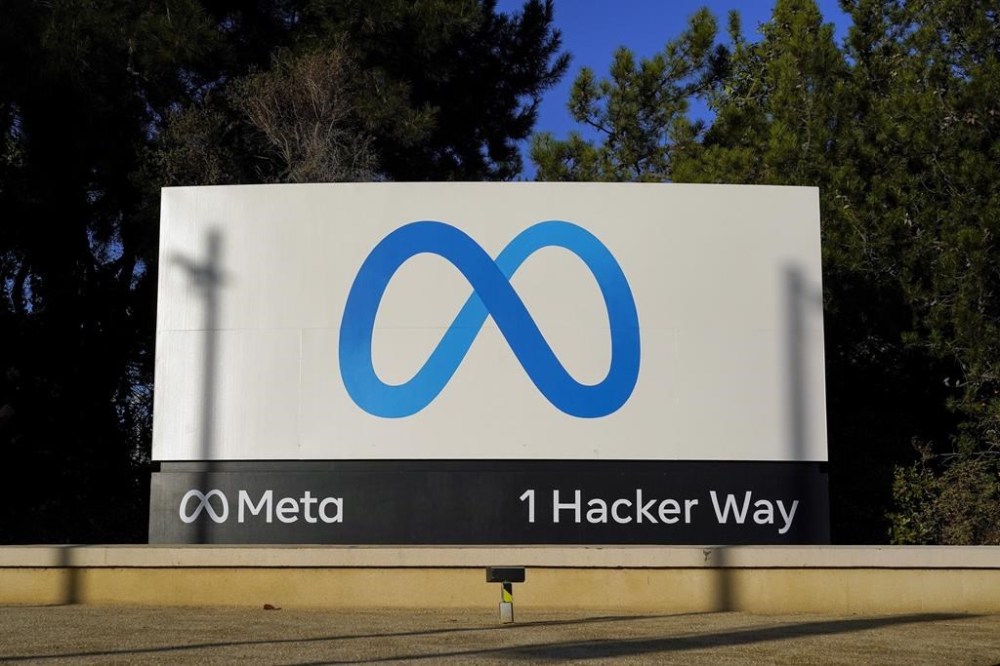
FILE - Meta's logo is seen on a sign at the company's headquarters in Menlo Park, Calif., Nov. 9, 2022. Meta has agreed to a $1.4 billion settlement with Texas in a privacy lawsuit over claims that the tech giant used biometric data of users without their permission, state officials said Tuesday, July 30, 2024. (AP Photo/Godofredo A. Vásquez, File)

Meta said in a statement: “We are pleased to resolve this matter, and look forward to exploring future opportunities to deepen our business investments in Texas, including potentially developing data centers.”

Filed in 2022, the Texas lawsuit said that Meta was in violation of a state law that prohibits capturing or selling a resident’s biometric information, such as their face or fingerprint, without their consent.

“This is by far the biggest state governmental privacy settlement in history,” Chicago-based class action attorney Jay Edelson said in an email. Edelson’s firm filed the lawsuit that settled for $650 million with Meta. The only other larger claim is the Federal Trade Commission’s $5 billion settlement with the company in 2019.

To date, Meta has now paid over $2 billion in settlements for biometric privacy claims, according to Edelson. “That is a huge signal to other companies that they should be extremely careful if they want to trade in individuals’ biometric information,” he said.

The company announced in 2021 that it was shutting down its face-recognition system and delete the faceprints of more than 1 billion people amid growing concerns about the technology and its misuse by governments, police and others.

At the time, more than a third of Facebook’s daily active users had opted in to have their faces recognized by the social network’s system. Facebook introduced facial recognition more than a decade earlier but gradually made it easier to opt out of the feature as it faced scrutiny from courts and regulators.

Facebook in 2019 stopped automatically recognizing people in photos and suggesting people “tag” them, and instead of making that the default, asked users to choose if they wanted to use its facial recognition feature.

Texas filed a similar lawsuit against Google in 2022. Paxton’s lawsuit says the search giant collected millions of biometric identifiers, including voiceprints and records of face geometry, through its products and services like Google Photos, Google Assistant, and Nest Hub Max. That lawsuit is still pending.

The $1.4 billion is unlikely to make a dent in Meta’s business. The Menlo Park, California-based tech made a profit of $12.37 billion in the first three months of this year, Its revenue was $36.46 billion, an increase of 27% from a year earlier. Meta is scheduled to report its second-quarter earnings results on Wednesday.

Meta’s stock slipped $4.06 to $461.65 Tuesday, a decline of less than 1%.

___

AP Technology Writer Barbara Ortutay in San Francisco contributed to this report.

___

Lathan is a corps member for The Associated Press/Report for America Statehouse News Initiative. Report for America is a nonprofit national service program that places journalists in local newsrooms to report on undercovered issues.

Report Error Submit a Tip

More Stories

The idea of Alberta separation viewed through a faith lens shows further fracture lines

Josiah Neufeld 10 minute read Preview

The idea of Alberta separation viewed through a faith lens shows further fracture lines

Josiah Neufeld 10 minute read 2:01 AM CDT

CALGARY — One morning in May, John Pentland, a minister at Hillhurst United Church in Calgary, opened his newspaper and read about a group of Albertans who were trying to divide his country.

Something inside of him felt like it cracked open. He started to weep.

“I couldn’t stop, I couldn’t breathe,” he said. He called a friend and told him: “I think I’m losing my mind.”

Pentland has always believed in Canada — flawed as it might be — as a nation gifted with diversity and welcoming of asylum seekers, refugees and immigrants. But recently that belief has been shaken as he’s witnessed right-wing ideologies charged with anti-immigrant sentiment take root in his province. It makes him angry and embarrassed for the country he loves.

Read
2:01 AM CDT

International flavour: Canadian investors may want to make like Ottawa, diversify beyond U.S.

Joel Schlesinger 6 minute read Preview

International flavour: Canadian investors may want to make like Ottawa, diversify beyond U.S.

Joel Schlesinger 6 minute read 2:01 AM CDT

Canada is learning the hard way about the dangers of putting too many eggs in its U.S. economic basket.

Much has been made about the need to diversify our economy away from the United States.

Diversification is understandably beneficial. The more varied streams of revenue a nation has, the less affected the economy will be when one of those sources is interrupted.

The same can be said about investment portfolios.

Read
2:01 AM CDT

Free Press staff 2 minute read 2:01 AM CDT

Advance voting for civic and school board elections begins next week.

Voters can cast early ballots for the Oct. 28 election in certain locations from Monday through Oct. 23.

Eligible voters can use their address to search for a convenient location.

Early votes can be cast at the council building at city hall (510 Main St.) every day, except weekends and Thanksgiving, from Monday to Oct. 23.

What’s luck got to do with it?

Tim Kist 5 minute read 2:01 AM CDT

We all seek certainty in our daily lives. We expect if we make a decision, the outcome will be just as we planned: a direct correlation between the decision and result.

You, as a business leader, seek the same certainty from the decisions you make. And sometimes, the result is what was expected. Sometimes, it isn’t.

The big question is: why is it so difficult to achieve the business results you expect when you carefully craft your plans and seemingly make good decisions?

The truth is we cannot predict the future. This means we almost never know precisely how customers will respond to a sales quote, what competitors are planning, and a myriad of other external variables at play.

Clock ticks down on destruction of records documenting residential school abuses

Marsha McLeod 13 minute read Preview

Clock ticks down on destruction of records documenting residential school abuses

Marsha McLeod 13 minute read Yesterday at 12:49 PM CDT

In less than a year, a private company is set to destroy the largest cache of records detailing the widespread abuse of Indigenous children at residential schools in Canada.

The destruction, which was ordered by an Ontario court in 2014 and later upheld by the Supreme Court, is set to take place on Sept. 19, 2027.

This countdown is igniting emotional conversations that seek to balance the immense historical value of the records alongside the confidentiality survivors were promised as part of the process of providing detailed testimony about abuses they’d suffered.

The records were created as part of the Indian Residential Schools Settlement Agreement, a class-action settlement stemming from survivors who began suing the federal government in the late 1990s over the harm they’d been subjected to at residential schools.

Read
Yesterday at 12:49 PM CDT

Retired guidance counsellor defends explicit 2025 sex-ed presentation to high school football team in disciplinary hearing

Maggie Macintosh 7 minute read Preview

Retired guidance counsellor defends explicit 2025 sex-ed presentation to high school football team in disciplinary hearing

Maggie Macintosh 7 minute read Updated: Yesterday at 12:26 PM CDT

Gus Watanabe, a former employee of Oak Park High School in Winnipeg, was the subject of a public disciplinary hearing on Thursday.

Read
Updated: Yesterday at 12:26 PM CDT