Google begins its defense in antitrust case alleging monopoly over advertising technology

Advertisement

Advertise with us

ALEXANDRIA, Va. (AP) — Google opened its defense against allegations that it holds an illegal monopoly on online advertising technology Friday with witness testimony saying the industry is vastly more complex and competitive than portrayed by the federal government.

Read this article for free:


or

Already have an account? Log in here »

To continue reading, please subscribe:

Subscribe and receive a limited-edition Free Press branded hat or tote.

Digital Subscription

One year of digital access for only $205*

  • Enjoy unlimited reading on winnipegfreepress.com
  • Read the E-Edition, our digital replica newspaper
  • Access News Break, our award-winning app
  • Play interactive puzzles

*First annual payment billed as $205.00 + GST for one year. This annual subscription will automatically renew at $233.00 + GST every 52 weeks (10% off the regular annual price of $259.35). Offer available to new and qualified returning subscribers only. Cancel any time.

To continue reading, please subscribe:

Add Free Press access to your Brandon Sun subscription for only an additional

$1 for the first 4 weeks*

  • Enjoy unlimited reading on winnipegfreepress.com
  • Read the E-Edition, our digital replica newspaper
  • Access News Break, our award-winning app
  • Play interactive puzzles
Start now

*Your next Brandon Sun subscription payment will increase by $1.00 and you will be charged $17.95 plus GST for four weeks. After four weeks, your payment will increase to $24.95 plus GST every four weeks.

Hey there, time traveller!
This article was published 20/09/2024 (723 days ago), so information in it may no longer be current.

ALEXANDRIA, Va. (AP) — Google opened its defense against allegations that it holds an illegal monopoly on online advertising technology Friday with witness testimony saying the industry is vastly more complex and competitive than portrayed by the federal government.

“The industry has been exceptionally fluid over the last 18 years,” said Scott Sheffer, a vice president for global partnerships at Google, the company’s first witness at its antitrust trial in federal court in Alexandria.

The Justice Department and a coalition of states contend that Google built and maintained an illegal monopoly over the technology that facilitates the buying and selling of online ads seen by consumers.

FILE - A sign at Google headquarters in Mountain View, Calif. is shown on Oct. 8, 2010. (AP Photo/Paul Sakuma, File)

Google counters that the government’s case improperly focuses on a narrow type of online ads — essentially the rectangular ones that appear on the top and on the right-hand side of a webpage. In its opening statement, Google’s lawyers said the Supreme Court has warned judges against taking action when dealing with rapidly emerging technology like what Sheffer described because of the risk of error or unintended consequences.

Google says defining the market so narrowly ignores the competition it faces from social media companies, Amazon, streaming TV providers and others who offer advertisers the means to reach online consumers.

Justice Department lawyers called witnesses to testify for two weeks before resting their case Friday afternoon, detailing the ways that automated ad exchanges conduct auctions in a matter of milliseconds to determine which ads are placed in front of which consumers and how much they cost.

The department contends the auctions are finessed in subtle ways that benefit Google to the exclusion of would-be competitors and in ways that prevent publishers from making as much money as they otherwise could for selling their ad space.

It also says that Google’s technology, when used on all facets of an ad transaction, allows Google to keep 36 cents on the dollar of any particular ad purchase, billions of which occur every single day.
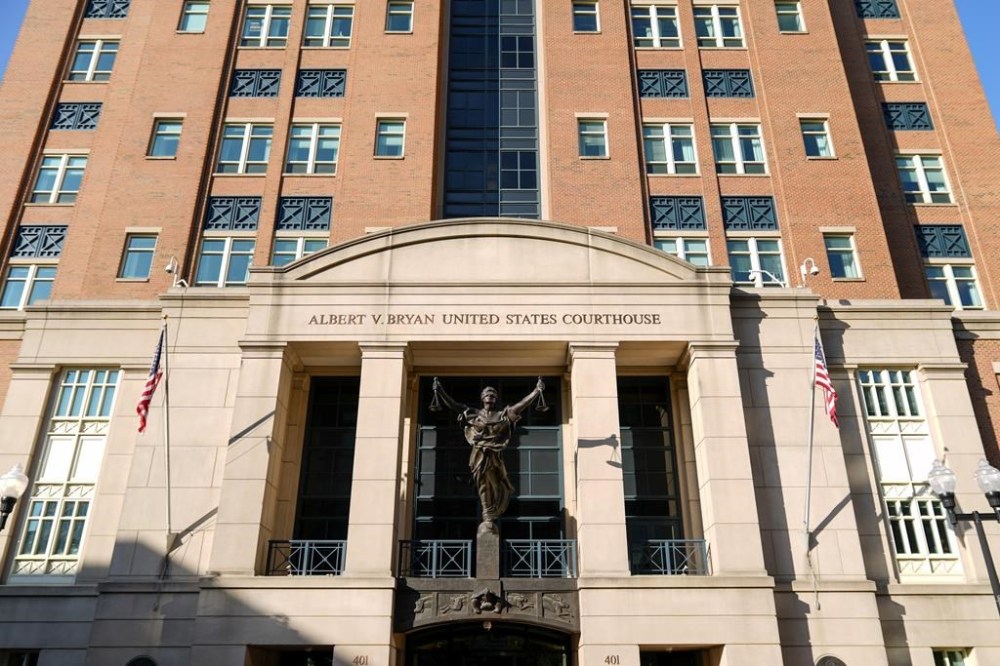
The U.S. District Court for the Eastern District of Virginia is seen Monday, Sept. 9, 2024, in Alexandria, Va. (AP Photo/Stephanie Scarbrough)

Executives at media companies like Gannett, which publishes USA Today, and News Corp., which owns the Wall Streel Journal and Fox News, have said that Google dominates the landscape with technology used by publishers to sell ad space as well as by advertisers looking to buy it. The products are tied together so publishers have to use Google’s technology if they want easy access to its large cache of advertisers.

The government said in its complaint filed last year that at a minimum Google should be forced to sell off the portion of its business that caters to publishers, to break up its dominance.

In his testimony Friday, Sheffer explained how Google’s tools have evolved over the years and how it vetted publishers and advertisers to guard against issues like malware and fraud.

The trial began Sept. 9, just a month after a judge in the District of Columbia declared Google’s core business, its ubiquitous search engine, an illegal monopoly. That trial is still ongoing to determine what remedies, if any, the judge may impose.

The ad technology at question in the Virginia case does not generate the same kind of revenue for Google as its search engine does, but is still believed to bring in tens of billions of dollars annually.
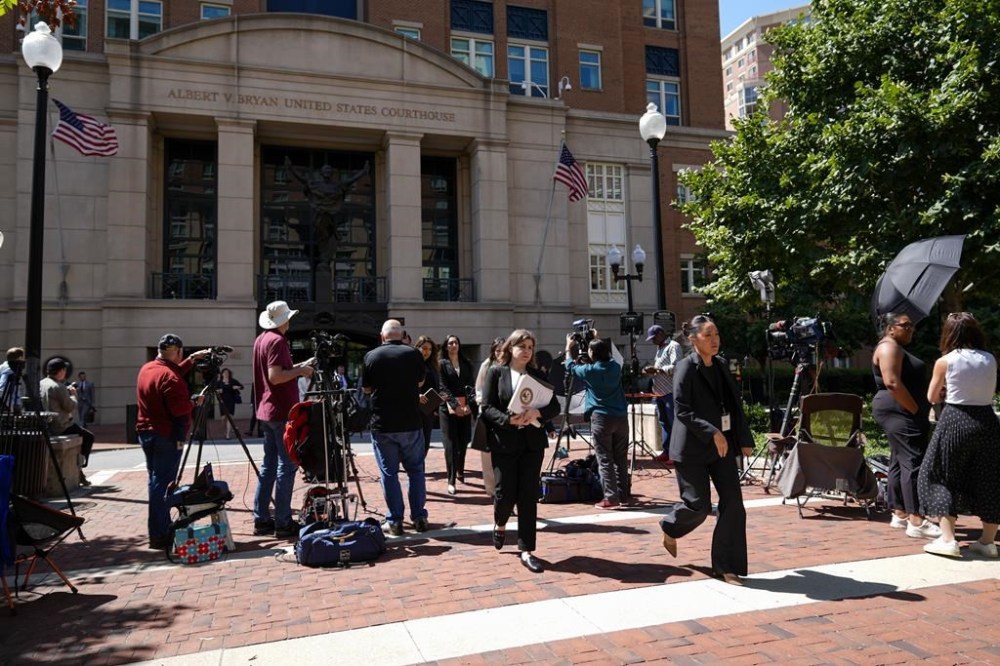
Lawyers and legal assistants leave the U.S. District Court for the Eastern District of Virginia for a lunch break in the Department of Justice's antitrust trial against tech giant Google, Monday, Sept. 9, 2024, in Alexandria, Va. (AP Photo/Stephanie Scarbrough)

Overseas, regulators have also accused Google of anticompetitive conduct. But the company won a victory this week when a an EU court overturned a 1.49 billion euro ($1.66 billion) antitrust fine imposed five years ago that targeted a different segment of the company’s online advertising business.

Report Error Submit a Tip

More Stories

Sex assault charges against basketball referee stayed

Dean Pritchard 3 minute read Preview

Sex assault charges against basketball referee stayed

Dean Pritchard 3 minute read Friday, Sep. 11, 2026

A Winnipeg basketball referee accused of sexual offences involving three men has had criminal charges against him stayed.

Michael Shane Maryk, 45, had been set to stand trial July 20 on five counts of sexual assault and two counts of committing an indecent act, but instead agreed to a one-year peace bond prohibiting him from having any contact with the three men.

Maryk was employed by the Manitoba Association of Basketball Officials at the time the offences were alleged to have occurred.

The peace bond requires that Maryk not come within 200 metres of the men’s homes, schools or places of worship and have no contact with their families.

Read
Friday, Sep. 11, 2026

The port of Churchill — but done right

Editorial 4 minute read Preview

The port of Churchill — but done right

Editorial 4 minute read Yesterday at 2:00 AM CDT

The seagoing grain carrier wasn’t christened with a champagne bottle. There was no confetti or streamers. Nevertheless, the Aug. 31 event marking the first shipment of grain to be loaded at the Port of Churchill since 2020 was celebrated like the launch of a brand new vessel.

The presence of the federal minister of northern and arctic affairs, provincial cabinet ministers and leaders and elders from several northern First Nations signalled that the fast-tracked process of refurbishing and buffing up Manitoba’s deep-water seaport gem is gaining momentum.

For OneNorth, the partnership of 29 First Nations and 12 northern communities which owns the Port of Churchill and the Hudson Bay Railway (both operated by the Arctic Gateway Group) the event heralded a new beginning. It’s been eight years since OneNorth purchased the port and railroad, and six years since grain was moved by rail through Manitoba and then by ship to European markets. Two more grain shipments, plus shipments of potash and critical minerals, will continue through the fall.

When Prime Minister Mark Carney solicited the premiers to suggest “nation-building” projects following his election in 2025, Premier Wab Kinew pitched a Manitoba trade corridor that would move wheat, critical minerals, potash and energy (oil or liquid natural gas) through the Port of Churchill.

Read
Yesterday at 2:00 AM CDT

Highway-safety upgrades in progress after tragic Interlake crash

Chris Kitching 5 minute read Preview

Highway-safety upgrades in progress after tragic Interlake crash

Chris Kitching 5 minute read Friday, Sep. 11, 2026

Provincial workers have started to update or install safety measures at a rural Interlake intersection where four teenage friends died in a crash on Labour Day weekend.

Pavement markings were repainted at Highway 8 and Provincial Road 229, just west of Winnipeg Beach, ahead of work to refresh worn-down rumble strips, starting Monday, and install flashing lights atop two stop signs, following an assessment earlier this week.

“They will also need to incorporate any information from the RCMP report that might be helpful if we were to consider any additional safety measures at this intersection,” Transportation and Infrastructure Minister Lisa Naylor said of department staff.

“The most important thing is safety, and any kinds of changes we make at any intersection actually have to make it safer.”

Read
Friday, Sep. 11, 2026

City to hire consultant to analyze 911 staffing levels amid skyrocketing calls

Joyanne Pursaga 4 minute read Preview

City to hire consultant to analyze 911 staffing levels amid skyrocketing calls

Joyanne Pursaga 4 minute read Friday, Sep. 11, 2026

The Winnipeg Fire Paramedic Service is ordering a detailed analysis of its 911 communications staffing level to cope with a surge in emergency calls and the demands of new technology.

WFPS emergency communications staff handled calls for 136,198 separate incidents in 2025. That number has risen every year since at least 2020, when 104,250 incidents were reported, the service’s annual report notes.

The total number of calls to the centre reached almost 275,000 last year. That broader figure also includes multiple calls per event and administrative calls.

“Things have changed in the last decade and call volumes have increased dramatically. That puts pressure on our systems,” said Coun. Vivian Santos (Point Douglas).

Read
Friday, Sep. 11, 2026

Fallis’s comic thriller infiltrates book club

Ben Sigurdson 3 minute read Preview

Fallis’s comic thriller infiltrates book club

Ben Sigurdson 3 minute read Yesterday at 6:00 AM CDT

The Free Press Book Club and McNally Robinson Booksellers are pleased to welcome Toronto author Terry Fallis to the next virtual meeting on Tuesday, September 29 at 7 p.m. to read from and discuss his novel The Marionette.

Fallis, a former lawyer, bureaucrat and political consultant, is the author of 10 bestselling novels and the two-time winner of the Stephen Leacock Medal for Humour (in 2015 for No Relation and in 2008 for The Best Laid Plans, which also won CBC’s Canada Reads in 2011).

His 11th novel, An End In Itself, will be published in November by McClelland & Stewart, who also published The Marionette in October 2025 (and which was also longlisted for the Leacock medal).

The Marionette follows James Norval, bestselling author of a series of thrillers featuring fictional CIA agent Hunter Chase. While in Tajikistan researching his next Hunter Chase novel, Norval is detained by local officials and subsequently freed and ferried away by the Canadian Security Intelligence Service (CSIS).

Read
Yesterday at 6:00 AM CDT

Downtown no place to be after dark, huge majority of Winnipeggers say in survey

Joyanne Pursaga 8 minute read Preview

Downtown no place to be after dark, huge majority of Winnipeggers say in survey

Joyanne Pursaga 8 minute read Friday, Sep. 11, 2026

Most Winnipeggers are afraid to walk alone downtown and believe the city needs more police officers, a new survey finds.

Winnipeg Police Service released its 2026 citizen survey Friday.

Downtown safety appears to remain a major concern, with just 44 per cent saying they feel very or reasonably safe walking alone in the area during the day. The number plummets to eight per cent overall at night, down from nine per cent in 2024, the last time the survey was conducted.

This year, 14 per cent of men felt very or reasonably safe walking alone downtown at night, compared to just three per cent of women.

Read
Friday, Sep. 11, 2026