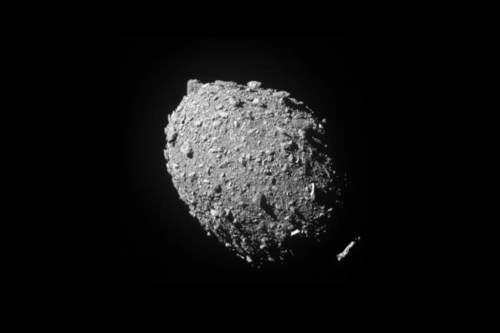
A spacecraft is on its way to a harmless asteroid slammed by NASA in a previous save-the-Earth test
Advertisement
Read this article for free:
or
Already have an account? Log in here »
To continue reading, please subscribe:

Digital Subscription
One year of digital access for only $205*
- Enjoy unlimited reading on winnipegfreepress.com
- Read the E-Edition, our digital replica newspaper
- Access News Break, our award-winning app
- Play interactive puzzles
*First annual payment billed as $205.00 + GST for one year. This annual subscription will automatically renew at $233.00 + GST every 52 weeks (10% off the regular annual price of $259.35). Offer available to new and qualified returning subscribers only. Cancel any time.
To continue reading, please subscribe:
Add Free Press access to your Brandon Sun subscription for only an additional
$1 for the first 4 weeks*
- Enjoy unlimited reading on winnipegfreepress.com
- Read the E-Edition, our digital replica newspaper
- Access News Break, our award-winning app
- Play interactive puzzles
*Your next Brandon Sun subscription payment will increase by $1.00 and you will be charged $17.95 plus GST for four weeks. After four weeks, your payment will increase to $24.95 plus GST every four weeks.
Read unlimited articles for free today:
or
Already have an account? Log in here »
Hey there, time traveller!
This article was published 07/10/2024 (718 days ago), so information in it may no longer be current.
CAPE CANAVERAL, Fla. (AP) — A spacecraft blasted off Monday to investigate the scene of a cosmic crash.
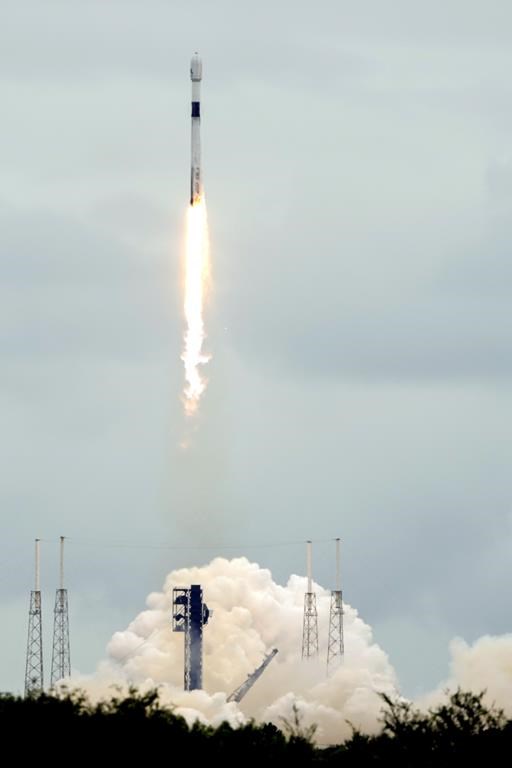
The European Space Agency’s Hera spacecraft rocketed away on a two-year journey to the small, harmless asteroid rammed by NASA two years ago in a dress rehearsal for the day a killer space rock threatens Earth. It’s the second part of a planetary defense test that could one day help save the planet.
SpaceX’s Falcon rocket quickly disappeared with Hera into the late morning clouds. An hour later, applause erupted in the control center in Germany as the spacecraft separated from the rocket’s upper stage and then called home. “It’s an amazing day,” the space agency’s director general Josef Aschbacher said afterward.
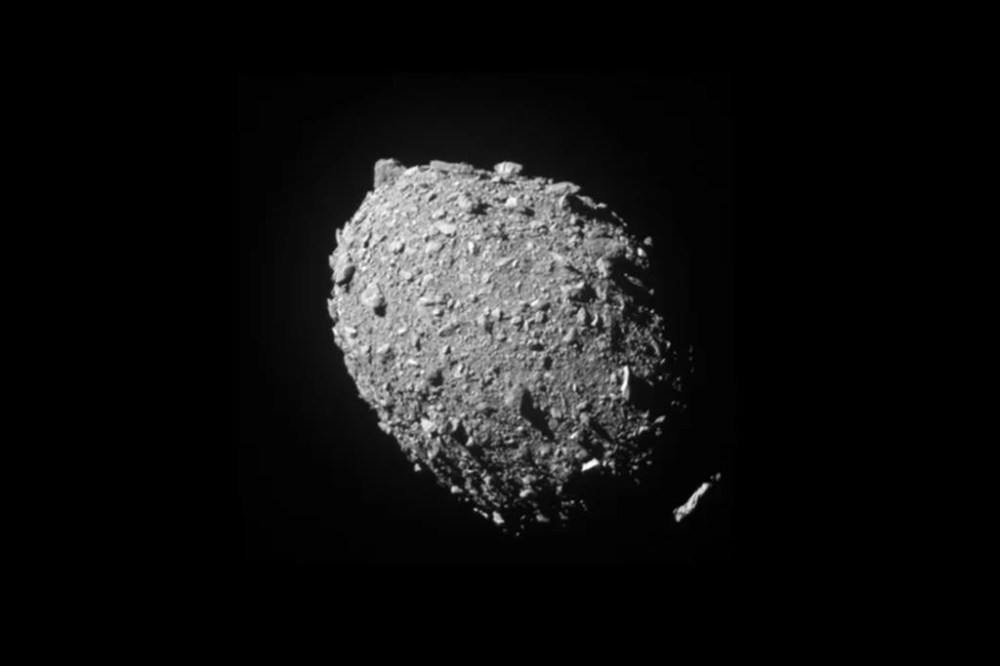
The 2022 crash by NASA’s Dart spacecraft shortened Dimorphos’ orbit around its bigger companion, demonstrating that if a dangerous rock was headed our way, there’s a chance it could be knocked off course with enough advance notice.
Scientists are eager to examine the impact’s aftermath up close to know exactly how effective Dart was and what changes might be needed to safeguard Earth in the future.
“The more detail we can glean the better as it may be important for planning a future deflection mission should one be needed,” University of Maryland astronomer Derek Richardson said before launch.
Researchers want to know whether Dart — short for Double Asteroid Redirection Test — left a crater or perhaps reshaped the 500-foot (150-meter) asteroid more dramatically. It looked something like a flying saucer before Dart’s blow and may now resemble a kidney bean, said Richardson, who took part in the Dart mission and is helping with Hera.
Dart’s wallop sent rubble and even boulders flying off Dimorphos, providing an extra kick to the impact’s momentum. The debris trail extended thousands of miles (more than 10,000 kilometers) into space for months.
Some boulders and other debris could still be hanging around the asteroid, posing a potential threat to Hera, said flight director Ignacio Tanco.
“We don’t really know very well the environment in which we are going to operate,” said Tanco. “But that’s the whole point of the mission is to go there and find out.”
European officials describe the $400 million (363 million euro) mission as a “crash scene investigation.”
Hera “is going back to the crime site and getting all the scientific and technical information,” said project manager Ian Carnelli.
Carrying a dozen science instruments, the small car-sized Hera will need to swing past Mars in 2025 for a gravity boost, before arriving at Dimorphos by the end of 2026. It’s a moonlet of Didymos, Greek for twin, a fast-spinning asteroid that’s five times bigger. At that time, the asteroids will be 120 million miles (195 million kilometers) from Earth.
Hera will attempt to go into orbit around the rocky pair, with the flyby distances gradually dropping from 18 miles (30 kilometers) all the way down to a half-mile (1 kilometer). The spacecraft will survey the moonlet for at least six months to ascertain its mass, shape and composition, as well as its orbit around Didymos.
Before the impact, Dimorphos circled its larger companion from three-quarters of a mile (1,189 meters) out. Scientists believe the orbit is now tighter and oval-shaped, and that the moonlet may even be tumbling.
Two shoebox-sized Cubesats will pop off Hera for even closer drone-like inspections, with one of them using radar to peer beneath the moonlet’s boulder-strewn surface. Scientists suspect Dimorphos was formed from material shed from Didymos. The radar observations should help confirm whether Didymos is indeed the little moon’s parent.
The Cubesats will attempt to land on the moonlet once their survey is complete. If the moonlet is tumbling, that will complicate the endeavor. Hera may also end its mission with a precarious touchdown, but on the larger Didymos.
Neither asteroid poses any threat to Earth — before or after Dart showed up. That’s why NASA picked the pair for humanity’s first asteroid-deflecting demo.
Leftovers from the solar system’s formation 4.6 billion years ago, asteroids primarily orbit the sun between Mars and Jupiter in what’s known as the main asteroid belt, where millions of them reside. They become near-Earth objects when they’re knocked out of the belt and into our neck of the woods.
NASA’s near-Earth object count currently tops 36,000, almost all asteroids but also some comets. More than 2,400 of them are considered potentially hazardous to Earth.
___
The Associated Press Health and Science Department receives support from the Howard Hughes Medical Institute’s Science and Educational Media Group. The AP is solely responsible for all content.