Many retailers offer ‘returnless refunds.’ Just don’t expect them to talk much about it
Advertisement
Read this article for free:
or
Already have an account? Log in here »
To continue reading, please subscribe:

Digital Subscription
One year of digital access for only $205*
- Enjoy unlimited reading on winnipegfreepress.com
- Read the E-Edition, our digital replica newspaper
- Access News Break, our award-winning app
- Play interactive puzzles
*First annual payment billed as $205.00 + GST for one year. This annual subscription will automatically renew at $233.00 + GST every 52 weeks (10% off the regular annual price of $259.35). Offer available to new and qualified returning subscribers only. Cancel any time.
To continue reading, please subscribe:
Add Free Press access to your Brandon Sun subscription for only an additional
$1 for the first 4 weeks*
- Enjoy unlimited reading on winnipegfreepress.com
- Read the E-Edition, our digital replica newspaper
- Access News Break, our award-winning app
- Play interactive puzzles
*Your next Brandon Sun subscription payment will increase by $1.00 and you will be charged $17.95 plus GST for four weeks. After four weeks, your payment will increase to $24.95 plus GST every four weeks.
Read unlimited articles for free today:
or
Already have an account? Log in here »
Hey there, time traveller!
This article was published 04/11/2024 (696 days ago), so information in it may no longer be current.
It’s one of the most under-publicized policies of some of the biggest U.S. retailers: sometimes they give customers full refunds and let them keep unwanted items too.
Returnless refunds are a tool that more retailers are using to keep online shoppers happy and to reduce shipping fees, processing time and other ballooning costs from returned products.
Companies such as Amazon, Walmart and Target have decided some items are not worth the cost or hassle of getting back. Think a $20 T-shirt that might cost $30 in shipping and handling to recover. There are also single-use items, such as a package of plastic straws, that might be difficult to resell or medicines that could be unsafe to market again.
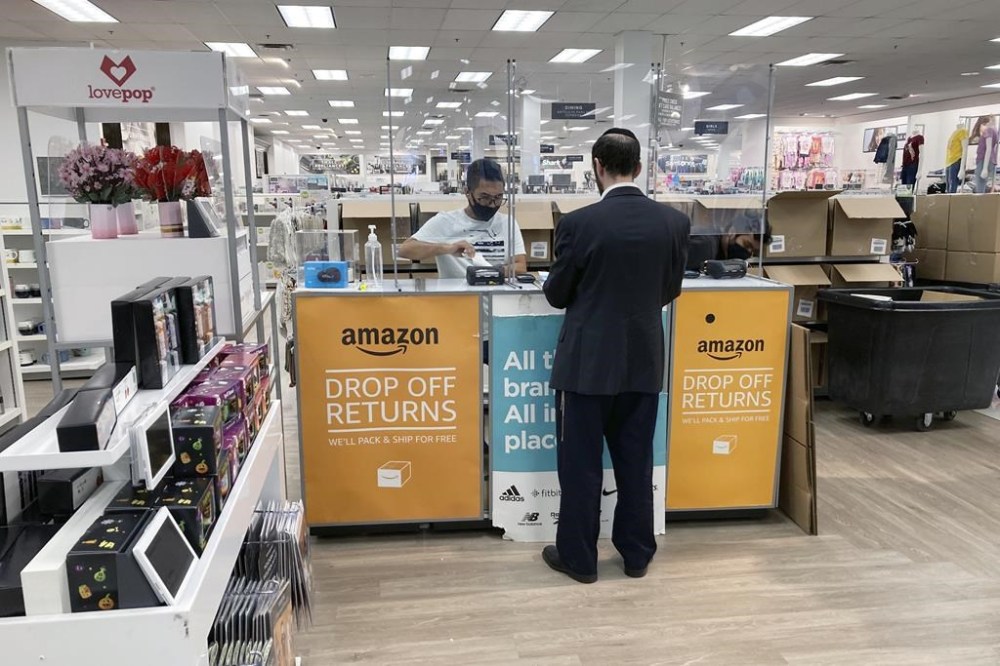
Analysts say the companies offering returnless refunds do it somewhat sporadically, typically reserving the option for low-cost objects or ones with limited resale value. But some online shoppers said they’ve also been allowed to keep more pricey products.
Dalya Harel, 48, received a return-free refund recently after ordering a desk from Amazon that cost roughly $300. When the desk arrived, she noticed it was missing some key pieces and would be impossible to put together, Harel said. She couldn’t request a replacement and have it within a reasonable time for the office of her New York lice detection removal service because the item was out of stock.
Harel, who routinely buys towels and other products from Amazon for her business, said her team reached out to the company’s customer service line. She was pleasantly surprised to hear she would get a refund without having to send back the desk.
“That’s one less headache to deal with,” Harel said. “It was really nice for us to not have to make an extra trip up to the post office.”
She used the desk pieces to create makeshift shelves in her office in Brooklyn.
A mysterious process
While the retail practice of letting customers keep merchandise and get their money back is not exactly a trade secret, the way it works is shrouded in mystery. Companies are not keen to publicize the circumstances in which they issue returnless refunds due to concerns over the potential for return fraud.
Even if brands don’t provide details about such policies on their websites, returnless refunds are expanding in at least some retail corners.
Amazon, which industry experts say has engaged in the practice for years, announced in August that it would extend the option to the third-party sellers who drive most of the sales on the e-commerce giant’s platform. Under the program, sellers who use the company’s fulfillment services in the U.S. could choose to offer customers a traditional refund for purchases under $75 along with no obligation to return what they ordered.
Amazon did not immediately respond to questions about how the program works. But publicly, it has pitched returnless refunds more directly to international sellers and those who offer cheaper goods. Items sold in an upcoming section of Amazon’s website, which will allow U.S. shoppers to buy low-cost goods shipped directly from China, will also be eligible for returnless refunds, according to documents seen by The Associated Press.
In January, Walmart gave a similar option to merchants who sell products on its growing online marketplace, leaving it up to sellers to set price limits and determine if or how they want to participate.
China-founded e-commerce companies Shein and Temu say they also offer returnless refunds on a small number of orders, as does Target, the online shopping site Overstock and pet products e-tailer Chewy, which some customer said had encouraged them to donate unwanted items to local animal shelters.
Wayfair, another online retailer cited by some customers as offering returnless refunds, did not reply to a request for comment on its policies.
Deciding who is eligible – and when
Overall, retailers and brands tend to be careful about how often they let customers keep items for free. Many of them are deploying algorithms to determine who should be given the option and who should not.
To make the decision, the algorithms assess multiple factors, including the extent to which a shopper should be trusted based on prior purchasing – and returning – patterns, shipping costs and the demand for the product in the customer’s hands, according to Sender Shamiss, CEO of goTRG, a reverse logistics company that works with retailers like Walmart.
Optoro, a company that helps streamline returns for Best Buy, Staples and Gap Inc., has observed retailers assessing the lifetime value of a customer and extending returnless refunds as a type of unofficial, discreet loyalty benefit, according to CEO Amena Ali.
The king of online retail appeared to verify the process works that way.
In a statement, Amazon said it offers returnless refunds on a “very small number” of items as a “convenience to customers.”
The company also said it’s hearing positive feedback from sellers about its new program that authorized them to tell customers they could keep some products and still be reimbursed. Amazon said it was monitoring for signs of fraud and setting eligibility criteria for sellers and customers. It didn’t provide additional details on what that encompassed.
Online shopping and the cost of returns
Some retailers also are stiffening the liberal return policies they long employed to encourage online orders. Shoppers who enjoyed making purchases on their computers or cellphones became accustomed to loading up their digital shopping baskets with the intent of returning items they ended up not liking.
Shopping online also grew significantly during the COVID-19 pandemic, when homebound consumers reduced their trips to stores and relied on sites like Amazon for everyday items. Retail companies have talked in recent years about returns becoming more expensive to process due to the growing volume, rising inflation and labor costs.

Last year, U.S. consumers returned $743 billion worth of merchandise, or 14.5% of the products they purchased – up from 10.6% in 2020, according to the National Retail Federation. In 2019, returned merchandise was valued at $309 billion, according to loss prevention company Appriss Retail.
Last year, roughly 14% of returns were fraudulent, costing retailers $101 billion in losses, according to a joint report from the National Retail federation and Appriss Retail. The problem spans from low-level forms of fraud – such as shoppers returning already worn clothing – to more complicated schemes by fraudsters who return shoplifted merchandise or items purchased on stolen credit cards.
To deter excessive returns, some retailers, including H&M, Zara and J. Crew, started charging customers return fees in the past year. Others have shortened their return windows. Some shopping sites, such as the Canadian retailer Ssense, have threatened to kick frequent returners off their platforms if they suspect abuse of their policies.
However, retailers don’t all view frequent returners in the same way. Such customers could be seen as “good returners” if they purchase – and keep – many more items than they send back, Ali said.
“Oftentimes, your most profitable customers tend to be high returners,” she said.