AI will eavesdrop on world’s wildest places to track and help protect endangered wildlife
Advertisement
Read this article for free:
or
Already have an account? Log in here »
To continue reading, please subscribe:

Digital Subscription
One year of digital access for only $205*
- Enjoy unlimited reading on winnipegfreepress.com
- Read the E-Edition, our digital replica newspaper
- Access News Break, our award-winning app
- Play interactive puzzles
*First annual payment billed as $205.00 + GST for one year. This annual subscription will automatically renew at $233.00 + GST every 52 weeks (10% off the regular annual price of $259.35). Offer available to new and qualified returning subscribers only. Cancel any time.
To continue reading, please subscribe:
Add Free Press access to your Brandon Sun subscription for only an additional
$1 for the first 4 weeks*
- Enjoy unlimited reading on winnipegfreepress.com
- Read the E-Edition, our digital replica newspaper
- Access News Break, our award-winning app
- Play interactive puzzles
*Your next Brandon Sun subscription payment will increase by $1.00 and you will be charged $17.95 plus GST for four weeks. After four weeks, your payment will increase to $24.95 plus GST every four weeks.
Read unlimited articles for free today:
or
Already have an account? Log in here »
Hey there, time traveller!
This article was published 23/12/2024 (640 days ago), so information in it may no longer be current.
PUERTO JIMÉNEZ, Costa Rica (AP) — The endangered Geoffrey’s spider monkeys that dangle high in the rainforest canopy are elusive and hard for scientists to track.
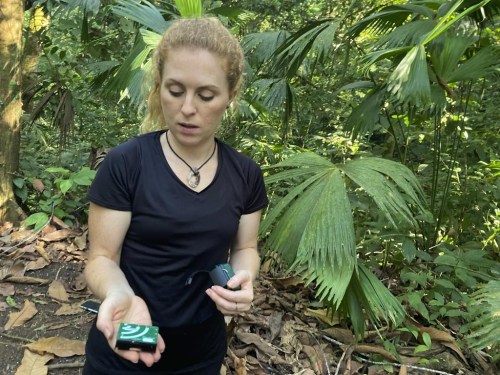
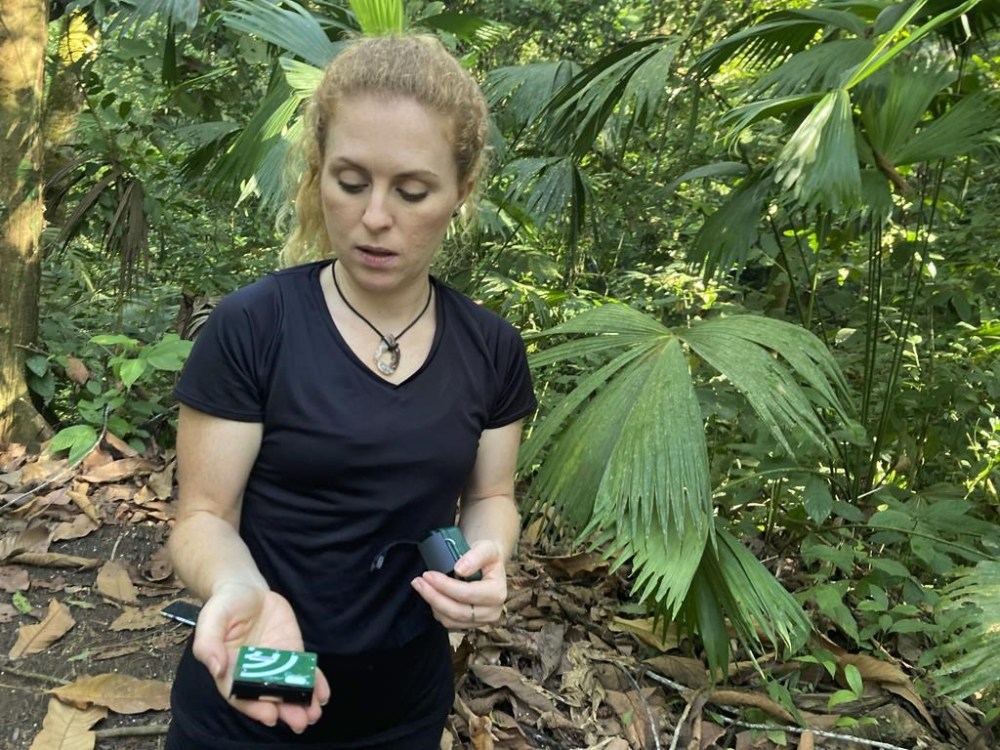
So biologist Jenna Lawson hid 350 audio monitors in trees across Costa Rica’s lush Osa Peninsula to spy on them.
The devices recorded the sounds of the forest and surrounding countryside for a week, collecting so much data that Lawson could have spent years listening to it all.
Instead, she fed it into artificial intelligence systems trained to instantly recognize spider monkey calls and detect where the animals traveled. One of the world’s largest acoustic wildlife studies when Lawson began the project in 2021, it revealed troubling findings about the health of a treasured wildlife refuge.
More of this AI-assisted wildlife surveillance is “urgently needed” as some 28% of all plant and animal species are now at risk of extinction, according to a paper published in the academic journal Science this summer. Researchers from Dutch and Danish universities showed that machine-learning techniques can “handle huge amounts of data and uncover sound patterns, allowing for faster, cheaper, and better ecological studies” that can aid in biodiversity conservation. But many technical challenges remain.
Tech giant Microsoft’s philanthropic AI for Good Lab announced this month it is hoping to answer some of those technical challenges with a new kind of hardware and computing system for eavesdropping on the planet’s wildest places.
“Those remote places are also the most important places on the Earth from a biodiversity perspective,” said Microsoft’s chief data scientist, Juan Lavista Ferres, in an interview last week by video call from Colombia, where a research team was preparing to test the new approach.
Powered by the sun and energy-efficient AI computer chips, the devices can run for years rather than weeks without human intervention. And they can regularly transmit their data online via low-Earth orbit satellites. It’s called Sparrow, short for Solar-Powered Acoustic and Remote Recording Observation Watch.
Pablo Arbelaez, director of an AI-focused research center at the University of the Andes, said a first Sparrow test will happen in a jungle preserve along Colombia’s largest river, the Magdalena. Eventually, the researchers hope to get a better idea of how deforestation — and efforts to reverse it — is affecting the population behavior of jaguars, blue-beaked paujil birds, spider monkeys and other endangered species.
Another project closer to Microsoft headquarters will monitor forests in Washington state’s Cascade Mountains. By late 2025, Lavista Ferres plans to have devices on all continents, from remote corners of the Amazon rainforest to gorilla habitats of the Democratic Republic of the Congo. That will then be “open-sourced” to make it accessible to a wide body of researchers in real time, but with measures to obscure sensitive location data.
“What we don’t want is these devices to ever be used for poachers to understand where the animals are,” Lavista Ferres said.
It was a concern about encroachments on Costa Rican spider monkey habitat that led Lawson, then at Imperial College London, to undertake her ambitious bio-acoustic study three years ago. She persuaded landowners to let her place recording devices on their properties outside Corcovado National Park, a jewel of Costa Rica’s decades-long efforts to preserve biodiversity by encouraging wildlife tourism.
“She basically realized the spider monkey is in a really critical situation,” said local environmentalist and bug scientist Jim Córdoba-Alfaro. On a follow-up visit last year, he and Lawson trekked across a private reserve with an Associated Press reporter to observe the monkeys and check on the audio monitors.
Compared to the charismatic capuchin monkey and the notoriously loud howler monkey — both commonly seen or heard throughout Costa Rica — spider monkeys are far more wary of humans and the changes they bring.
“They’re the most sensitive of the primates that we have here,” said Lawson. “The spider monkey would be the first animal to leave when there’s signs of trouble. They would be the last animal to come back once forests are restored because they need mature secondary and primary forest to be able to survive.”
The Royal Society of London in March 2023 published Lawson’s findings of what the audio monitors revealed: the spider monkeys weren’t going anywhere near paved roads or the plantations harvesting palm oil and teak wood that bisect the region’s protected national parks. That meant government-designated wildlife corridors meant to extend their range through and beyond the Osa Peninsula were not working as well as designed. She came back to present those conclusions to local officials.

After hours of searching, a troop of spider monkeys appeared — peering down at the humans who found them. Within moments, they were on their way again — extending their lanky arms and prehensile tails to grasp at trees and propel themselves across the canopy with spidery acrobatics.
Unattended acoustic detection of animal sounds is valuable not just in rainforests but in a wide variety of ecosystems, according to the Science paper published earlier this year. For example, it could help sailors avoid colliding their ships with large baleen whales heard to be passing through a shipping channel.
Lavista Ferres said there are still numerous challenges to overcome, from humidity that can fray jungle monitors to elephants in African savannas unintentionally knocking them off a tree.
Lawson said using the audio monitors to capture the spider monkey’s distinctive whinny enables biologists to study a larger area at lower cost, but also provides a truer account of how the monkeys behave without scientists following them around.
“We’re reducing our influence on their behavior,” she said. ”And also — they don’t want us here.”