As Biden warns of an ‘oligarchy,’ Trump will be flanked by tech billionaires at his inauguration
Advertisement
Read this article for free:
or
Already have an account? Log in here »
To continue reading, please subscribe:

Digital Subscription
One year of digital access for only $205*
- Enjoy unlimited reading on winnipegfreepress.com
- Read the E-Edition, our digital replica newspaper
- Access News Break, our award-winning app
- Play interactive puzzles
*First annual payment billed as $205.00 + GST for one year. This annual subscription will automatically renew at $233.00 + GST every 52 weeks (10% off the regular annual price of $259.35). Offer available to new and qualified returning subscribers only. Cancel any time.
To continue reading, please subscribe:
Add Free Press access to your Brandon Sun subscription for only an additional
$1 for the first 4 weeks*
- Enjoy unlimited reading on winnipegfreepress.com
- Read the E-Edition, our digital replica newspaper
- Access News Break, our award-winning app
- Play interactive puzzles
*Your next Brandon Sun subscription payment will increase by $1.00 and you will be charged $17.95 plus GST for four weeks. After four weeks, your payment will increase to $24.95 plus GST every four weeks.
Read unlimited articles for free today:
or
Already have an account? Log in here »
Hey there, time traveller!
This article was published 16/01/2025 (610 days ago), so information in it may no longer be current.
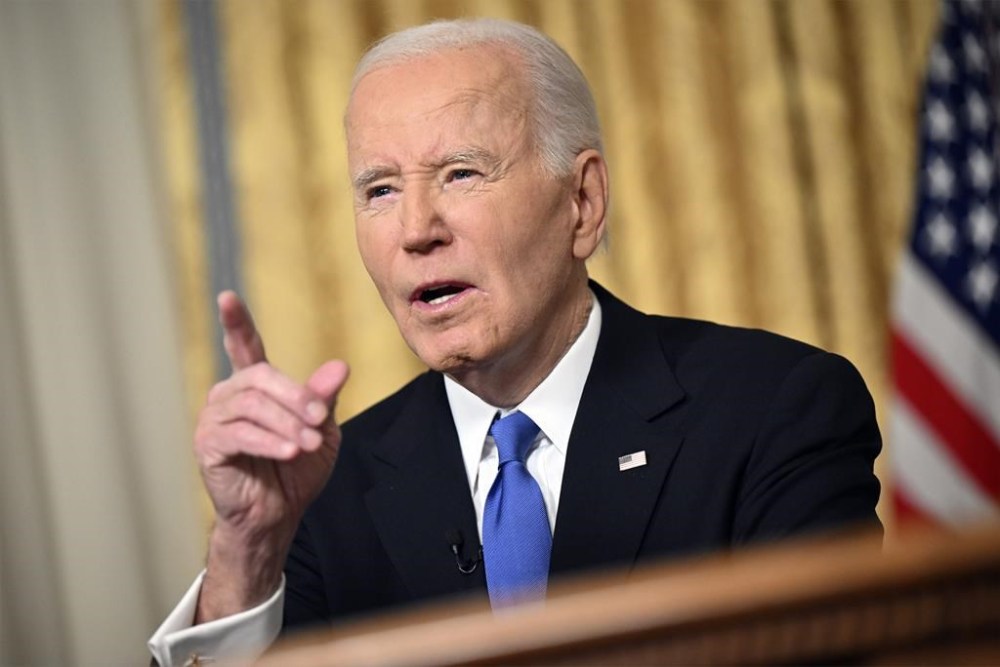
President Joe Biden’s pointed warning about the U.S. becoming an “ oligarchy ” of tech billionaires will be illustrated at Donald Trump’s inauguration, when the world’s three richest men will sit on the dais as Trump is sworn in for a second term.
Elon Musk, the world’s wealthiest person, took an unprecedented, hands-on role in the final stretch of Trump’s campaign, spending some $200 million through a super PAC. Musk has a new role reshaping government in the upcoming administration and will be joined on the dais by Amazon founder Jeff Bezos. Both men’s companies have enormous contracts with the federal government.
Rounding out the trio is Meta CEO Mark Zuckerberg, who recently changed his company’s priorities to align with Trump’s and has cozied up to the president-elect less than six months after Trump threatened to imprison him.
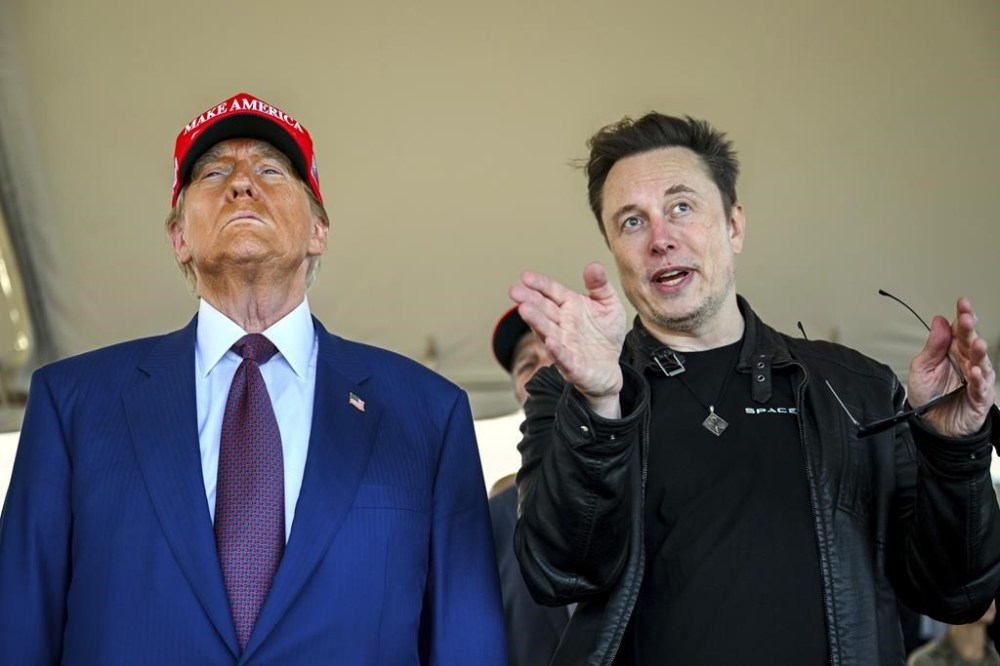
The three men are worth nearly $1 trillion combined and will be joined at the inauguration by the chief executive officers of OpenAI and the social media platform TikTok, which is scheduled to be shut down in the U.S. over the weekend under a new law that Trump opposes.
Meta, Amazon and OpenAI CEO Sam Altman donated $1 million to Trump’s inauguration fund.
The mega-rich have long had a prominent role in national politics, and several billionaires helped bankroll the campaign of Trump’s Democratic opponent, Vice President Kamala Harris. Biden recently gave the presidential medal of freedom to George Soros, a billionaire donor to liberal causes.
But the inaugural display highlights the unusually direct role billionaires have in the incoming administration. Biden’s use of the word “oligarchy” was no accident — it’s a direct reference to the form of government in Russia, whose leader Trump has long spoken warmly about. Russian President Vladimir Putin preserves the uber-rich’s wealth and keeps them under control with threats.
Here’s a look at the dynamics of the incoming administration and the mega-rich:
A new level of wealth
Inequality in the U.S. actually dropped during most of Biden’s term and is slightly lower than it was 10 years ago, but remains quite high historically.
Consider that the wealthiest 0.1% of Americans — about 131,000 households — owned nearly 14% of the nation’s wealth as of last fall, or more than $22 trillion in stocks, bonds, real estate and other assets, according to the most recent data from the Federal Reserve. That is up from up from 10% two decades ago.
The bottom half of the U.S. population — or about 65 million households — collectively own just 2.4% of the nation’s wealth, or just under $4 trillion, according to Federal Reserve data.
A relatively new development, however, is the stratospheric levels of wealth of a handful of the country’s several hundred billionaires.
Musk, for example, is worth $450 billion, according to the Bloomberg Billionaires Index. Bezos, at $242 billion and Zuckerberg, at $212 billion, have also reached new heights. They are the only people worth more than $200 billion in the world. All but two of the top 10 wealthiest people in the world are technology moguls.
The exploding levels of affluence have led Democrats to try to revamp the U.S. tax code to target wealth. Massachusetts Sen. Elizabeth Warren proposed a wealth tax during her unsuccessful 2020 bid for the Democratic presidential nomination. Democrats in 10 states last year unsuccessfully tried to create wealth taxes. Several Democratic-leaning states impose higher taxes on those making more than $1 million as a way to address income inequality.
An oligarch who argues he’ll disrupt oligarchy
Trump, Vice President-elect JD Vance — who worked as a venture capitalist with conservative Silicon Valley billionaire, Peter Thiel — and others in their inner circle identify themselves as men of the people, promising to wrest back power from interest groups and elites and restore it to Americans.
Turning Point USA founder Charlie Kirk, a prominent conservative influencer, has repeatedly called the U.S. government an “oligarchy” that rejects the will of the citizens for its own military and financial interests.
Trump, of course, is himself a billionaire. And part of his pitch has always been a billionaire-focused form of populism. He and his allies have argued that a vast array of intellectual elites — lawyers, executives, journalists and academics — have held back the country’s lower and middle class and that rich entrepreneurs can free them.
That tension came out Thursday during the confirmation hearing of Trump’s nominee to be Secretary of the Treasury, Scott Bessent. Vermont’s Democratic Sen. Bernie Sanders noted high levels of wealth inequality in the country and the control the mega-rich have over social media.
“Would you agree with President Biden that an oligarchy is taking shape in America?” Sanders asked Bessent.
The nominee replied: “The billionaires you listed make the money themselves.”
Bessent, a hedge fund manager, is one of several billionaires Trump has tapped for his Cabinet.
Americans skeptical of billionaires’ influence
If the growing involvement of Musk and other uber-wealthy tech executives in the nation’s politics has caught the attention of the public, it’s not necessarily in a positive way.
An Associated Press-NORC Center for Public Affairs Research poll finds that about six out of 10 Americans believe it would be somewhat or very bad for the president to rely on billionaires for advice on government policy.
That sentiment was most pronounced among Democrats, according to the survey taken earlier this month. Republicans were less skeptical of billionaires advising presidents, with 44% having no strong opinion and about 2 in 10 saying it would be somewhat or very good.
The Russia example
The term “oligarch” has been most associated with Russia in modern times.
After the collapse of the Soviet Union in the 1990s, a group of businessmen took advantage of the privatizing of state industries under then-Russian President Boris Yeltsin to quickly snap up vast holdings.
They became known as “oligarchs,” and by the time Putin came to power in 2000, they had amassed both vast wealth and power while millions of ordinary Russians had struggled through turbulent economic times.
After Putin took office, he met with top oligarchs at a closed-door meeting in the Kremlin and reportedly offered a deal: Stay out of politics and your wealth won’t be touched.
Russian oligarchs who didn’t end up imprisoned or dead became uber-wealthy and largely remain under Putin’s control.
The risk in the U.S.
The U.S. is a long way from Russian-style oligarchy, with a diverse, strong economy and resilient institutions. The risk is that if wealth is increasingly determined by executives’ relationships with the government, it can increase inequality and lead to stagnation for most. That’s the cautionary tale of Russia.
Some worry that’s starting to happen in the U.S. as Trump prepares to take office. Just look at the technology sector, with which Trump spent much of his first term feuding with and vowing to retaliate against if he returned to office.
Google and Microsoft both reportedly donated $1 million to the president-elect’s inauguration fund. Zuckerberg is cohosting a reception with wealthy Republican donors next week for the inauguration, and Microsoft’s chief executive officer had lunch with Trump and Vance at Trump’s Florida headquarters at Mar-A-Lago this week.
And Amazon recently bought exclusive rights to a documentary about Trump’s wife, incoming first lady Melania Trump.
Brooke Harrington, a sociologist at Dartmouth College who studies the world’s wealthiest people, dubbed the new wave of Trump tech supporters “broligarchs.”
“It’s not going to be good for democracy anywhere in the world,” Harrington said of their rise, “because they have essentially acquired so much wealth that they’re more powerful than the governments of individual nations.”
___
Associated Press writers Josh Boak, Gary Fields, Fatima Hussein, Zeke Miller, Christopher Rugaber and Amelia Thomson-DeVeaux in Washington, D.C., David Lieb in Jefferson City, Missouri, Harriet Morris in Tallinn, Estonia, Matt O’Brien in Providence, Rhode Island, and Michelle L. Price in New York contributed to this report.
__
The Associated Press receives support from several private foundations to enhance its explanatory coverage of elections and democracy. See more about AP’s democracy initiative here. The AP is solely responsible for all content.
Related Articles
U.S. Supreme Court upholds law banning TikTok if it's not sold by its Chinese parent company


Advertisement Advertise With Us
Advertisement Advertise With Us