Microsoft founder Bill Gates explores the making of his internal operating system in new memoir
Advertisement
Read this article for free:
or
Already have an account? Log in here »
To continue reading, please subscribe:

Digital Subscription
One year of digital access for only $205*
- Enjoy unlimited reading on winnipegfreepress.com
- Read the E-Edition, our digital replica newspaper
- Access News Break, our award-winning app
- Play interactive puzzles
*First annual payment billed as $205.00 + GST for one year. This annual subscription will automatically renew at $233.00 + GST every 52 weeks (10% off the regular annual price of $259.35). Offer available to new and qualified returning subscribers only. Cancel any time.
To continue reading, please subscribe:
Add Free Press access to your Brandon Sun subscription for only an additional
$1 for the first 4 weeks*
- Enjoy unlimited reading on winnipegfreepress.com
- Read the E-Edition, our digital replica newspaper
- Access News Break, our award-winning app
- Play interactive puzzles
*Your next Brandon Sun subscription payment will increase by $1.00 and you will be charged $17.95 plus GST for four weeks. After four weeks, your payment will increase to $24.95 plus GST every four weeks.
Read unlimited articles for free today:
or
Already have an account? Log in here »
Hey there, time traveller!
This article was published 03/02/2025 (591 days ago), so information in it may no longer be current.
As he prepares to turn 70 later this year, Microsoft founder Bill Gates’ new memoir explores how his childhood quirks, upbringing, friendships and experiences coalesced into shaping his internal operating system.
In “Source Code: My Beginnings,” the first installment of a trilogy retracing his journey from an often misunderstood kid to a polarizing technology titan to an influential philanthropist, Gates dissects his brain’s unusual wiring, delves into the emotional trauma of his best friend dying while they were both in high school, and revisits the birth of Traf-O-Data, a startup that he launched in Albuquerque, New Mexico, with another childhood friend, Paul Allen.
Traf-O-Data, conceived to create software for the groundbreaking Altair computer made Micro Instrumentation and Telemetry Systems, became Microsoft in 1975 — a year it booked $16,005 in revenue while Gates and Allen were making $9 per hour.
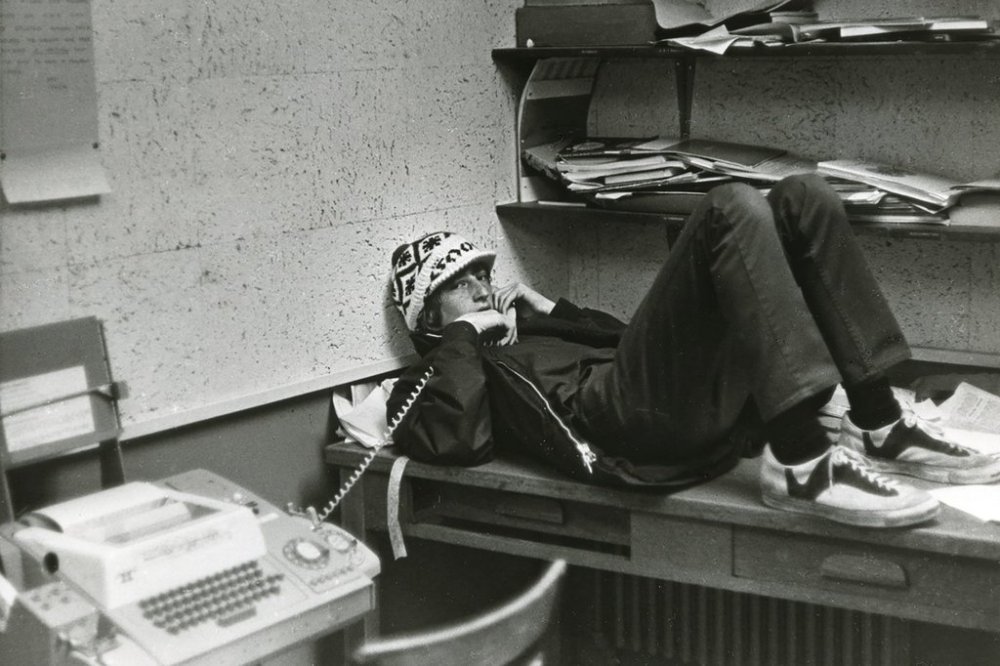
By 1977, Microsoft had become successful enough to embolden Gates to drop out of Harvard University. In 1979, he had decided to move Microsoft to the Seattle area where he grew up. Although Gates stepped down as Microsoft’s CEO 25 years ago, the Windows operating system and other software created under his reign remain the main pillar in a company that now generates $212 billion in annual revenue, boasts a $3.1 trillion market value, and accounts for most of Gates’ $100 billion personal fortune.
“Source Code” ends with Gates’s drive back to Seattle in 1979, meaning it doesn’t touch upon his 1994 marriage to Melinda French, nor their 2021 divorce.
“I am being reflective, which is not my normal mode, but it’s kind of time,” Gates said during an interview about the book with The Associated Press. “As we went back and got teacher’s comments or people I worked with at Harvard, it was fascinating. I had confused myself into thinking I got straight A’s in ninth grade.”
That might not sound like much of a revelation, but it was a surprise to the cerebral Gates, who paints himself in the book as a “bratty smartass” prone to dismissively sneering, “That’s the stupidest thing I ever heard,” about remarks that seemed nonsensical to him.
Gate’s self-portrait is that of a nerd nicknamed “Trey” by his card-playing grandmother because he was the third male on this father’s side of the family to be named Bill. He was a pipsqueak who had difficulty making friends and preferred living in his own head before he discovered computers, which became like slot machines that rewarded him for writing elegant lines of code.
When he did talk, the young Gates rocked back and forth like a metronome setting a rhythm for his brain — a habit that surfaced during parts of his 45-minute interview with the AP.
“It was a little weird because it was hard to direct my attention,” Gates recalled during the interview. “I had one year in school where they said, ‘Oh we should put you ahead a couple grades.’ And then another time, they said, ‘No, we should hold you back.’ And it’s like, ‘Well make up your mind.’ They were a little confounded.”
Although he didn’t realize it as a boy, Gates has no doubt he was and still is neurodivergent who channeled that anomaly into learning to program computers at the right time in the right place with the patient support of his late parents (the book is dedicated to them, along with his sister, Kristi and Libby).
“It wasn’t until I was an adult that there was this idea that there are kids that have this kind of unique ability to concentrate but less social skills. I certainly would be included in that,” Gates said. “I encourage people who have strengths and deficits to kind of map their ambition onto something that plays to their strengths. Being able to think just about programming and how you do it better ended up being invaluable for me.”
Gates also had the advantage of growing up in a family that could afford to pay for him to attend a private high school in Seattle. Still, that privilege didn’t insulate him from the trauma he experienced when his best friend, Kent Evans, died in a mountain climbing accident in May 1972 — a year before they were going to graduate.
Evans’ death occurred while he and Gates were preparing to spend much of the summer working on a program for their school, but what hurt far more was the loss of someone who understood him and helped give him a sense of purpose for the first time in his life.
“I had no notion of a friend just being gone. It was the only negative thing in my childhood,” Gates said. “It shapes you, that someone can just disappear — somebody you loved and would have done things with. He would have been part of whatever I ended up going on to do. I give Kent credit, along with Paul (Allen), for setting the direction that I ended up going down.”
Evans’ death provided the impetus for Gates to reconnect with Allen, who was already attending college, to help him with his programming projects. Allen, three years older than Gates and a passionate fan of legendary guitarist Jimi Hendrix, did more than just help with the coding. He also offered Gates some LSD in an attempt to lure his partner down a more psychedelic path.
Gates rebuffed Allen at first but decided to drop acid with a group of high school friends shortly before his 1973 graduation, according to the book.
It wasn’t a pleasant experience, a reaction that Gates thought might have been related to the dental surgery he underwent the day after his LSD trip. He tried LSD again with Allen in October 1974 while they were watching an episode of the old “Kung Fu” series on TV, and decided he would be better off without psychedelic drugs even though Apple co-founder Steve Jobs contended Microsoft would have created better products had Gates taken more acid.
“I thought maybe I’d seem cool if I took it, but that didn’t happen,” Gates said during the interview. “I would say Steve was definitely more hip than I was. He took a lot more acid than I did. He had a sense of style. I had some charisma in terms of motivating engineers and saying this great thing (with personal computers) would happen, but Steve had natural speaking and charisma capabilities, even beyond mine. So I always envied him for the things he did.”
Gates’ mind is now being blown by the recent advances in artificial intelligence — a technology being planted into Microsoft’s software as part of its partnership with ChatGPT creator OpenAI.
“When I finally see ChatGPT-4, where the OpenAI guys show me a very early version, I am just blown away completely,” Gates said. He views AI as an “amazing and scary” technology that should be rigorously monitored.
“You should be nervous. We have to acknowledge that AI is almost uniquely dangerous because it’s unbounded in terms of how good it will get and it’s happening within a generation,” Gates said. “Hopefully, the politicians and the technologists will share with each other, and we can shape this thing. We better get on top of that now.”
If nothing else, Gates is hoping “Source Code” will help people see a more human side of him, even if he might never been seen as the cultural tastemaker that Jobs was.
“I wouldn’t say I was completely uncool,” Gates said. “But once I got going on Microsoft, I was willing to be pretty monomaniacal. Even people I competed with found it very intimidating how focused I was. I really didn’t goof off in my 20s because my whole thing was having Microsoft move at full speed.”
Perhaps Gates will delve deeper into the monomania that made him so rich, famous and sometimes reviled in the next book about his life — an installment that he says won’t be done until sometime in 2027, at the earliest.