Trump puts the spotlight anew on a major Alaska gas project. Will it make a difference?
Advertisement
Read this article for free:
or
Already have an account? Log in here »
To continue reading, please subscribe:

Digital Subscription
One year of digital access for only $205*
- Enjoy unlimited reading on winnipegfreepress.com
- Read the E-Edition, our digital replica newspaper
- Access News Break, our award-winning app
- Play interactive puzzles
*First annual payment billed as $205.00 + GST for one year. This annual subscription will automatically renew at $233.00 + GST every 52 weeks (10% off the regular annual price of $259.35). Offer available to new and qualified returning subscribers only. Cancel any time.
To continue reading, please subscribe:
Add Free Press access to your Brandon Sun subscription for only an additional
$1 for the first 4 weeks*
- Enjoy unlimited reading on winnipegfreepress.com
- Read the E-Edition, our digital replica newspaper
- Access News Break, our award-winning app
- Play interactive puzzles
*Your next Brandon Sun subscription payment will increase by $1.00 and you will be charged $17.95 plus GST for four weeks. After four weeks, your payment will increase to $24.95 plus GST every four weeks.
Read unlimited articles for free today:
or
Already have an account? Log in here »
Hey there, time traveller!
This article was published 19/02/2025 (558 days ago), so information in it may no longer be current.
JUNEAU, Alaska (AP) — Since his election, President Donald Trump has repeatedly expressed support for a major natural gas pipeline in Alaska — comments that have drawn fresh attention to a project that’s floundered for years despite support from state leaders.
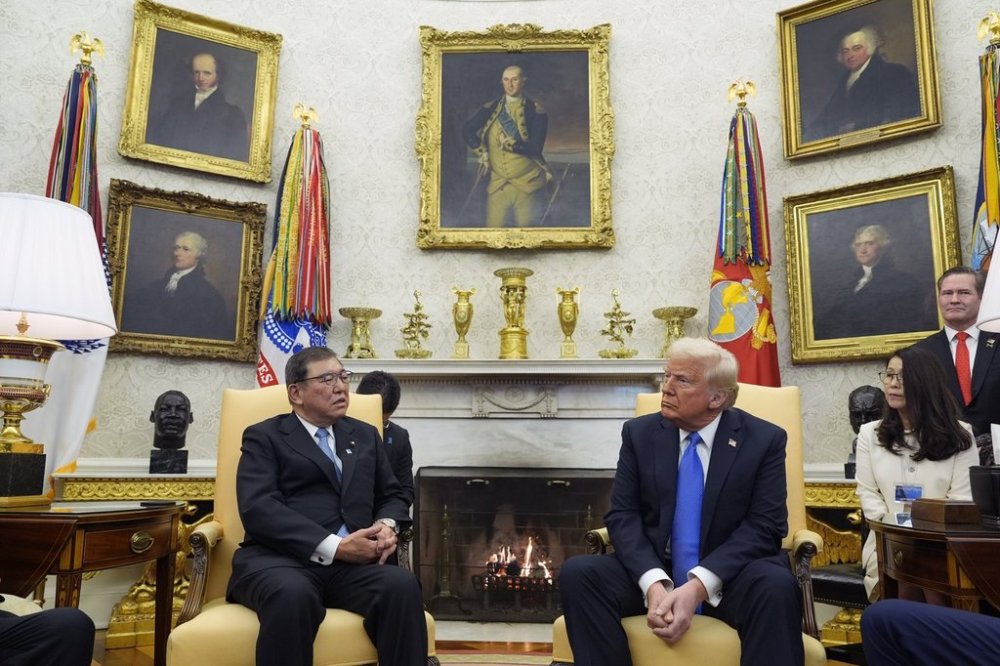
Trump mentioned the pipeline at a news conference with Japan’s prime minister earlier this month, drawing praise from Alaska Gov. Mike Dunleavy and U.S. Sen. Dan Sullivan, both Republicans. As proposed, the nearly 810-mile (1,300-kilometer) pipeline would funnel gas from Alaska’s vast North Slope to port, with an eye largely on exports to Asian countries.
Critics, however, see this as a repackaged version of a decades-old effort that has struggled to gain traction. Hurdles include the cost — an estimated $44 billion for the pipeline and related infrastructure — competition from other projects and questions about its economic feasibility. One state senator said Alaska has put around $1 billion over the years into trying to get a pipeline built.
What is liquefied natural gas?
It’s natural gas that’s been cooled to a liquid form for shipping and storage. Natural gas, a fossil fuel, is extracted from underground.
The Alaska project calls for a pipeline from the gas fields of the North Slope to south-central Alaska. A liquefaction facility in Nikiski, southwest of Anchorage, would process and export the liquefied natural gas.
What has Trump said?
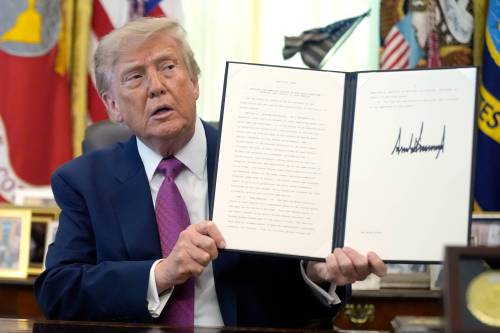
Trump, following his election, said his administration would ensure the project gets built “to provide affordable energy to Alaska and allies all over the world.” He highlighted it as a priority in an Alaska-specific executive order aimed at spurring resource development he signed on his first day in office. And during a recent news conference with Prime Minister Shigeru Ishiba of Japan, Trump touted the Alaska project’s relative proximity to that country and said there were talks “about a joint venture of some type.” He did not elaborate.
Japan’s Foreign Ministry, in a statement, said the meeting between the leaders “was carried out in a way that would be beneficial to both sides and confirmed that the two nations will cooperate bilaterally toward strengthening energy security, including increasing LNG exports to Japan.” It did not specifically reference the Alaska project.
Trump was a booster of the project during his first term. In 2017, he was there for the signing in Beijing of an agreement between then-Alaska Gov. Bill Walker and representatives of Chinese companies that called for the parties to work together on elements of the project. That effort ultimately fizzled: Walker, an independent, left office in 2018, and his successor, Dunleavy, took the project in a different direction. The project has a history of new governors taking a different tack than their predecessors; Walker did it, too.
Walker called Trump’s recent actions significant: “What he has done is a tremendous boost to the awareness of the project worldwide.”
What have been some challenges?
Currently, there is no way to bring Alaska’s large gas reserves to market. The focus for decades by major companies on the North Slope has been on producing more profitable oil. The 800-mile (1,280-kilometer) trans-Alaska oil pipeline — which began operating in 1977 — is the state’s economic lifeline. Gas that occurs with deposits of oil is reinjected into the fields.
Changing markets and costs have been major obstacles, too.
What’s next?
State leaders are facing the likelihood that Alaska could have to import gas to help meet the needs of its most populous region due to production constraints in the aging Cook Inlet basin in south-central Alaska, hundreds of miles (kilometers) from the North Slope. Cook Inlet is Alaska’s oldest producing oil and gas basin, dating to the 1950s.
Even a year ago, the idea of importing gas was widely seen by lawmakers as a humiliating possibility. But it’s now being met with resignation and hopes by some that it might simply be a short-term solution until a gas line is built.
Alaska House Majority Leader Chuck Kopp, a Republican, said Alaskans “need to be hopeful” and cautioned against negative thinking.
“We need to watch how we talk because it becomes a self-fulfilling prophecy, and an energy project of this size, if it was successful, would be transformative to the economic security of our state,” he said.
Roger Marks, an oil and gas economist in Alaska, said he can’t see the pipeline project happening and said more energy should be devoted to preparing for possible imports. “Creating these false expectations has just been a big distraction from what needs to be done,” he said.
___
Associated Press writer Yuri Kageyama in Tokyo contributed to this report.