Canadian chip and hardware makers brace for tariffs, seek domestic support
Advertisement
Read this article for free:
or
Already have an account? Log in here »
To continue reading, please subscribe:

Digital Subscription
One year of digital access for only $205*
- Enjoy unlimited reading on winnipegfreepress.com
- Read the E-Edition, our digital replica newspaper
- Access News Break, our award-winning app
- Play interactive puzzles
*First annual payment billed as $205.00 + GST for one year. This annual subscription will automatically renew at $233.00 + GST every 52 weeks (10% off the regular annual price of $259.35). Offer available to new and qualified returning subscribers only. Cancel any time.
To continue reading, please subscribe:
Add Free Press access to your Brandon Sun subscription for only an additional
$1 for the first 4 weeks*
- Enjoy unlimited reading on winnipegfreepress.com
- Read the E-Edition, our digital replica newspaper
- Access News Break, our award-winning app
- Play interactive puzzles
*Your next Brandon Sun subscription payment will increase by $1.00 and you will be charged $17.95 plus GST for four weeks. After four weeks, your payment will increase to $24.95 plus GST every four weeks.
Read unlimited articles for free today:
or
Already have an account? Log in here »
Hey there, time traveller!
This article was published 24/02/2025 (591 days ago), so information in it may no longer be current.
Ramee Mossa was months into fundraising for his power hardware company FTEX when U.S. President Donald Trump started looming over the negotiations.
As soon as Trump took office, potential financiers in the U.S. began feeling “uneasy” and started asking questions about what a succession of tariffs would mean for Mossa’s Montreal-based company.
“For hardware startups, it’s going to make it more difficult for us to raise (money) and it’s going to make it more difficult for companies that make hardware to survive,” Mossa said.
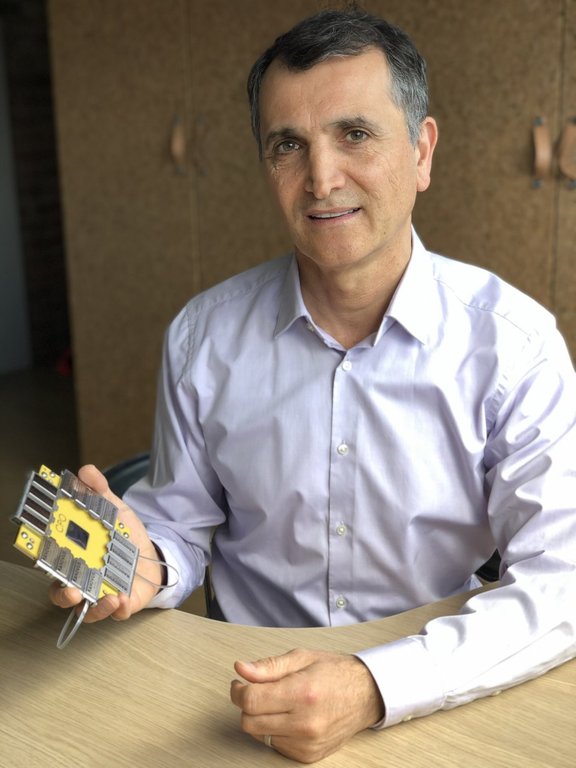
He imagines the tariffs will be more of a “minor inconvenience” than a catastrophe for FTEX because it makes its systems that power e-bikes, e-scooters and other micro-mobility vehicles in Malaysia with components from Taiwan.
Its clients are mostly Canadian, American and European brands manufacturing their products in China or Vietnam, which allows FTEX to circumvent the forthcoming 25 per cent duty on Canadian goods and the U.S.’s present 10 per cent tariff on Chinese goods.
Yet Mossa and other leaders of Canadian hardware firms are not without their worries. They say tariffs could challenge their suppliers and manufacturers and ripple through the supply chain, eventually hitting the bottom lines of companies relying on their goods or labour.
Addressing the threats by routing products around tariff-prone countries can be time-consuming and isn’t an option for everyone. Canada would be better off fending off the impact of possible tariffs and setting its tech companies up for the long-term by looking inward, they say.
“The best thing for Canada would be to buy Canadian stuff,” said Hamid Arabzadeh, CEO of Ranovus.
The Kanata, Ont.-based company makes advanced silicon chips meant to help power AI systems efficiently. The design originates in Canada, but Ranovus manufactures silicon wafers containing hundreds of chips in the U.S.
The wafers are then sent to Canada, where Ranovus separates, tests and packages them with lasers and other components into advanced photonics products.
While some may look at the tariff situation and see the construction of Canadian chip factories as the answer, others feel the lengthy timelines required for that are too unrealistic to make an impact, with the duties expected to be only weeks away.
“Taiwan, for example, is responsible for 60 per cent of the world’s semiconductor fabrication and they didn’t do that within the space of five years. This was started in the late ’70s,” said Avinash Persaud, vice-president of Markham, Ont.-based tech hub VentureLab’s Hardware Catalyst Initiative.
Most global companies rely on Taiwan as well as South Korea, China and Japan for manufacturing because chip factories, their machinery and the production process can cost billions of dollars and the work they do isn’t speedy.
It can take several months to engrave and transform silicon wafers into chips and the process can be upended by as little as a speck of dust. Packaging them into even more advanced products takes even longer.
Plus, any facility outside of the U.S. might wind up in Trump’s crosshairs. He’s mused about imposing tariffs on chips made anywhere else in hopes of returning manufacturing to the U.S.
If Ranovus wound up impacted by U.S. tariffs or Canada’s retaliatory duties, Arabzadeh said customers likely wouldn’t accept higher prices and would demand the company get all its production work done somewhere more free of fees, such as Taiwan.
“But it’s better to keep that know-how and intellectual property here in Canada,” Arabzadeh said.
“If we were to ask a foreign company … to package this together, they would have to learn everything about our business, about our product, and so forth, and then that knowledge will start to go into their other customers, which will be our competitors like Broadcom and Intel, and those guys then would benefit from that.”
Another option Arabzadeh finds just as unpalatable is overhauling the business to give manufacturing rights to customers in exchange for a royalty paid to Ranovus.
“That’s another devastating blow,” he said.
Arabzadeh would rather the government help companies like his with countermeasures to stop artificial intelligence hardware from entering the country if it uses foreign components when there is a Canadian equivalent available.
He said China makes such moves all the time and it wouldn’t be too hard for Canada to replicate because Ranovus and its Canadian competitors already make components that can be incorporated into products from global giants Nvidia and AMD.
“This will be amazing for us because it would sort of force those people to design our product into their product if they want to sell to Canada,” Arabzadeh said.
But Canada doesn’t appear ready to make the move. Persaud pointed out it doesn’t even have a national semiconductor strategy.
If the country did, he said stakeholders staring down tariffs would be more galvanized, the government would likely make commitments to support the industry and the world would know where Canada’s hardware sector is headed.
“When you have clarity around that, it makes investment, foreign direct investment partnerships, long-term strategies much more likely,” said Persaud. “It’s very difficult to do that when somebody’s not sure what the policy is going to be.”
Uncertainty, however, is becoming a hallmark of running a business in the time of Trump.
Mossa, for example, watched many of FTEX’s clients move production to Vietnam and away from China amid geopolitical tensions.
They may not be unscathed in Vietnam either, Mossa reasons, because the country has a large trade imbalance with the U.S.
Adding to the uncertainty his company faces is the possibility of its suppliers being hit with tariffs themselves, which would increase production costs and be passed along to clients like FTEX.
If that happened, Mossa said FTEX would have to consider raising prices, a move its Chinese competitors would likely not have to make because they source supplies and manufacture bikes all in Asia.

“We’re seeing their prices kind of stay steady and we’re seeing our prices go up, and at the end of the day, it gives us less room to maneuver,” Mossa said.
Canada’s government would need to impose “insane” tariffs to make it more competitive for FTEX’s clients to make products here rather than Asia.
“And it’s just the consumer that’s going to suffer in the end,” he said, noting the simplest e-bikes cost $1,500 and more high-end ones go for $10,000.
“If we start making these in North America because we have 200 or 300 per cent tariffs on them in Asia, they’re going to cost as much as a used car and people are just going to go back to driving cars. We’ll lose obviously as a company from this, but we’ll lose as a society as well.”
This report by The Canadian Press was first published Feb. 24, 2025.

Advertisement Advertise With Us
Advertisement Advertise With Us