AI pioneers who channeled ‘hedonistic’ machines win computer science’s top prize

Advertisement

Advertise with us

Teaching machines in the way that animal trainers mold the behavior of dogs or horses has been an important method for developing artificial intelligence and one that was recognized Wednesday with the top computer science award.

Read this article for free:


or

Already have an account? Log in here »

To continue reading, please subscribe:

Subscribe and receive a limited-edition Free Press branded hat or tote.

Digital Subscription

One year of digital access for only $205*

  • Enjoy unlimited reading on winnipegfreepress.com
  • Read the E-Edition, our digital replica newspaper
  • Access News Break, our award-winning app
  • Play interactive puzzles

*First annual payment billed as $205.00 + GST for one year. This annual subscription will automatically renew at $233.00 + GST every 52 weeks (10% off the regular annual price of $259.35). Offer available to new and qualified returning subscribers only. Cancel any time.

To continue reading, please subscribe:

Add Free Press access to your Brandon Sun subscription for only an additional

$1 for the first 4 weeks*

  • Enjoy unlimited reading on winnipegfreepress.com
  • Read the E-Edition, our digital replica newspaper
  • Access News Break, our award-winning app
  • Play interactive puzzles
Start now

*Your next Brandon Sun subscription payment will increase by $1.00 and you will be charged $17.95 plus GST for four weeks. After four weeks, your payment will increase to $24.95 plus GST every four weeks.

Hey there, time traveller!
This article was published 05/03/2025 (530 days ago), so information in it may no longer be current.

Teaching machines in the way that animal trainers mold the behavior of dogs or horses has been an important method for developing artificial intelligence and one that was recognized Wednesday with the top computer science award.

Two pioneers in the field of reinforcement learning, Andrew Barto and Richard Sutton, are the winners of this year’s A.M. Turing Award, the tech world’s equivalent of the Nobel Prize.

Research that Barto, 76, and Sutton, 67, began in the late 1970s paved the way for some of the past decade’s AI breakthroughs. At the heart of their work was channeling so-called “hedonistic” machines that could continuously adapt their behavior in response to positive signals.
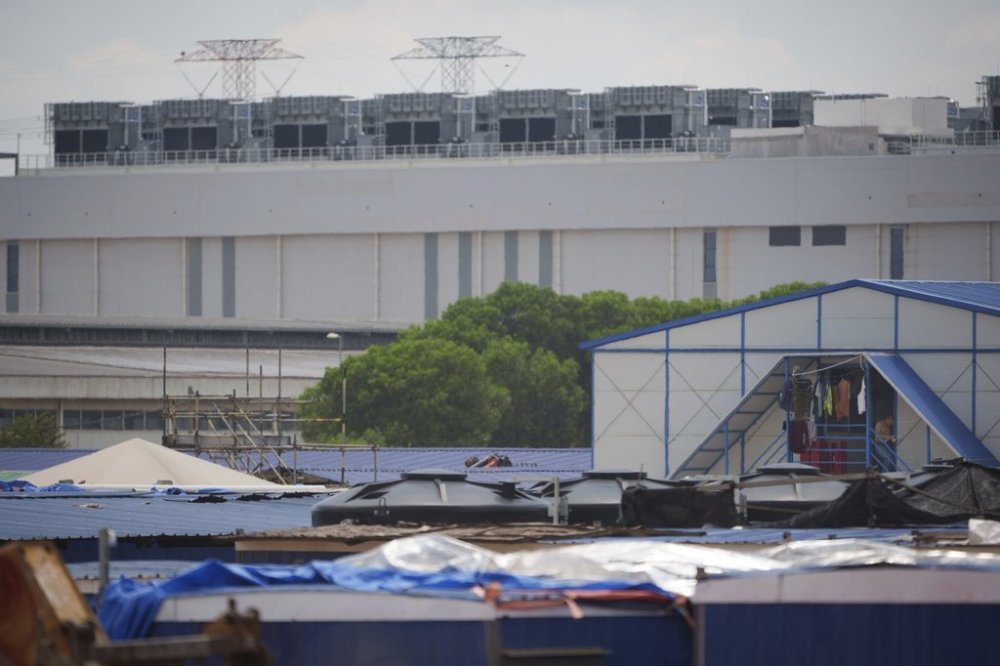
A lodging for construction workers is seen in front of a Data center in Sedenak Tech Park in Johor state of Malaysia, Friday, Sept. 27, 2024. (AP Photo/Vincent Thian)

Reinforcement learning is what led a Google computer program to beat the world’s best human players of the ancient Chinese board game Go in 2016 and 2017. It’s also been a key technique in improving popular AI tools like ChatGPT, optimizing financial trading and helping a robotic hand solve a Rubik’s Cube.

But Barto said the field was “not fashionable” when he and his doctoral student, Sutton, began crafting their theories and algorithms at the University of Massachusetts, Amherst.

“We were kind of in the wilderness,” Barto said in an interview with The Associated Press. “Which is why it’s so gratifying to receive this award, to see this becoming more recognized as something relevant and interesting. In the early days, it was not.”

Google sponsors the annual $1 million prize, which was announced Wednesday by the Association for Computing Machinery.

Barto, now retired from the University of Massachusetts, and Sutton, a longtime professor at Canada’s University of Alberta, aren’t the first AI pioneers to win the award named after British mathematician, codebreaker and early AI thinker Alan Turing. But their research has directly sought to answer Turing’s 1947 call for a machine that “can learn from experience” — which Sutton describes as “arguably the essential idea of reinforcement learning.”

In particular, they borrowed from ideas in psychology and neuroscience about the way that pleasure-seeking neurons respond to rewards or punishment. In one landmark paper published in the early 1980s, Barto and Sutton set their new approach on a specific task in a simulated world: balance a pole on a moving cart to keep it from falling. The two computer scientists later co-authored a widely used textbook on reinforcement learning.

“The tools they developed remain a central pillar of the AI boom and have rendered major advances, attracted legions of young researchers, and driven billions of dollars in investments,” said Google’s chief scientist Jeff Dean in a written statement.

In a joint interview with the AP, Barto and Sutton didn’t always agree on how to evaluate the risks of AI agents that are constantly seeking to improve themselves. They also distinguished their work from the branch of generative AI technology that is currently in fashion — the large language models behind chatbots made by OpenAI, Google and other tech giants that mimic human writing and other media.
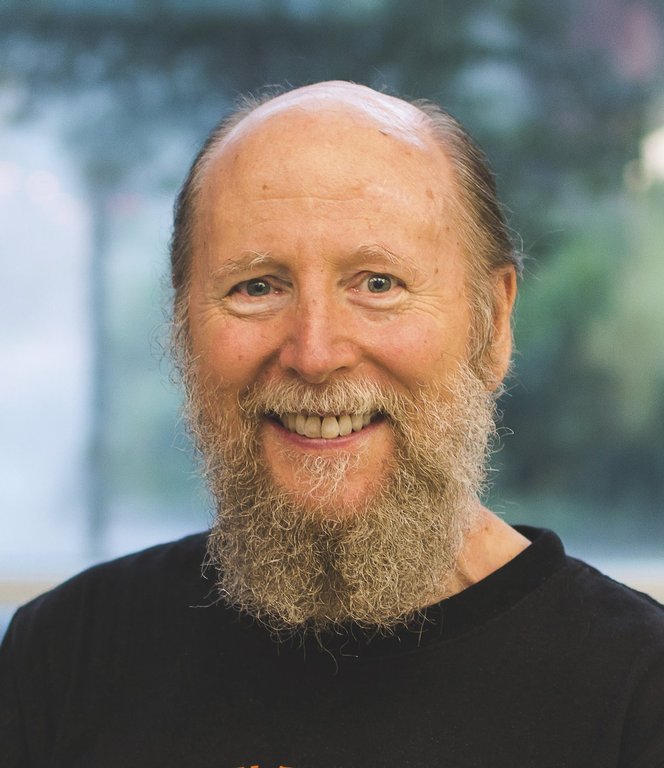
This undated photo provided by Dawn Graves shows Richard Sutton. (Dawn Graves via AP)

“The big choice is, do you try to learn from people’s data, or do you try to learn from an (AI) agent’s own life and its own experience?” Sutton said.

Sutton has dismissed what he describes as overblown concerns about AI’s threat to humanity, while Barto disagreed and said “You have to be cognizant of potential unexpected consequences.”

Barto, retired for 14 years, describes himself as a Luddite, while Sutton is embracing a future he expects to have beings of greater intelligence than current humans — an idea sometimes known as posthumanism.

“People are machines. They’re amazing, wonderful machines,” but they are also not the “end product” and could work better, Sutton said.

“It’s intrinsically a part of the AI enterprise,” Sutton said. “We’re trying to understand ourselves and, of course, to make things that can work even better. Maybe to become such things.”

Report Error Submit a Tip

More Stories

Free fix is in: repair café aims to keep items out of landfills

Tiago Resko 3 minute read Preview

Free fix is in: repair café aims to keep items out of landfills

Tiago Resko 3 minute read 6:00 AM CDT

Stephen Kirk wants to give people a chance to fix items they’re not ready to let go of.

The Spence Neighbourhood Association staffer took notice when repair cafés started popping up around the world, and he decided to bring the idea to Winnipeg.

The café invites people to bring broken items like bikes, clothes and small kitchen appliances to the association’s headquarters to get free repairs by a team of skilled volunteers.

“Certainly in our neighbourhood, a lot of people’s motivation is economic, they would rather fix it than have to buy a new one,” said Kirk, the environmental and open spaces coordinator for the Spence Neighbourhood Association.

Read
6:00 AM CDT

Manitoba family finalist for cattle producers environmental award

Aaron Epp 4 minute read Preview

Manitoba family finalist for cattle producers environmental award

Aaron Epp 4 minute read Saturday, Aug. 15, 2026

A family in western Manitoba is one of seven finalists for a national environmental award honouring beef cattle producers.

Connor and Kyla English, alongside Connor’s parents, Brian and Leanne English, are nominated for the Canadian Cattle Association’s Environmental Stewardship Award. The 30-year-old award is presented to beef farmers and ranchers who explore innovative ways to protect, preserve and enhance their operations and the environment simultaneously.

This year’s recipient will be announced on Wednesday during a banquet at the Canadian Beef Industry Conference in Winnipeg.

The English family’s roots near Bradwardine — about 265 kilometres west of Winnipeg — date back to 1898. Today, Connor, Kyla, Brian and Leanne manage a herd of about 320 breeding cows on nearly 445 hectares (1,100 acres) of owned and rented pasture and forage land.

Read
Saturday, Aug. 15, 2026

Hometown hero hits CEBL championship clinching shot

Taylor Allen 5 minute read Preview

Hometown hero hits CEBL championship clinching shot

Taylor Allen 5 minute read Yesterday at 6:34 PM CDT

Chapter 1 of Winnipeg Sea Bears basketball was capped by hometown hero Chad Posthumus.

It was May 27, 2023, and the late, great centre out of River East Collegiate had a put-back basket off a Teddy Allen miss to give the Sea Bears a 90-85 victory over the Vancouver Bandits in Winnipeg’s inaugural game, in front of what was then a record crowd of 7,303.

So, on Saturday, it was rather poetic that Simon Hildebrandt — another Winnipegger and a player Posthumus used to mentor — was the one to put an exclamation mark on the franchise’s latest and greatest chapter.

Hildebrandt drilled a wide-open three in Target Score Time to crown the Sea Bears as the 2026 CEBL champions.

Read
Yesterday at 6:34 PM CDT

Volunteer helps keep Nellie McClung’s legacy alive

Tiago Resko 4 minute read Preview

Volunteer helps keep Nellie McClung’s legacy alive

Tiago Resko 4 minute read 6:00 AM CDT

Growing up with ties to the community of Manitou, Gillian Potvin has found great inspiration in the traces of Nellie McClung’s legacy.

The 39-year-old has spent nearly a decade channelling that inspiration back into the community by being a key part of the Nellie McClung Museum of Canada’s marketing and events planning since it opened at 55 Main St., in the southern Manitoba town in 2017.

Utilizing her skills in marketing and digital design for the museum is her way of thanking the woman who fought for the rights she has today and continuing her legacy.

“She helped women to be identified as persons and that’s huge,” she said of the woman born in 1873 and considered one of Canada’s most prominent suffragists. “It’s easy to take for granted some of these rights we now have as women, but there would have been a big fight back in the day to change the things that have always been.”

Read
6:00 AM CDT

Trustees call for e-scooter safety education

Maggie Macintosh 4 minute read Preview

Trustees call for e-scooter safety education

Maggie Macintosh 4 minute read 6:00 AM CDT

School trustees are calling on the province to bolster public education around e-bike and e-scooter safety ahead of back-to-school season.

The Manitoba School Boards Association brought members’ concerns about a growing number of students using electronic devices to get to and from classes to the education minister’s office this month.

“There’s a concerning lack of safety knowledge on the part of Manitoba youth,” executive director Alan Campbell said.

Campbell, a long-time trustee in the Interlake School Division, resigned from elected office this summer to run the association that mobilizes school boards and provides them with labour relations support.

Read
6:00 AM CDT

Puzzles Palace

1 minute read Monday, Jul. 27, 2026

To solve our puzzles, please subscribe with this special offer: |