Explorers discover wreckage of cargo ship that sank in Lake Superior storm more than 130 years ago

Advertisement

Advertise with us

MADISON, Wis. (AP) — Twenty years before the Titanic changed maritime history, another ship touted as the next great technological feat set sail on the Great Lakes.

Read this article for free:


or

Already have an account? Log in here »

To continue reading, please subscribe:

Subscribe and receive a limited-edition Free Press branded hat or tote.

Digital Subscription

One year of digital access for only $205*

  • Enjoy unlimited reading on winnipegfreepress.com
  • Read the E-Edition, our digital replica newspaper
  • Access News Break, our award-winning app
  • Play interactive puzzles

*First annual payment billed as $205.00 + GST for one year. This annual subscription will automatically renew at $233.00 + GST every 52 weeks (10% off the regular annual price of $259.35). Offer available to new and qualified returning subscribers only. Cancel any time.

To continue reading, please subscribe:

Add Free Press access to your Brandon Sun subscription for only an additional

$1 for the first 4 weeks*

  • Enjoy unlimited reading on winnipegfreepress.com
  • Read the E-Edition, our digital replica newspaper
  • Access News Break, our award-winning app
  • Play interactive puzzles
Start now

*Your next Brandon Sun subscription payment will increase by $1.00 and you will be charged $17.95 plus GST for four weeks. After four weeks, your payment will increase to $24.95 plus GST every four weeks.

Hey there, time traveller!
This article was published 11/03/2025 (583 days ago), so information in it may no longer be current.

MADISON, Wis. (AP) — Twenty years before the Titanic changed maritime history, another ship touted as the next great technological feat set sail on the Great Lakes.

The Western Reserve was one of the first all-steel cargo ships to traverse the lakes. Built to break speed records, the 300-foot (91-meter) freighter dubbed “the inland greyhound” by newspapers was supposed to be one of the safest ships afloat.

Owner Peter Minch was so proud of her that he brought his wife and young children aboard for a summer joyride in August 1892.
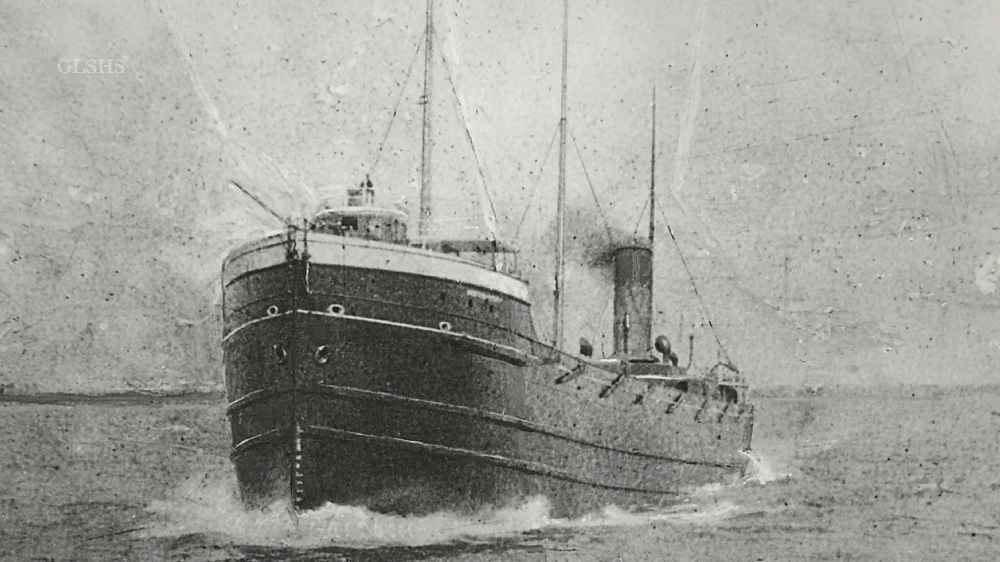
This image provided by Great Lakes Shipwreck Historical Society shows the Western Reserve, a merchant ship that sank in Lake Superior in 1892 off Michigan’s Upper Peninsula. (Great Lakes Shipwreck Historical Society via AP)

As the ship entered Lake Superior’s Whitefish Bay between Michigan and Canada on Aug. 30, a gale came up. With no cargo, the ship was floating high in the water. The storm battered it until it cracked in half.

Twenty-seven people perished, including the Minch family. The only survivor was wheelsman Harry W. Stewart, who swam a mile (1.6 kilometers) to shore after his lifeboat capsized.

For almost 132 years, the lake hid the wreckage. In July, explorers from the Great Lakes Shipwreck Historical Society pinpointed the Western Reserve off Michigan’s Upper Peninsula. The society announced the discovery Saturday at the annual Ghost Ships Festival in Manitowoc, Wisconsin.

“There’s a number of concurrent stories that make this important,” the society’s executive director, Bruce Lynn, said in a telephone interview.

“Most ships were still wooden. It was a technologically advanced ship. They were kind of a famous family at the time. You have this new ship, considered one of the safest on the lake, new tech, a big, big ship. (The discovery) is another way for us to keep this history alive.”

Search lasted more than two years
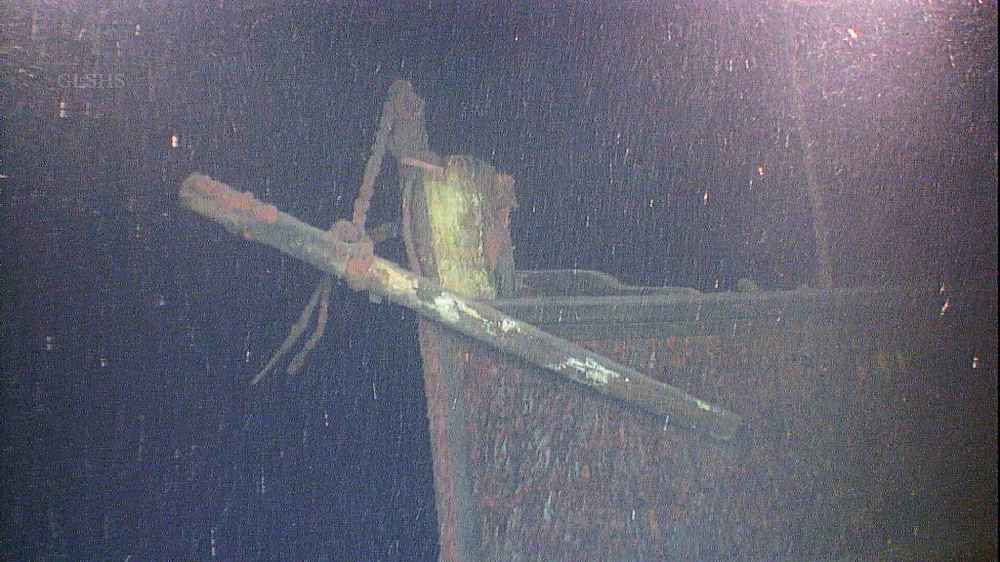
A steering post from the Western Reserve. (Great Lakes Shipwreck Historical Society via AP)

Darryl Ertel, the society’s marine operations director, and his brother, Dan Ertel, spent more than two years looking for the Western Reserve.

On July 22, they set out on the David Boyd, the society’s research vessel. Heavy ship traffic that day forced them to alter their course, though, and search an area adjacent to their original search grid, Lynn said.

The brothers towed a side-scanning sonar array behind their ship. Side sonar scans starboard and port, providing a more expansive picture of the bottom than sonar mounted beneath a ship.

About 60 miles (97 kilometers) northwest of Whitefish Point on the Upper Peninsula, they picked up a line with a shadow behind it in 600 feet (182 meters) of water. They dialed up the resolution and spotted a large ship broken in two with the bow resting on the stern.

Confirmation day

Eight days later, the brothers returned to the site along with Lynn and other researchers.
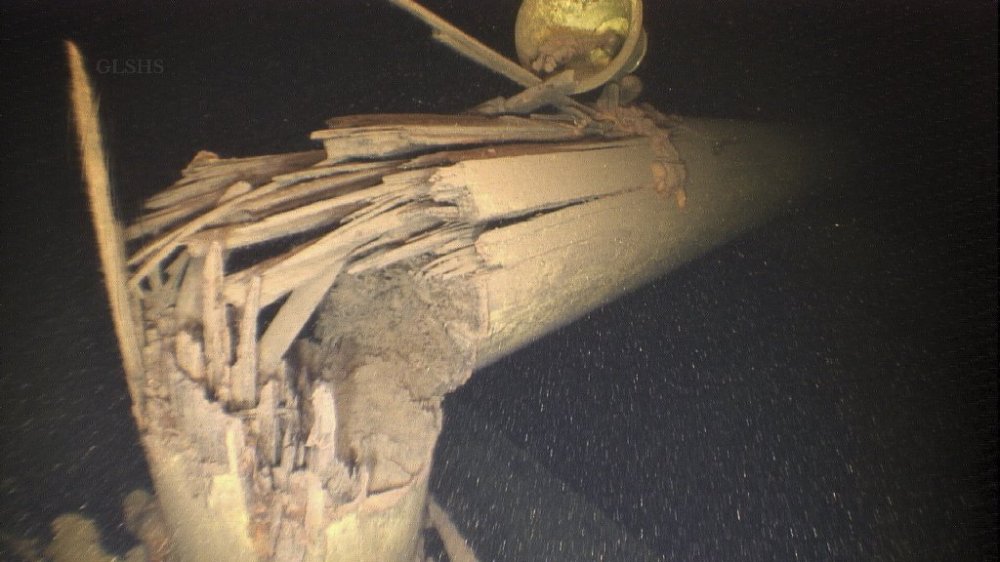
This image provided by Great Lakes Shipwreck Historical Society shows the broken mast from The Western Reserve, a merchant ship that sank off Michigan’s Upper Peninsula. (Great Lakes Shipwreck Historical Society via AP)

They deployed a submersible drone that returned clear images of a portside running light that matched a Western Reserve’s starboard running light that had washed ashore in Canada after the ship went down. That light was the only artifact recovered from the ship.

“That was confirmation day,” said Lynn, the society’s executive director.

Darryl Ertel said that discovery gave him chills — and not in a good way.

“Knowing how the 300-foot Western Reserve was caught in a storm this far from shore made a uneasy feeling in the back of my neck,” he said in a society news release. “A squall can come up unexpectedly…anywhere, and anytime.”

Lynn said that the ship was “pretty torn up” but the wreckage appeared well-preserved in the frigid fresh water.

The Great Lakes can be more dangerous than the oceans

A bell from the Western Reserve.  (Great Lakes Shipwreck Historical Society via AP)
A bell from the Western Reserve. (Great Lakes Shipwreck Historical Society via AP)

The Great Lakes have claimed thousands of ships since the 1700s. Perhaps the most famous is the Edmund Fitzgerald, an ore carrier that got caught in a storm in November 1975 and went down off Whitefish Point within 100 miles (160 kilometers) of the Western Reserve.

All hands were killed. The incident was immortalized in the Gordon Lightfoot song, “The Wreck of the Edmund Fitzgerald.”

Assistant Wisconsin State Climatologist Ed Hopkins said that storm season on the lakes begins in November, when warm water meets cold air and winds blow unimpeded across open water, generating waves as high as 30 feet (9 meters).

The lakes at that time can be more dangerous than the oceans because they’re smaller, making it harder for ships to out-maneuver the storms, he said.

Brittle steel may have played a role in sinking

But it’s rare to see such gales form in August, Hopkins said. A National Weather Service report called the storm that sank the Western Reserve a “relatively minor gale,” he noted.

A deck rack on the bow of the Western Reserve cargo ship beneath Lake Superior. (Great Lakes Shipwreck Historical Society via AP)

A Wisconsin Marine Historical Society summary of the Western Reserve sinking noted that the maritime steel age had just begun and the Western Reserve’s hull might have been weak and couldn’t handle the bending and twisting in the storm.

The steel also becomes brittle in low temperatures like those of Great Lakes waters. The average water temperature in Lake Superior in late August is about 60 degrees (16 degrees Celsius), according to the National Oceanic and Atmospheric Administration.

The summary notes the Titanic used the same type of steel as the Western Reserve and that it may have played a role in speeding up the luxury liner’s sinking.

Report Error Submit a Tip

More Stories

Storm costs not factored in to MPI request for 2.38% rate increase

Nicole Buffie 5 minute read Preview

Storm costs not factored in to MPI request for 2.38% rate increase

Nicole Buffie 5 minute read Tuesday, Oct. 13, 2026

Manitoba Public Insurance told the Public Utilities Board Tuesday it didn’t factor in reinsurance costs related to devastating summer storms in its application for an increase to vehicle insurance rates.

Cara Low, the Crown corporation’s chief actuary, told the board that given MPI anticipates an increase to reinsurance premiums, the 2.38 per cent increase listed in its application won’t be adequate to cover its costs.

“There’s going to be a significant increase. We still have to decide how much we want to retain, what we want the coverage to look like, and what the upper end needs to be,” she said on the opening day of a three-week hearing.

Nearly 41,000 claims have been submitted in relation to summer storms that swept across southern Manitoba from June to August. Floods, tornadoes and hail pummelled several communities and forced MPI to open satellite claims centres to deal with the record number of calls.

Read
Tuesday, Oct. 13, 2026

Law will curb e-scooter enthusiasts

Editorial 4 minute read Preview

Law will curb e-scooter enthusiasts

Editorial 4 minute read 2:00 AM CDT

For people concerned about safety on Manitoba’s sidewalks and roadways, the province’s announcement that new rules will be introduced next year regarding the use of e-scooters and other personal electric vehicles (PEVs) was no doubt met with an enthusiastic “It’s about time.”

As their popularity and their presence among pedestrians on sidewalks and/or motor vehicles on the road has increased steadily, so have reports of close calls or, even worse, collisions involving e-scooters or other PEVs — including electric skateboards, hoverboards and unicycles — being operated imprudently and at unsafe speeds.

Traffic laws urgently need to be updated to govern the use of these conveyances, which up until now have remained in a regulatory grey area that has allowed PEVs to operate largely without guidelines and outside conventional avenues of traffic-safety enforcement. Accordingly, updates regarding PEV use will be included in the Highway Traffic Act in 2027.

The new legislation will govern such areas as mandatory helmet use, age restrictions, where PEVs can lawfully operate and the maximum speed at which they can travel (25 km/h). The aim of the new law, according to the province’s website, is “to help keep Manitobans safe when sharing roads, paths, and other public spaces.”

Read
2:00 AM CDT

Jets top line powers win over Wild

Ken Wiebe 7 minute read Preview

Jets top line powers win over Wild

Ken Wiebe 7 minute read Tuesday, Oct. 13, 2026

Cole Perfetti has made it clear he doesn’t want to get ahead of himself.

The Winnipeg Jets winger has first-hand knowledge on how humbling the NHL can be, coming off a quiet campaign as he worked his way back from a high ankle sprain.

But with the benefit of a full summer of training and a return to health, Perfetti has taken advantage of his promotion to the top line and quickly shown he belongs.

The latest proof came Tuesday, with Perfetti scoring a pair of goals — including the game-winner — in a 5-2 victory over the Minnesota Wild at Canada Life Centre.

Read
Tuesday, Oct. 13, 2026

Serial arsonist gets more jail time, community ban

Tessa Adamski 4 minute read 2:01 AM CDT

BRANDON — A serial arsonist who believes controlled burning is his “calling” was sentenced to nine months in jail and barred for two years from a southwestern Manitoba community after he deliberately set multiple grass fires during a fire ban in May.

Phillip Andrew Unrau, 72, created a dangerous situation for residents of Margaret and a nearby Hutterite colony on the evening of May 21 when he set fire to several patches of grass along a railway bed, provincial court Judge Shauna Hewitt-Michta said on Wednesday.

People in the community, located 45 kilometres southeast of Brandon, called the fire department. While no residents saw Unrau light the fires, he made incriminating comments to witnesses and was found alone near the burning land that stretched for 274 metres, the judge said.

“The damage to property here was minimal, but the emotional and psychological harm that Mr. Unrau causes to his neighbours is significant,” she said.

Today’s horoscope

Georgia Nicols 4 minute read Preview

Today’s horoscope

Georgia Nicols 4 minute read 2:00 AM CDT

MOON ALERT: Avoid shopping (except food and gas) or important decisions for the rest of the day after 4:30 p.m. The moon is in Sagittarius.

ARIES (March 21-April 19)

This is a wonderful day to expand your world by learning something exciting that broadens your view of life. You might enjoy a vacation or even feel like you’re on holiday. Activities with children, sporting events and the arts will delight.

TAURUS (April 20-May 20)

Read
2:00 AM CDT

Slain chef’s family infuriated by stayed charges

Morgan Modjeski 3 minute read Preview

Slain chef’s family infuriated by stayed charges

Morgan Modjeski 3 minute read Yesterday at 8:28 PM CDT

The family of a Ste. Anne chef who died after an altercation at a party says they are angry a manslaughter charge has been stayed against a 46-year-old man.

“What I’ve been told is they don’t have enough evidence to prosecute criminally because the only ones that are alive to tell the story are saying they did it in self defence,” said Jason Huley, brother of 49-year-old Cameron Huley, who died May 3.

“I’m pissed. I hate our justice system … I feel they let us down.”

Steinbach RCMP were called to a home in the RM of Ste. Anne just after 11:30 p.m. on May 2 about an assault. Cameron Huley was found suffering from serious injuries. He died hours later in hospital, police said.

Read
Yesterday at 8:28 PM CDT