Canada-linked team finds Saturn has 128 more moons, leaving Jupiter in cosmic dust

Advertisement

Advertise with us

VANCOUVER - Canadian and other researchers have confirmed Saturn as the solar system’s undisputed “moon king," after discovering 128 more moons circling the ringed planet.

Read this article for free:


or

Already have an account? Log in here »

To continue reading, please subscribe:

Subscribe and receive a limited-edition Free Press branded hat or tote.

Digital Subscription

One year of digital access for only $205*

  • Enjoy unlimited reading on winnipegfreepress.com
  • Read the E-Edition, our digital replica newspaper
  • Access News Break, our award-winning app
  • Play interactive puzzles

*First annual payment billed as $205.00 + GST for one year. This annual subscription will automatically renew at $233.00 + GST every 52 weeks (10% off the regular annual price of $259.35). Offer available to new and qualified returning subscribers only. Cancel any time.

To continue reading, please subscribe:

Add Free Press access to your Brandon Sun subscription for only an additional

$1 for the first 4 weeks*

  • Enjoy unlimited reading on winnipegfreepress.com
  • Read the E-Edition, our digital replica newspaper
  • Access News Break, our award-winning app
  • Play interactive puzzles
Start now

*Your next Brandon Sun subscription payment will increase by $1.00 and you will be charged $17.95 plus GST for four weeks. After four weeks, your payment will increase to $24.95 plus GST every four weeks.

Hey there, time traveller!
This article was published 12/03/2025 (535 days ago), so information in it may no longer be current.

VANCOUVER – Canadian and other researchers have confirmed Saturn as the solar system’s undisputed “moon king,” after discovering 128 more moons circling the ringed planet.

The discovery by a team, including current and former University of British Columbia astronomers, brings Saturn’s total to 274, almost twice as many as all other planets in our solar system combined, and leaving Jupiter in a distant second place with 95 moons.

“Based on our projections, I don’t think Jupiter will ever catch up,” said lead researcher Edward Ashton, who received his astronomy PhD at the University of B.C. and is now a post-doctoral fellow at Taiwan’s Academia Sinica Institute of Astronomy and Astrophysics.
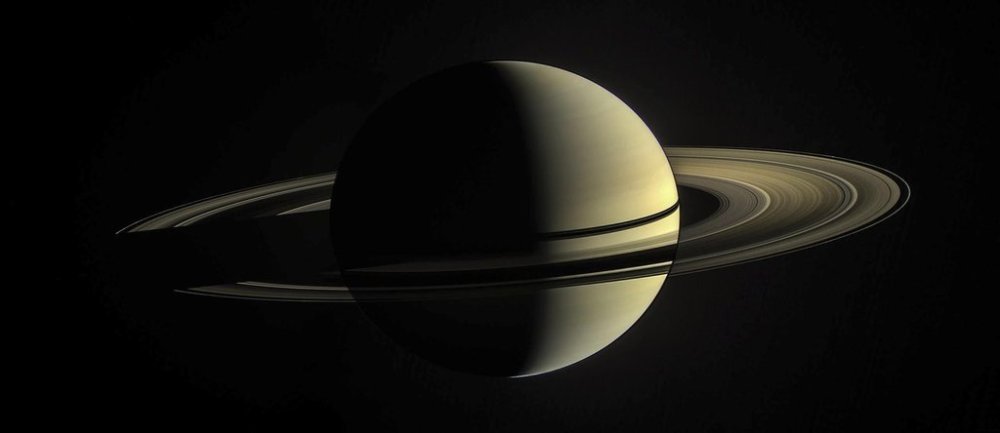
This Jan. 2, 2010 image made available by NASA shows the planet Saturn, as seen from the Cassini spacecraft. THE CANADIAN PRESS/NASA/JPL-Caltech/Space Science Institute via AP

The findings, ratified on Tuesday by the International Astronomical Union, come after a decades-long battle to confirm which of the two biggest planets in the solar system have the most moons.

UBC astronomy professor Brett Gladman, a co-author of a forthcoming paper on the discovery, said it was a “firm result” that Saturn had the most moons.

The new discoveries are only a few kilometres in size, with the smallest ones only two kilometres wide.

Gladman said it’s likely they are “remnants” of collisions between larger moons or with passing comets that happened recently in cosmic terms, in the past 100 million years or so. 

“The fact that the small moons are still there in enormous abundance tells us the collision couldn’t have happened billions of years ago. It must be relatively recent or we wouldn’t see the huge abundance of small moons,” said Gladman.

He said if the collisions occurred more than 100 million years ago, then the smaller moons would have ended up being “depleted.”

He said a group of the newly discovered moons is located near the so-called Mundilfari subgroup, leading them to suspect that a “catastrophic collision” broke up a now-destroyed moon, leaving behind Mundilfari as the biggest fragment and a large number of the smaller moons on similar orbits.

The discovery of the new moons was made with the Canada France Hawaii Telescope, a 3.6-metre optical telescope on the summit of the dormant volcano Mauna Kea in Hawaii.

The team had previously used the telescope to discover 62 more Saturnian moons, a discovery ratified in 2023 that vaulted the planet past Jupiter’s moon tally. 

Ashton said that given the understanding there were likely even more moons waiting to be discovered, they revisited the same sky fields from September to November in 2023. These efforts paid off. 

Gladman called the latest discovery a culmination of six years of work, as the team pushed technical limits to seek “fainter and smaller moons” around Saturn.

He said they used a “shift and stack” technique, allowing them to add multiple images together to enhance faint signals along known orbital paths.

“It requires a lot of patience, but we’re very pleased that the carefully planned campaign has yielded a lot of success,” said Gladman. 

The newly discovered moons of Saturn are classified as “irregular moons,” referring to objects orbiting giant planets on inclined, highly elliptical and retrograde orbits.

“All of these moons we discovered are in the distant reaches of the bubble of space around Saturn, in which moons can orbit,” said Gladman.

The team led by Ashton and Gladman also included Mike Alexandersen of the Harvard Smithsonian Centre for Astrophysics and Jean-Marc Petit of the Observatoire de Besancon.

Could there be more moons out there? Gladman said current technology had been taken as far as possible in the search around Saturn and Jupiter.

He said the new moons are not yet ready to be named, a process that first involves verification of their orbits with the International Astronomical Union.

This report by The Canadian Press was first published March 12, 2025. 

Report Error Submit a Tip

More Stories

Beware invasive, ‘frightening’ waterhemp

Laura Rance-Unger 4 minute read Preview

Beware invasive, ‘frightening’ waterhemp

Laura Rance-Unger 4 minute read 2:01 AM CDT

There’s a threat lurking on the edge of Manitoba farmers’ fields this fall that’s even scarier than the escalating trade war with their biggest customer.

Provincial extension advisers are warning farmers to watch for a weed known as “tall waterhemp,” which, true to its name, may already be towering above ready-to-harvest crops.

Those wispy tentacles waving in the breeze look pretty innocuous from a distance. But this highly invasive member of the pigweed family produces hundreds of thousands of seeds that are just itching for dispersal through farmers’ combines and across their fields.

Each of those tiny seeds — one small pill container filled halfway holds 44,000 — can produce plants with stems the width of saplings and heights of two to five metres. One or two plants can quickly turn into a patch. If waterhemp takes over a field, it can choke out the growing crop and cut yields by more than 90 per cent.

Read
2:01 AM CDT

Winnipeg man among those missing in Nepal flash flood

Free Press staff 2 minute read Preview

Winnipeg man among those missing in Nepal flash flood

Free Press staff 2 minute read 10:06 AM CDT

A Winnipeg man on a pilgrimage in Nepal is among nearly 2,000 people missing after a deadly flash flood devastated a popular tourist region along the Himalayan border earlier this week.

Mohit Kaushik, 49, was travelling with a tour group taking part in the Kailash Manasarovar Yatra, a sacred, days-long pilgrimage to Mount Kailash and Lake Manasarovar in neighbouring Tibet, according to social media posts.

“Our friend and neighbour, Mohit Kaushik, a resident of Winnipeg, Canada, has been out of contact since yesterday while travelling from Timure during his pilgrimage to Kailash Mansarovar,” Swikriti Pokhrel wrote in a social media post. “If you have seen him or find his name on any hospital list, please let us know. Thank you.”

Kaushik has not been heard from since Wednesday, when a glacier collapse in the nearby Himalayas triggered catastrophic flooding and landslides, sending a torrent of ice, rock and debris roughly 100 kilometres downstream.

Read
10:06 AM CDT

Five exceptional Manitobans reflect on what it means to be Canadian while bracing against Trump’s vitriol and economic upheaval

Aaron Epp 11 minute read Preview

Five exceptional Manitobans reflect on what it means to be Canadian while bracing against Trump’s vitriol and economic upheaval

Aaron Epp 11 minute read Yesterday at 1:35 PM CDT

Canadians have been trying to make sense of a new reality since Canada-United States trade talks broke down on Aug. 21.

The following day, President Donald Trump’s administration imposed 50 per cent tariffs on US$20 billion worth of Canadian exports to the U.S.

The federal government responded in kind a few days later, rolling out tariffs on $27.6 billion worth of imports from the U.S.

The Free Press contacted five Manitobans who have been appointed to the Order of Canada and asked them for their thoughts on the status of Canada-U.S. relations and what is means to be a Canadian today. Their responses have been edited for length and clarity.

Read
Yesterday at 1:35 PM CDT

Puzzles Palace

1 minute read Monday, Jul. 27, 2026

To solve our puzzles, please subscribe with this special offer: |

Nightclub owner, divorced dad sentenced for involvement in cocaine-trafficking case

Erik Pindera 5 minute read Preview

Nightclub owner, divorced dad sentenced for involvement in cocaine-trafficking case

Erik Pindera 5 minute read 7:00 AM CDT

Three people, including a Winnipeg nightclub owner and a divorced dad desperate for cash, have been sentenced in a cocaine-trafficking case city police were once concerned had been compromised by a corrupt cop.

The trio was charged in early 2024 as part of Project Roasted, a lengthy investigation into a drug trafficking network by the Winnipeg Police Service organized crime unit.

Investigators arrested two of the men, Mohamed Ali and Abdullah Khan, as they left the Stella’s on Pembina Highway in early February 2024. Two kilograms of cocaine was found in Khan’s car.

On the same day, Ahmed Dini was arrested at his River Avenue suite, where investigators found more than 200 rocks of crack cocaine.

Read
7:00 AM CDT

NDP trying to solve health-care problems from every angle — except the one likely to have the biggest impact

Tom Brodbeck 5 minute read Preview

NDP trying to solve health-care problems from every angle — except the one likely to have the biggest impact

Tom Brodbeck 5 minute read Yesterday at 12:46 PM CDT

Winnipeg’s emergency-room wait times hit a record high in July, according to the latest data released Thursday by the Winnipeg Regional Health Authority.

The 90th-percentile wait for all emergency rooms and urgent-care sites hit a staggering 13.02 hours last month, the longest wait ever recorded since the WRHA began publishing monthly data.

Thirteen hours is not a wait, it’s an endurance test. And it’s getting worse.

The 90th percentile is the point at which nine out of 10 patients experienced a shorter wait and one in 10 waited even longer.

Read
Yesterday at 12:46 PM CDT