AI is turbocharging organized crime, EU police agency warns

Advertisement

Advertise with us

THE HAGUE, Netherlands (AP) — The European Union's law enforcement agency cautioned Tuesday that artificial intelligence is turbocharging organized crime that is eroding the foundations of societies across the 27-nation bloc as it becomes intertwined with state-sponsored destabilization campaigns.

Read this article for free:


or

Already have an account? Log in here »

To continue reading, please subscribe:

Subscribe and receive a limited-edition Free Press branded hat or tote.

Digital Subscription

One year of digital access for only $205*

  • Enjoy unlimited reading on winnipegfreepress.com
  • Read the E-Edition, our digital replica newspaper
  • Access News Break, our award-winning app
  • Play interactive puzzles

*First annual payment billed as $205.00 + GST for one year. This annual subscription will automatically renew at $233.00 + GST every 52 weeks (10% off the regular annual price of $259.35). Offer available to new and qualified returning subscribers only. Cancel any time.

To continue reading, please subscribe:

Add Free Press access to your Brandon Sun subscription for only an additional

$1 for the first 4 weeks*

  • Enjoy unlimited reading on winnipegfreepress.com
  • Read the E-Edition, our digital replica newspaper
  • Access News Break, our award-winning app
  • Play interactive puzzles
Start now

*Your next Brandon Sun subscription payment will increase by $1.00 and you will be charged $17.95 plus GST for four weeks. After four weeks, your payment will increase to $24.95 plus GST every four weeks.

Hey there, time traveller!
This article was published 18/03/2025 (566 days ago), so information in it may no longer be current.

THE HAGUE, Netherlands (AP) — The European Union’s law enforcement agency cautioned Tuesday that artificial intelligence is turbocharging organized crime that is eroding the foundations of societies across the 27-nation bloc as it becomes intertwined with state-sponsored destabilization campaigns.

The grim warning came at the launch of the latest edition of a report on organized crime published every four years by Europol that is compiled using data from police across the EU and will help shape law enforcement policy in the bloc in coming years.

“Cybercrime is evolving into a digital arms race targeting governments, businesses and individuals. AI-driven attacks are becoming more precise and devastating,” said Europol’s Executive Director Catherine De Bolle.
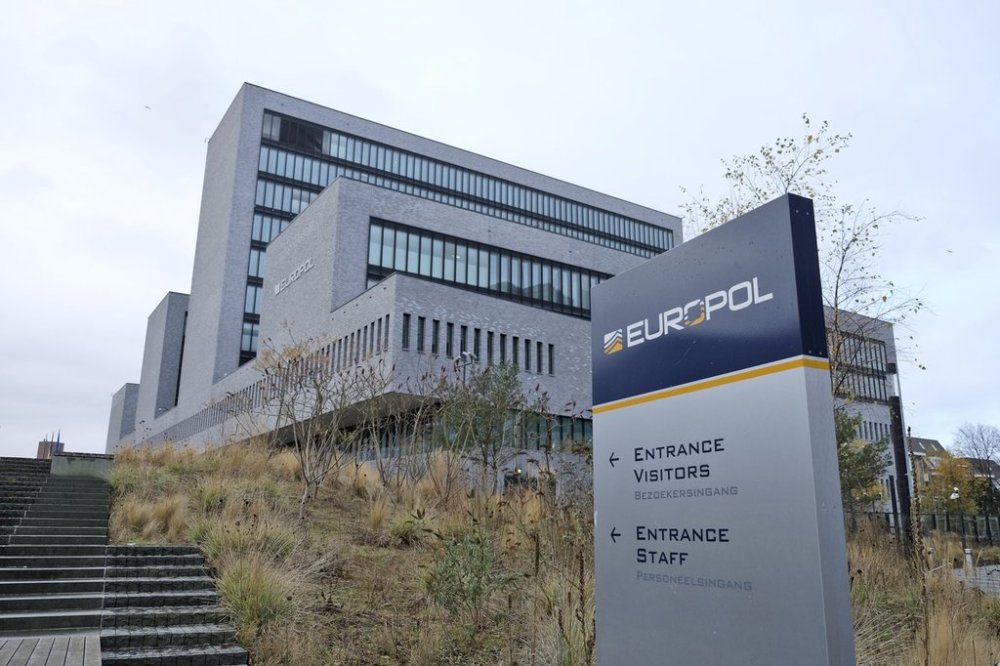
FILE - The exterior view of the European police agency Europol headquarters in The Hague, Netherlands, Friday, Dec. 2, 2016. (AP Photo/Mike Corder, File)

“Some attacks show a combination of motives of profit and destabilization, as they are increasingly state-aligned and ideologically motivated,” she added.

The report, the EU Serious and Organized Crime Threat Assessment 2025, said offenses ranging from drug trafficking to people smuggling, money laundering, cyber attacks and online scams undermine society and the rule of law “by generating illicit proceeds, spreading violence, and normalizing corruption.”

The volume of child sexual abuse material available online has increased significantly because of AI, which makes it more difficult to analyze imagery and identify offenders, the report said.

“By creating highly realistic synthetic media, criminals are able to deceive victims, impersonate individuals and discredit or blackmail targets. The addition of AI-powered voice cloning and live video deepfakes amplifies the threat, enabling new forms of fraud, extortion, and identity theft,” it said.

States seeking geopolitical advantage are also using criminals as contractors, the report said, citing cyber-attacks against critical infrastructure and public institutions “originating from Russia and countries in its sphere of influence.”

“Hybrid and traditional cybercrime actors will increasingly be intertwined, with state-sponsored actors masking themselves as cybercriminals to conceal their origin and real disruption motives,” it said.

Polish Interior Ministry Undersecretary of State Maciej Duszczyk cited a recent cyberattack on a hospital as the latest example in his country.

“Unfortunately this hospital has to stop its activity for the hours because it was lost to a serious cyber-attack,” boosted by AI, he said.

AI and other technologies “are a catalyst for crime, and drive criminal operations’ efficiency by amplifying their speed, reach, and sophistication,” the report said.

As the European Commission prepares to launch a new internal security policy, De Bolle said that nations in Europe need to tackle the threats urgently.

“We must embed security into everything we do,” said European Commissioner for Internal Affairs and Migration Magnus Brunner. He added that the EU aims to provide enough funds in coming years to double Europol’s staff.

Report Error Submit a Tip

More Stories

Province looks to seize notorious drug den

Erik Pindera 5 minute read Preview

Province looks to seize notorious drug den

Erik Pindera 5 minute read Saturday, Oct. 3, 2026

Provincial justice officials are trying to seize a Dominion Street drug den that has been the source of trouble in the West End for years.

The owner of 982 Dominion St., 45-year-old Robert Edward Johnson, was most recently arrested in June along with several others after a lengthy Winnipeg Police investigation into thefts and illicit drug sales connected to the house.

“The residence has a reputation within the neighbourhood as being a location where individuals habitually attend for the purpose of purchasing and/or consuming controlled substances,” reads a statement of claim filed by the province’s director of civil forfeiture in the Court of King’s Bench last week.

“For several years, the residence has been associated with criminal activity, violence, and disorder, resulting in numerous police attendances and complaints from members of the surrounding community.”

Read
Saturday, Oct. 3, 2026

Three could prove an awkward crowd

Maureen Scurfield 4 minute read 2:00 AM CDT

DEAR MISS LONELYHEARTS: My girlfriend and I — two women in our late 20s — are finally getting married.

Previously, we were both living with guys and it didn’t ever work for us. She thinks marriage itself was not her problem, but that guys are basically not suited to “loving” in the special ways two women can love.

So, here I am getting ready to give marriage another go — but with her! She’s a woman who’s a wonderful chef, decorator and a mother of two from her previous marriage. The problem we have as partners? I don’t care for the domestic arts myself — but I’d still like to have a child of my own.

That brings up another issue. I also have a male friend who’d be happy to get me pregnant — an old pal of mine who is a bachelor and would like to be a father and continue being platonic friends with me. He’d also help support the child financially.

Board game company charts winning path

Aaron Epp 5 minute read Preview

Board game company charts winning path

Aaron Epp 5 minute read Friday, Oct. 2, 2026

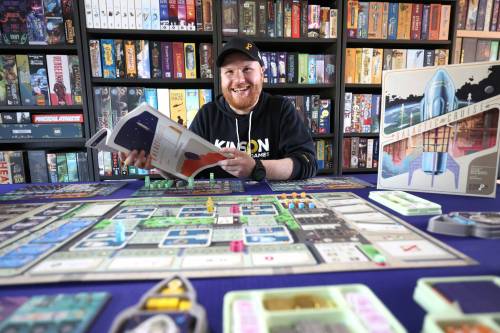
Dennis Northcott has launched a game without frontiers.

The Winnipeg entrepreneur is the co-designer of Galactic Cruise, a board game published last year by Kinson Key Games LLC, the business he co-founded. Since its release, Galactic Cruise has been translated into 11 languages and sold around 50,000 copies worldwide.

It’s also one of three finalists for this year’s Deutsche Spiele Preis, a prestigious community-voted board game award. Northcott will travel to Essen, Germany, later this month, where the winner will be announced at Spiel Essen, an annual board game trade fair.

“It’s been amazing,” Northcott said of the response to Galactic Cruise during an interview in his Island Lakes neighbourhood home earlier this week. “The sales have been great, but it’s also been amazing in terms of people giving their reviews.”

Read
Friday, Oct. 2, 2026

The freedom to create can be a balm for the soul

Deborah Schnitzer 5 minute read 2:01 AM CDT

My mother-in-law, Malka, came to Toronto in 1958 from postwar Poland. She came with unbearable losses authored by the Third Reich fascist fantasies that had destroyed her world.

She suffered the murder of her husband and second child, a newborn. She endured a hatred of her very being that defies reason and reckoning, yet she came, nonetheless, with profound wits about her and a courage groomed by the black market in Siberia where she somehow kept her first-born toddler alive by placing her in an unlit closet where the child would be safe while Malka bartered for food.

After the war, she married a survivor whose wife and children and been exterminated. Together, they had a son; I married that son, his story and the longest hatred it embodied.

Even given the profound and forbidding ugliness of the world Malka fled, she somehow created, in her third act, a single piece of art she found beautiful.

Six high school hockey programs ceased operations following new Hockey Manitoba policy

Joshua Frey-Sam 7 minute read Preview

Six high school hockey programs ceased operations following new Hockey Manitoba policy

Joshua Frey-Sam 7 minute read Friday, Oct. 2, 2026

She lived the best of both worlds.

For the last three years, the 17-year-old wore a sweater for two different hockey programs — her high school team and AAA club in the Manitoba Female Hockey League — and was preparing to flourish in both colours again this winter.

Recently, however, the blue-liner was disappointed to learn she is no longer eligible to play her Grade 12 season with her school owing to a new policy imposed by Hockey Manitoba that bans players from participating in the Manitoba Women’s High School Hockey League if they are rostered on a U18 AAA team.

The rule applies to all athletes who play for both Winnipeg-based and rural AAA teams.

Read
Friday, Oct. 2, 2026

Wasteful operations should be held accountable

Barry E. Prentice 5 minute read Preview

Wasteful operations should be held accountable

Barry E. Prentice 5 minute read 2:00 AM CDT

Rising water bills are a top-of-mind issue for residents of Winnipeg going into the fall election. Management of the water and waste system is under question, with citizen’s groups, as well as the Free Press, calling for proper oversight of rates (Time for the PUB to review Winnipeg water rates, Editorial, Sept. 26).

The need to increase rates to build the North End sewage plant is understandable. Siphoning off utility proceeds to make up other tax revenue shortfalls is another matter. But it is not the only questionable practice. If there was Public Utilities Board oversight of Winnipeg’s water and sewer rates, it would certainly be asking why the city is spending more than $3 million annually to operate the 164-kilometre-long, Greater Winnipeg Water District railway (GWWD) on ratepayers’ behalf.

The GWWD has come to the attention of the Railway Relocation Study, led by Lloyd Axworthy. All existing rail lines within the city are under review, as is the feasibility of a new railway bypass.

The GWWD is an example of a railway that has outlived its usefulness and sits on a pocket of land close to downtown that could be converted to higher-value uses.

Read
2:00 AM CDT