Dow wants to power its Texas manufacturing complex with new nuclear reactors instead of natural gas

Advertisement

Advertise with us

Dow, a major producer of chemicals and plastics, wants to use next-generation nuclear reactors for clean power and steam at a Texas manufacturing complex instead of natural gas.

Read this article for free:


or

Already have an account? Log in here »

To continue reading, please subscribe:

Subscribe and receive a limited-edition Free Press branded hat or tote.

Digital Subscription

One year of digital access for only $205*

  • Enjoy unlimited reading on winnipegfreepress.com
  • Read the E-Edition, our digital replica newspaper
  • Access News Break, our award-winning app
  • Play interactive puzzles

*First annual payment billed as $205.00 + GST for one year. This annual subscription will automatically renew at $233.00 + GST every 52 weeks (10% off the regular annual price of $259.35). Offer available to new and qualified returning subscribers only. Cancel any time.

To continue reading, please subscribe:

Add Free Press access to your Brandon Sun subscription for only an additional

$1 for the first 4 weeks*

  • Enjoy unlimited reading on winnipegfreepress.com
  • Read the E-Edition, our digital replica newspaper
  • Access News Break, our award-winning app
  • Play interactive puzzles
Start now

*Your next Brandon Sun subscription payment will increase by $1.00 and you will be charged $17.95 plus GST for four weeks. After four weeks, your payment will increase to $24.95 plus GST every four weeks.

Hey there, time traveller!
This article was published 31/03/2025 (527 days ago), so information in it may no longer be current.

Dow, a major producer of chemicals and plastics, wants to use next-generation nuclear reactors for clean power and steam at a Texas manufacturing complex instead of natural gas.

Dow’s subsidiary, Long Mott Energy, applied Monday to the U.S. Nuclear Regulatory Commission for a construction permit. It said the project with X-energy, an advanced nuclear reactor and fuel company, would nearly eliminate the emissions associated with power and steam generation at its plant in Seadrift, Texas, avoiding roughly 500,000 metric tons of planet-warming greenhouse gas emissions annually.

If built and operated as planned, it would be the first U.S. commercial advanced nuclear power plant for an industrial site, according to the NRC.

FILE - A Dow sign is shown in Midland, Mich., Aug. 2, 2019. (AP Photo/Paul Sancya, File)

For many, nuclear power is emerging as an answer to meet a soaring demand for electricity nationwide, driven by the expansion of data centers and artificial intelligence, manufacturing and electrification, and to stave off the worst effects of a warming planet. However, there are safety and security concerns, the Union of Concerned Scientists cautions. The question of how to store hazardous nuclear waste in the U.S. is unresolved, too.

Dow wants four of X-energy’s advanced small modular reactors, the Xe-100. Combined, those could supply up to 320 megawatts of electricity or 800 megawatts of thermal power. X-energy CEO J. Clay Sell said the project would demonstrate how new nuclear technology can meet the massive growth in electricity demand.

The Seadrift manufacturing complex, at about 4,700 acres, has eight production plants owned by Dow and one owned by Braskem. There, Dow makes plastics for a variety of uses including food and beverage packaging and wire and cable insulation, as well as glycols for antifreeze, polyester fabrics and bottles, and oxide derivatives for health and beauty products.

Edward Stones, the business vice president of energy and climate at Dow, said submitting the permit application is an important next step in expanding access to safe, clean, reliable, cost-competitive nuclear energy in the United States. The project is supported by the Department of Energy’s Advanced Reactor Demonstration Program.

The NRC expects the review to take three years or less. If a permit is issued, construction could begin at the end of this decade so the reactors would be ready early in the 2030s, as the natural gas-fired equipment is retired.

A total of four applicants have asked the NRC for construction permits for advanced nuclear reactors. The NRC issued a permit to Abilene Christian University for a research reactor and to Kairos Power for one reactor and two reactor test versions of that company’s design. It’s reviewing an application by Bill Gates and his energy company, TerraPower, to build an advanced reactor in Wyoming.

X-energy is also collaborating with Amazon to bring more than 5 gigawatts of new nuclear power projects online across the United States by 2039, beginning in Washington state. Amazon and other tech giants have committed to using renewable energy to meet the surging demand from data centers and artificial intelligence and address climate change.

___

The Associated Press’ climate and environmental coverage receives financial support from multiple private foundations. AP is solely responsible for all content. Find AP’s standards for working with philanthropies, a list of supporters and funded coverage areas at AP.org.

Report Error Submit a Tip

More Stories

Double climate whammy hits home

Editorial 4 minute read Preview

Double climate whammy hits home

Editorial 4 minute read 2:00 AM CDT

It’s a bit of a one-two punch. First, the show-and-tell of what global warming could be bringing us. Then, the fact we’ve already failed our best chance of halting climate change.

Read
2:00 AM CDT

Senior assaulted at bus stop

1 minute read Yesterday at 12:47 PM CDT

An 18-year-old man has been charged after a 67-year-old woman was randomly attacked at a bus stop on Portage Avenue last month.

The senior was sitting on a bench at a bus stop at Portage and Craig Street on Aug. 10 when a man lay down beside her, the Winnipeg Police Service said in a news release Tuesday.

The woman was “minding her own business” when the man began to kick and punch her, police said. The suspect followed her onto a city bus, but was kicked off shortly after for causing a disturbance.

The victim sustained injuries to her upper body but did not require medical attention.

Forgo faceoff and augment wife’s self-esteem

Maureen Scurfield 5 minute read 2:00 AM CDT

DEAR MISS LONELYHEARTS: I’m married to a woman who’s older than I am, and it’s the second marriages for both of us. She’s beautiful, even after having what she calls “a few nips and tucks.”

Seriously, it was more than a few.

Her former husband insisted she had to appear a lot younger than him — so ridiculous!

I’ve never seen even one picture of her when she was not wrinkle-free.

Winkler-based internet provider delivering high-speed service to 30 rural and First Nations Manitoba communities

Nicole Buffie 3 minute read Preview

Winkler-based internet provider delivering high-speed service to 30 rural and First Nations Manitoba communities

Nicole Buffie 3 minute read Yesterday at 7:12 PM CDT

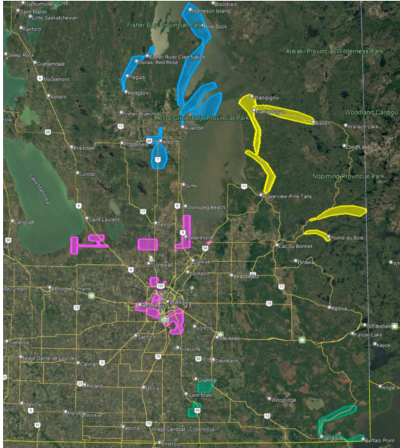
Valley Fiber says it is undertaking one of its largest fibre optic projects and is building infrastructure that will deliver internet to 10,000 homes and businesses in rural and First Nations communities across Manitoba.

“These communities will now have access to the fastest internet network in Manitoba, and it will power their lives and their business,” Ryan Klassen, chief executive officer of the Winkler-based internet provider, said Tuesday from Fisher River Cree Nation.

The province has granted Valley Fiber use of two of its underused cables on the existing Manitoba Hydro fibre optic network for up to 20 years as part of the project, which will connect nearly 30 communities — including Buffalo Point, Hollow Water, Black River and Peguis First Nations, along with Fisher River and Fox Lake Cree Nations — to high-speed internet.

Construction should be finished by 2027.

Read
Yesterday at 7:12 PM CDT

‘Dynacare sucks:’ premier muses about bringing lab services back into public system after strike halted

Free Press staff 4 minute read Preview

‘Dynacare sucks:’ premier muses about bringing lab services back into public system after strike halted

Free Press staff 4 minute read Updated: 11:49 AM CDT

Manitoba’s premier said the province is looking at bringing diagnostic lab services back into the public system rather than continuing to contract Dynacare, declaring the for-profit company “sucks.”

“Maybe we’ll take over the whole system… we’re working on it, we’re looking at it, the situation is not great, this company’s making a mess — I think it’s pretty clear I’m not happy with them,” Premier Wab Kinew told CBC Radio Wednesday morning. “At the same time, nobody should be trying to use people’s health care as leverage.”

Kinew made the comments the day after the Manitoba Labour Board cut short a strike by 350 lab technicians and technologists employed by Dynacare, which administers blood, urine and other medical tests for patients in Winnipeg, Brandon and surrounding communities.

Dynacare, which is contracted by the provincial government, performs the majority of non-emergency blood and urine tests in the province.

Read
Updated: 11:49 AM CDT

Climate: ‘No good outcomes’

Gwynne Dyer 5 minute read 2:00 AM CDT

‘EL NIÑO is being supersized before our eyes,’ United Nations Secretary-General António Guterres said last week.

“The science leaves no room for doubt: the planet is in uncharted waters, and those waters are heating up. The world is in the danger zone of extreme weather.”

He’s right — we are in even deeper trouble than we thought on the climate front.

Zeke Hausfather, a leading American climate scientist, warns that 2027 is almost certain to be the hottest year. It will be, he said, “a climate time-machine, temporarily driving global average temperatures to levels not normally expected until the late 2030s.” (Note the “temporarily.” We’ll get back to that.)