Creating and sharing deceptive AI-generated media is now a crime in New Jersey

Advertisement

Advertise with us

NEWARK, N.J. (AP) — Creating and sharing deceptive media made with artificial intelligence is now a crime in New Jersey and open to lawsuits under a new state law.

Read this article for free:


or

Already have an account? Log in here »

To continue reading, please subscribe:

Subscribe and receive a limited-edition Free Press branded hat or tote.

Digital Subscription

One year of digital access for only $205*

  • Enjoy unlimited reading on winnipegfreepress.com
  • Read the E-Edition, our digital replica newspaper
  • Access News Break, our award-winning app
  • Play interactive puzzles

*First annual payment billed as $205.00 + GST for one year. This annual subscription will automatically renew at $233.00 + GST every 52 weeks (10% off the regular annual price of $259.35). Offer available to new and qualified returning subscribers only. Cancel any time.

To continue reading, please subscribe:

Add Free Press access to your Brandon Sun subscription for only an additional

$1 for the first 4 weeks*

  • Enjoy unlimited reading on winnipegfreepress.com
  • Read the E-Edition, our digital replica newspaper
  • Access News Break, our award-winning app
  • Play interactive puzzles
Start now

*Your next Brandon Sun subscription payment will increase by $1.00 and you will be charged $17.95 plus GST for four weeks. After four weeks, your payment will increase to $24.95 plus GST every four weeks.

Hey there, time traveller!
This article was published 03/04/2025 (517 days ago), so information in it may no longer be current.

NEWARK, N.J. (AP) — Creating and sharing deceptive media made with artificial intelligence is now a crime in New Jersey and open to lawsuits under a new state law.

Democratic Gov. Phil Murphy signed legislation Wednesday making the creation and dissemination of so-called deceptive deepfake media a crime punishable by up to five years in prison, and establishing a basis for lawsuits against perpetrators.

New Jersey joins a growing list of states enacting measures taking aim at media created using generative AI. At least 20 states have passed similar legislation that targets such media involving elections.
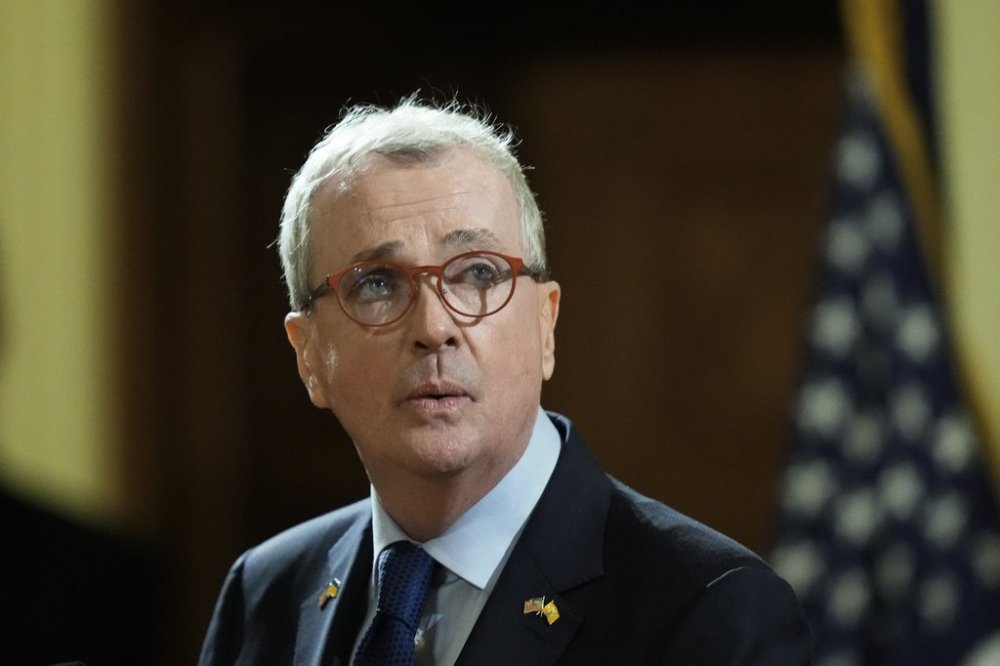
FILE - New Jersey Gov. Phil Murphy delivers his State of the State address to a joint session of the Legislature at the statehouse, in Trenton, N.J., Jan. 9, 2024. (AP Photo/Matt Rourke, File)

As of last year, governors in more than a dozen states had signed laws cracking down on digitally created or altered child sexual abuse imagery, according to a review by The National Center for Missing & Exploited Children.

New Jersey’s law stems in part from the story of Westfield High School student Francesca Mani, who stood alongside the governor as he signed the bill this week. Mani said she became the victim of a deepfake video two years ago and was told that the only punishment for the person who created it was a short suspension because there were no laws against such media.

“Doing nothing is no longer an option,” said Mani, who pushed for the legislation and was recognized by Time last year as an anti-deepfake activist.

The measure defines a deepfake as any video or audio recording or image that appears to a reasonable person to realistically depict someone doing something they did not actually do.

In addition to prison time upon conviction, the law establishes civil penalties that would permit victims to pursue lawsuits.

Report Error Submit a Tip

More Stories

Reimagining education in Manitoba

Jim Silver 4 minute read 2:00 AM CDT

There has been much talk lately about how Manitoba can strengthen its economy and improve its general well-being. Adding a third component to our education system, one that would be equal in funding and recognition to K-12 and post-secondary education, would do just that.

That third component, adult basic education, already exists, but with inadequate funding and little recognition.

Adult basic education includes adult learning centres that offer mature high school diplomas to those who have not previously completed high school, and adult literacy programs that bring adults up to high school entry level.

Adult basic education works well. Since 2003, some 25,000 Manitobans have earned their mature high school diplomas. Enough graduates move off employment and income assistance, saving the provincial government money, and into full-time employment, increasing the government’s tax revenue, so that over a 10-year period the government makes more than it spends on adult basic education. The system pays for itself.

In the footsteps of a refugee

Josiah Neufeld 6 minute read Preview

In the footsteps of a refugee

Josiah Neufeld 6 minute read 6:00 AM CDT

I used to have a meaningful job, a loving family and a strong community. All that changed overnight.

There was a regime change.

I lost my job and found myself targeted by the new military government. One day I came home to find my father and brother had been beaten by police for refusing to reveal my whereabouts.

I used all my cash to pay a taxi driver to smuggle me over a border into the neighbouring country.

Read
6:00 AM CDT

Renewed spirit and life: Indigenous treatment centre expands with $21-M revamp

Scott Billeck 5 minute read Preview

Renewed spirit and life: Indigenous treatment centre expands with $21-M revamp

Scott Billeck 5 minute read Yesterday at 3:44 PM CDT

Don Robinson knows first-hand that many people don’t get sober by themselves.

In late June 1984, Robinson downed his last drink. His recovery began at Pritchard House in Winnipeg’s North End, a 22-bed treatment facility run by the Native Addictions Council of Manitoba.

“I didn’t get sober by myself,” said Robinson, a member of Bunibonibee Cree Nation who now works in grief and trauma counselling and traditional knowledge as an elder at Ka Ni Kanichihk Inc.

More than four decades later, Robinson was back at the council on Monday, crowded into a room at its newly renovated treatment centre at 160 Salter St. — a place he once turned to for help and where he helps others now.

Read
Yesterday at 3:44 PM CDT

Rare and tough to notice, sarcomas may lurk in the body

Jen Zoratti 12 minute read Preview

Rare and tough to notice, sarcomas may lurk in the body

Jen Zoratti 12 minute read Monday, Aug. 31, 2026

Last summer, Michelle Finley was going about a normal day.

She had just dropped her car off at a garage and was walking back to her office building downtown when, suddenly, she was stopped in her tracks by a searing cramp on the bottom of her right foot.

“It was so painful it took my breath away,” says Finley, now 52. “I stopped and held on to the side of a building for a second — like, it was bringing tears to my eyes.”

Finley thought she had a really bad case of plantar fasciitis. Nine months later she would lose her foot to sarcoma.

Read
Monday, Aug. 31, 2026

At last, some good news on homelessness

Editorial 4 minute read Preview

At last, some good news on homelessness

Editorial 4 minute read Yesterday at 2:00 AM CDT

There is no shortage of reasons to be frustrated about homelessness in Winnipeg. But the latest numbers provide something that has been increasingly difficult to find — evidence that at least some things are getting better.

Read
Yesterday at 2:00 AM CDT

Filtering the worst of our behaviour

Gwynne Dyer 5 minute read 2:00 AM CDT

On Sunday, Aug. 30, a Falcon Heavy rocket delivered the Nancy Grace Roman space telescope onto a direct transfer trajectory to its permanent home at the Lagrange Two Point (L2), 1.5-million km from Earth. In 100 days it will reach its station, power up, and start observing the universe.

Astronomers will use it to try to understand the nature of dark matter, which makes up most of the mass in the universe (but some say may not even exist).

It is expected to find up to 100,000 new exoplanets circling other stars, and may be able to spot ones even smaller than Mars. Current methods can only see much bigger ones.

It will test a new technology called a coronagraph, which may one day be able to detect life on some of those planets by analyzing the light reflected from them. It would be nice to have a better answer to scientist Enrico Fermi’s famous question: “Where is everybody?”