Meta CEO Zuckerberg considered spinning off Instagram in 2018 over antitrust worries, email says
Advertisement
Read this article for free:
or
Already have an account? Log in here »
To continue reading, please subscribe:

Digital Subscription
One year of digital access for only $205*
- Enjoy unlimited reading on winnipegfreepress.com
- Read the E-Edition, our digital replica newspaper
- Access News Break, our award-winning app
- Play interactive puzzles
*First annual payment billed as $205.00 + GST for one year. This annual subscription will automatically renew at $233.00 + GST every 52 weeks (10% off the regular annual price of $259.35). Offer available to new and qualified returning subscribers only. Cancel any time.
To continue reading, please subscribe:
Add Free Press access to your Brandon Sun subscription for only an additional
$1 for the first 4 weeks*
- Enjoy unlimited reading on winnipegfreepress.com
- Read the E-Edition, our digital replica newspaper
- Access News Break, our award-winning app
- Play interactive puzzles
*Your next Brandon Sun subscription payment will increase by $1.00 and you will be charged $17.95 plus GST for four weeks. After four weeks, your payment will increase to $24.95 plus GST every four weeks.
Read unlimited articles for free today:
or
Already have an account? Log in here »
Hey there, time traveller!
This article was published 15/04/2025 (539 days ago), so information in it may no longer be current.
WASHINGTON (AP) — Meta CEO Mark Zuckerberg once considered separating Instagram from its parent company due to worries about antitrust litigation, according to an email shown Tuesday on the second day of an antitrust trial alleging Meta illegally monopolized the social media market.
In the 2018 email, Zuckerberg wrote that he was beginning to wonder if “spinning Instagram out” would be the only way to accomplish important goals, as big-tech companies grow. He also noted “there is a non-trivial chance” Meta could be forced to spin out Instagram and perhaps WhatsApp in five to 10 years anyway.
He wrote that while most companies resist breakups, “the corporate history is that most companies actually perform better after they’ve been split up.”
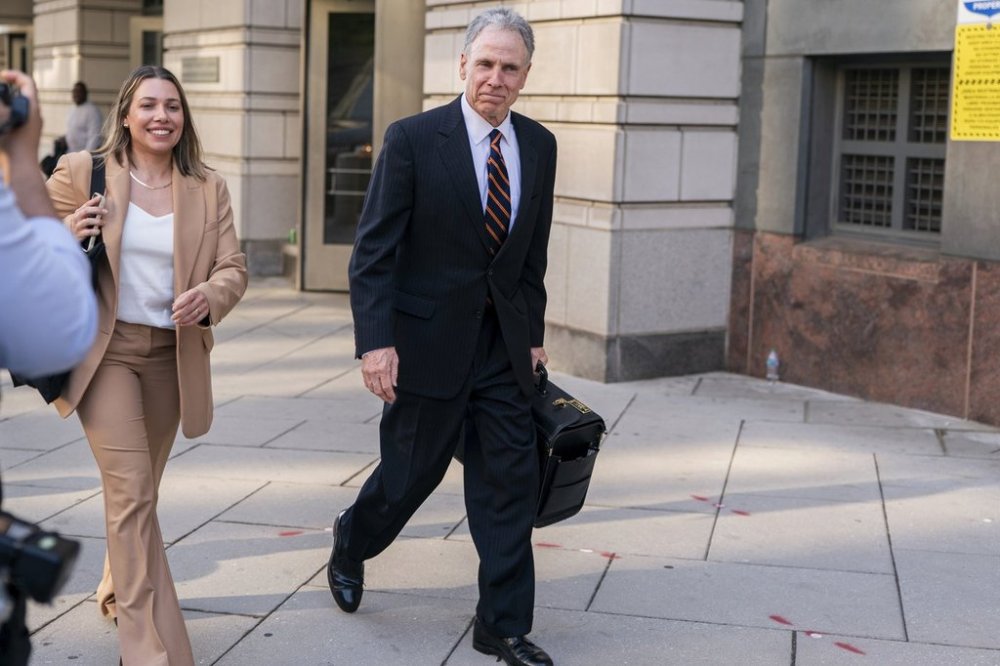
Asked Tuesday by attorney Daniel Matheson, who is leading the antitrust case for the Federal Trade Commission, which incidence in corporate history he had in mind, Zuckerberg responded: “I’m not sure what I had in mind then.”
Zuckerberg, who was the first witness, testified for more than seven hours over two days in the trial that could force Meta to break off Instagram and WhatsApp, startups the tech giant bought more than a decade ago that have since grown into social media powerhouses.
While questioning Zuckerberg on Tuesday morning, Matheson noted that he had referred to Instagram as being a “rapidly growing, threatening, network.” The attorney also pointed out Zuckerberg’s referring to trying to neutralize a competitor by buying the company.
But Zuckerberg said while Matheson was able to show documents in court that indicated his concern about Instagram’s growth, he also had many conversations about how excited his company was to acquire Instagram to make a better product.
Zuckerberg also said Facebook was in the process of building a camera app for sharing on mobile phones, and he thought Instagram was better at that, “so I wanted to buy them.”
Zuckerberg also pushed back against Matheson’s contention that the reason for buying the company was to neutralize a threat.
“I think that that mischaracterizes what the email was,” Zuckerberg said.
In his questioning of Zuckerberg, Matheson repeatedly brought up emails — many of them more than a decade old — written by Zuckerberg and his associates before and after the acquisition of Instagram.
While acknowledging the documents, Zuckerberg has often sought to downplay the contents, saying he wrote them in the early stages of considering the acquisition and that what he wrote at the time didn’t capture the full scope of his interest in the company.
Matheson also brought up a February 2012 message in which Zuckerberg wrote to the former chief financial officer of Facebook that Instagram and Path, a social networking app, already had created meaningful networks that could be “very disruptive to us.”
Zuckerberg testified that the message was written in the context of a broad discussion about whether they should buy companies to accelerate their own developments.
Zuckerberg also testified that buying the company, taking it off the market and building their own version of it was “a reasonable thing to do.”
Later Tuesday, Mark Hansen, an attorney for Meta, began his questioning of Zuckerberg. Hansen, in his opening statements Monday, emphasized that Meta’s services are free and that the company, far from holding a monopoly, actually has a lot of competition. He made a point of bringing up those issues in just over an hour of questioning Zuckerberg, with more expected to come Wednesday.
“It’s very competitive,” Zuckerberg said, noting that charging for using services like Facebook would likely drive users away, since similar services are widely available elsewhere.
The trial is one of the first big tests of President Donald Trump’s FTC’s ability to challenge Big Tech. The lawsuit was filed against Meta — then called Facebook — in 2020, during Trump’s first term. It claims the company bought Instagram and WhatsApp to squash competition and establish an illegal monopoly in the social media market.

Facebook bought Instagram — which was a photo-sharing app with no ads — for $1 billion in 2012.
Instagram was the first company Facebook bought and kept running as a separate app. Until then, Facebook was known for smaller “acqui-hires” — a popular Silicon Valley deal in which a company purchases a startup as a way to hire its talented workers, then shuts the acquired company down. Two years later, it did it again with the messaging app WhatsApp, which it purchased for $22 billion.
WhatsApp and Instagram helped Facebook move its business from desktop computers to mobile devices, and to remain popular with younger generations as rivals like Snapchat (which it also tried, but failed, to buy) and TikTok emerged.
However, the FTC has a narrow definition of Meta’s competitive market, excluding companies like TikTok, YouTube and Apple’s messaging service from being considered rivals to Instagram and WhatsApp.
U.S. District Judge James Boasberg is presiding over the case. Late last year, he denied Meta’s request for a summary judgment and ruled that the case must go to trial.