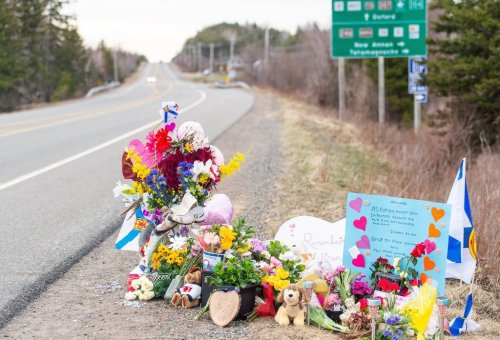
Gender-based violence spikes five years after Nova Scotia mass shooting
Advertisement
Read this article for free:
or
Already have an account? Log in here »
To continue reading, please subscribe:

Digital Subscription
One year of digital access for only $205*
- Enjoy unlimited reading on winnipegfreepress.com
- Read the E-Edition, our digital replica newspaper
- Access News Break, our award-winning app
- Play interactive puzzles
*First annual payment billed as $205.00 + GST for one year. This annual subscription will automatically renew at $233.00 + GST every 52 weeks (10% off the regular annual price of $259.35). Offer available to new and qualified returning subscribers only. Cancel any time.
To continue reading, please subscribe:
Add Free Press access to your Brandon Sun subscription for only an additional
$1 for the first 4 weeks*
- Enjoy unlimited reading on winnipegfreepress.com
- Read the E-Edition, our digital replica newspaper
- Access News Break, our award-winning app
- Play interactive puzzles
*Your next Brandon Sun subscription payment will increase by $1.00 and you will be charged $17.95 plus GST for four weeks. After four weeks, your payment will increase to $24.95 plus GST every four weeks.
Read unlimited articles for free today:
or
Already have an account? Log in here »
Hey there, time traveller!
This article was published 17/04/2025 (492 days ago), so information in it may no longer be current.
HALIFAX – The worst mass shooting in modern Canadian history began almost five years ago, shortly after a Nova Scotia man brutally assaulted his common-law wife.
Lisa Banfield was kicked, punched and choked by her partner of 19 years on the night of April 18, 2020. She was left with fractured ribs and vertebrae but managed to escape. Over the next 13 hours, Gabriel Wortman fatally shot 22 people in rural Nova Scotia before two Mounties shot him dead at a gas station north of Halifax.
In March 2023, an inquiry into the murders issued 130 recommendations aimed at preventing a similar tragedy, including more than a dozen that called on governments to do more to end “an epidemic” of gender-based violence. But as the anniversary of the killings approaches, people working in the field say not enough is being done to implement those recommendations.
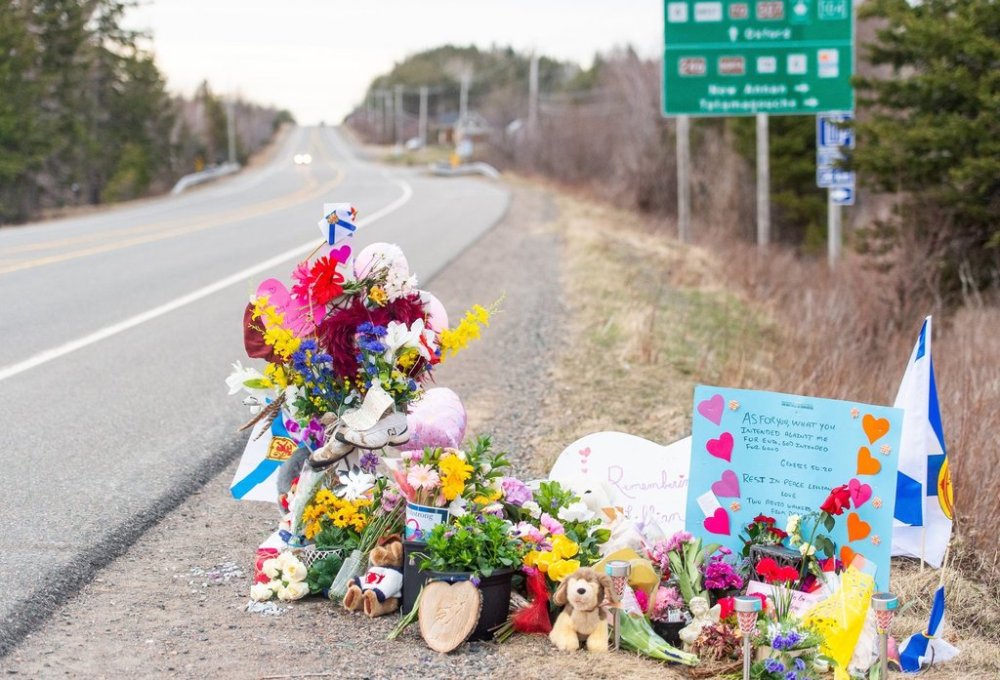
“There is still a lot of work to do,” said Kristina Fifield, a trauma therapist who works with survivors of intimate-partner violence and is a member of the committee monitoring how governments and the RCMP are responding to the inquiry’s recommendations.
Since the inquiry published its report, there has been more discussion of gender-based violence and governments have committed more money, she said. “But day-to-day, in our work with survivors, we’re continuing to hear about the violence, the injustices, the failures and the betrayals of the system … I would say not much has changed.”
In the past six months, police in Nova Scotia have reported a disturbing spike in the number of deaths resulting from intimate partner violence. Since Oct. 18, seven women in Nova Scotia have been murdered by their intimate partners, and the father of one victim was also killed.
Data from Nova Scotia RCMP, Halifax Regional Police and Cape Breton Regional Police show that the number of intimate-partner violence homicides in the province last year was three times the average in the nine preceding years.
“I am highly concerned about this spike, but not surprised,” Fifield said, adding that as a trauma therapist she’s seeing an increase in gender-based violence, including more instances of coercive control and injuries from strangulation and suffocation.
She said the high rates of violence should be sounding alarm bells across Canada, given the strong link researchers have found between intimate-partner violence and mass shootings. “We need to continue to remember that the root of this mass shooting was the perpetrator’s long history of gender-based violence and violence against others,” Fifield said.
A 2021 study of mass shootings in the United States between 2014 and 2019 found that 68 per cent of the perpetrators had either killed their partner or a family member as part of the mass shooting or they had a history of domestic violence.
Between 2011 and 2021, police across Canada reported 1,125 gender-related homicides of women and girls, two-thirds of which were committed by an intimate partner, Statistics Canada reported in 2023. The data also showed police-reported family violence and intimate-partner violence rose by 19 per cent from 2014 to 2022.
With those sobering figures in mind, the federal-provincial inquiry — formally known as the Mass Casualty Commission — recommended Ottawa appoint an independent gender-based violence commissioner. The inquiry said a commissioner could lead a co-ordinated, national approach to evaluating implementation of federal and provincial policies aimed at eliminating gender-based violence.
But two years later, no action has been taken on that key recommendation.
The Women’s Legal Education and Action Fund, known as LEAF, last year highlighted the need for a commissioner, noting that decades of reports and studies have proposed action, but the “unacceptable reality” of violence remains. “We need accountability to ensure that governments at all levels take the steps necessary to implement the changes that could end (gender-based violence) in Canada,” the group said in a report published in October.
Kat Owens, LEAF’s project director, was more blunt: “We know what we need to do. It’s a question of actually doing it,” she said referring to the need for a federal commissioner.
While the Liberal government under former prime minister Justin Trudeau was open to talking about appointing a commissioner, no commitment was made. “We’ve been pushing for the parties to include this commitment in their platforms leading up to the (April 28) election, but we haven’t seen it yet,” Owens said in an interview.
When each of the main political parties was recently asked if they would appoint a commissioner if elected, only the New Democrats under Jagmeet Singh offered a direct answer, saying the party supports the recommendation “to keep communities and women safe.”
The Conservatives, led by Pierre Poilievre, issued a statement saying a Tory government would deliver tougher sentences and stricter bail conditions for those convicted of intimate partner violence. The Liberals recently promised to automatically revoke gun licences for people convicted of violent offences, including intimate partner violence.
Owens said that given the opportunity to speak directly to Liberal Leader Mark Carney or Poilievre, she would tell them that intimate-partner violence remains deeply entrenched in Canada. “It’s pervasive and it isn’t going away,” she said. “But we can end it, and we know what we need to do to end it.”
The problem is that political discourse in Canada has been dominated by cost-of-living issues for several years, and U.S. President Donald Trump’s ongoing trade war has limited the range of discussion during the federal campaign, she said.
Another key recommendation from the inquiry calls for federal and provincial governments to provide “epidemic-level funding” for gender-based violence prevention and intervention.
Fifield said that although the Nova Scotia government has recently increased funding, no government is providing the kind of sustained funding that an epidemic demands. “This sector has been living in survival mode,” she said. “This project-based or grant-based funding is not working.”
At the provincial level, Nova Scotia has officially declared intimate-partner violence an epidemic and has made substantial financial commitments, with $228 million earmarked for programs supporting survivors of gender-based violence in the two most recent budgets.
Ann de Ste Croix, executive director of the Transition House Association of Nova Scotia, said the province’s recent decision to grant her organization $17.9 million over four years will allow its 11 facilities to focus on providing help to women and children experiencing violence without having to worry about fundraising.
“With this funding, it kind of stabilizes our operations so that we’re not strictly in survival mode,” said de Ste Croix, whose group provided help to 4,500 women and children in 2024. “We recognize that four years isn’t forever,” she added, expressing hope the funding will become permanent.
Fifield suggested that progress in implementing the inquiry’s recommendations on domestic violence may be hindered by the stubborn persistence of victim-blaming.
The daughter of a Nova Scotia woman who was killed by her husband in October said many people continue to question why her mother did not do more to get out of the abusive relationship before her murder.
“The main questions are: ‘Did your mom ever ask for help? Did she ever talk to anybody? Did she ever try to leave?’” Tara Graham said in an interview Monday. “I don’t take any insult from it. But responsibility keeps getting put on the victim” instead of the perpetrator, she said.
Graham’s mother, 59-year-old Brenda Tatlock-Burke, was shot and killed by her retired RCMP officer husband Mike Burke, 61, who then took his own life. The former Mountie’s coercive and controlling behaviour towards Tatlock-Burke escalated in the years leading up to the killing, Graham said, adding that her stepfather controlled her mother’s finances and relationships in order to keep her isolated.
“We can’t expect somebody in a position facing unbalanced power to have the ability to just stand up and leave,” Graham said, adding that she is urging all Canadians to speak up when they see signs of abuse in their loved ones’ relationships.
Her message echoes a finding of the Mass Casualty Commission, which reported that “victim-blaming” encountered by Banfield after the shootings has had a chilling effect on other survivors of gender-based violence.
Fifield said she regularly hears comments from people who continue to blame Banfield for the mass shooting, saying she should have done something to stop her murderous spouse. She said it reminds her “of just how far away we are, how society and people are continuing to cause a lot of harm by re-victimizing and further isolating survivors and victims.”
This report by The Canadian Press was first published April 17, 2025.