Canada in robot trucking vanguard, with one driverless semi already here
Advertisement
Read this article for free:
or
Already have an account? Log in here »
To continue reading, please subscribe:

Digital Subscription
One year of digital access for only $205*
- Enjoy unlimited reading on winnipegfreepress.com
- Read the E-Edition, our digital replica newspaper
- Access News Break, our award-winning app
- Play interactive puzzles
*First annual payment billed as $205.00 + GST for one year. This annual subscription will automatically renew at $233.00 + GST every 52 weeks (10% off the regular annual price of $259.35). Offer available to new and qualified returning subscribers only. Cancel any time.
To continue reading, please subscribe:
Add Free Press access to your Brandon Sun subscription for only an additional
$1 for the first 4 weeks*
- Enjoy unlimited reading on winnipegfreepress.com
- Read the E-Edition, our digital replica newspaper
- Access News Break, our award-winning app
- Play interactive puzzles
*Your next Brandon Sun subscription payment will increase by $1.00 and you will be charged $17.95 plus GST for four weeks. After four weeks, your payment will increase to $24.95 plus GST every four weeks.
Read unlimited articles for free today:
or
Already have an account? Log in here »
Hey there, time traveller!
This article was published 20/04/2025 (504 days ago), so information in it may no longer be current.
MONTREAL – If it’s daytime, odds are a lone box truck is cruising the streets between Toronto and Brampton, Ont., with no one behind the wheel.
Bristling with more than two dozen cameras, radars and “lidar” — a laser-based measurement of distance — the vehicle ferries groceries daily from an automated Loblaw Cos. Ltd. warehouse at a supermarket in Etobicoke to its headquarters 25 kilometres west of the city.
Sporting a purple logo, the truck is owned by Gatik Inc., an autonomous trucking firm based in California but with an office a 10-minute drive from the store.
“We’ve been laying down very deep Canadian roots for five, six years now,” said Rich Steiner, a spokesman for Gatik, which placed its first self-driving truck on a Canadian road for Loblaw in 2020.
Five of the company’s six Isuzu box trucks in Ontario haul goods from a Loblaw distribution facility to retailers on fixed routes in the Greater Toronto Area, all autonomously but with a safety driver on board.
Gatik is one of several companies vaulting Canada to the forefront of autonomous trucking, with self-steering haulers powered by domestic tech already on the road in Ontario and Texas — but questions around safety and regulations continue to pose problems for the nascent industry.
It’s not just satellite companies that are operating in Canada. Homegrown firms have staked out turf as well.
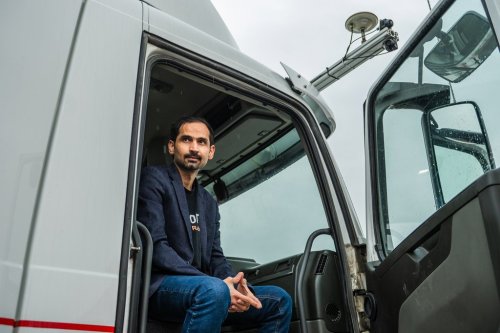
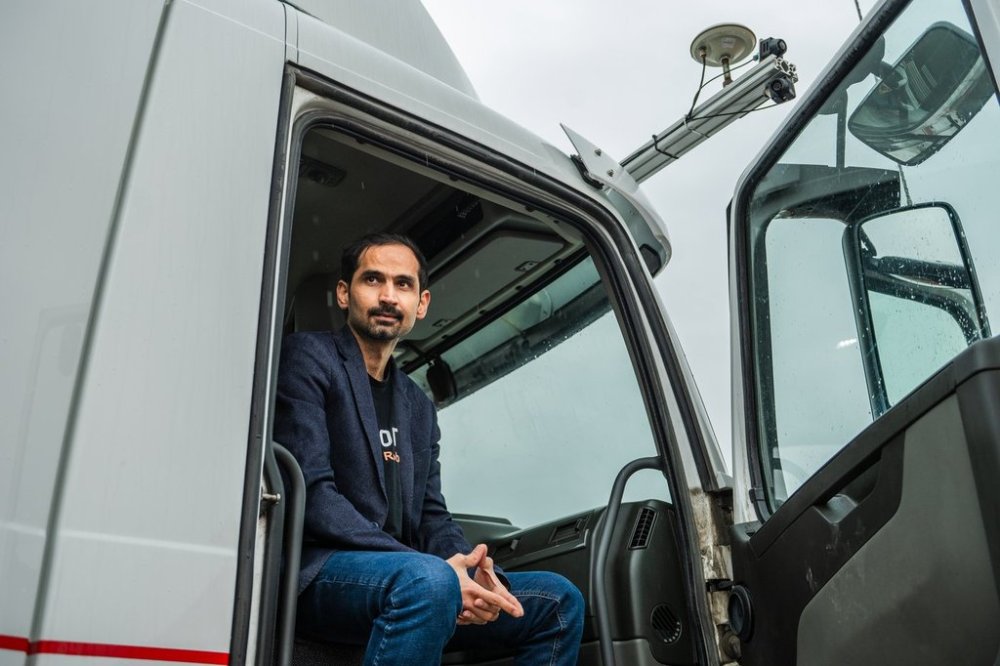
NuPort Robotics has partnered with Canadian Tire Corp. Ltd. on a pilot project that aims to move goods within a distribution centre north of Toronto.
There, a Volvo eighteen-wheeler undergoes testing on private roads as it learns to shuttle goods “like a taxi for cargo and rearranging containers,” said chief executive Raghavender Sahdev. At least a half-dozen Nuport trucks are in the testing phase with customers in several provinces. It aims to start deploying them commercially on public streets within a couple of years, he said.
Waabi Innovation Inc. may be the jewel in Canada’s autonomous trucking crown. The artificial intelligence startup launched in Toronto four years ago, but already runs about a dozen autonomous trucks between the Dallas and Houston areas for Uber Freight, said founder Raquel Urtasun.
Backed by 200 employees and $375 million in funding from partners ranging from Uber and Nvidia to Volvo and Porsche, the company now finds itself in a race to commercially deploy the first driverless long-haul truck in Texas. It plans to do that near the end of the year, Urtasun said in an interview.
“The industry is ripe for this technology,” said the CEO and University of Toronto computer science professor.
Robotic big rigs offer key advantages, proponents say.
Amid a driver shortage that Trucking HR Canada projects will top 40,000 per year by 2030, driverless vehicles slash labour needs for employers.
Autonomous trucks also tend to drive more efficiently. Fuel savings can reach up to 20 per cent, said Sahdev.
Meanwhile, the transport market to be tapped is massive. Revenues from road freight totalled US$987 billion in the United States in 2023, according to the American Trucking Association. More than half of U.S. states allow autonomous trucks on their roads — with a safety driver.
So far, Ontario is the only province to permit the practice, via a pilot program that regulates testing of self-driving cars, including those with no one on board.
Then there’s the persistent question of safety.
On the one hand, self-driving software is free from all-too-human flaws.
“Our robot trucks, they don’t get tired, they don’t get distracted,” said Rich Steiner of Gatik.
Long-haul trucks mainly traverse highways, where the surprises and confusion furnished by crowded urban streetscapes, pedestrians and cyclists number far fewer.
On the other hand, automated vehicles harbour defects of their own.
In April 2022, an autonomous truck from then-San Diego-based startup TuSimple made a sharp left turn across a lane on an Arizona interstate highway, ramming into a concrete barrier. The company said its computer system and the safety driver were both responsible for the incident, which caused no injuries.
While self-driving vehicles are less likely to crash overall, they tend to fare worse than human-steered autos during lower light and left turns, according to an analysis last year in the peer-reviewed journal Nature.
Automated systems also struggle more to detect children and people with darker skin tones.
Meanwhile, snow and fog impede visual sensors just as they do human eyes, a particular concern in Canada.
So far, large autonomous trucks have avoided serious crashes, according to the U.S.-based Advocates for Highway Safety.
“When you have hills, snow or ice … if you’re a good (human) driver, you can adapt to that,” said Sidney Givigi, a professor of robotics and machine learning at Queen’s University’s School of Computing. A self-driving car can also register weather information and react accordingly, “but it may not determine the best way to operate in these conditions.”
“Safety is a problem mostly in areas where you have these harsh environments,” he said.
At Waabi, Urtasun thinks she’s found a solution.
Hers is the only company using what she calls AV 2.0, a generative AI system that allows it to “reason” rather than rely on preprogrammed responses that prove “brittle” and unscalable, she said.
Instead of clocking miles and burning gas on real-world roads to gather data, Waabi algorithms concoct countless scenarios to simulate problems and test the vehicle’s response.
Urtasun compared her model’s advances to ChatGPT’s leaps over traditional search engines.
“That’s a very, very powerful approach that is more humanlike,” Urtasun said on a video call, backed by a whiteboard crowded with equations. “It chooses the safest action in a fraction of a second.”
However, even proponents acknowledge there will be accidents. The question is whether robo-rigs will pose less of a risk than trucks with people at the helm.
“If you’re travelling at 45 miles per hour and a dog literally jumps out right in front of you, well, we can’t defy the laws of physics,” Steiner said.
A sluggish regulatory environment marks a final obstacle.

“Canada is not necessarily a country that moves really, really fast. And regulations are one of those things,” Urtasun said.
Nonetheless, she thinks the presence of more self-driving — if not driverless — semis on Canadian roads is merely a matter of time.
“For me, self-driving is not just a problem I work on; it’s an obsession. It’s 24-7 in my head.”
This report by The Canadian Press was first published April 20, 2025.
Companies in this story: (TSX:L, TSX:CTC.A)