Canada’s deepening dependence on U.S. has been a decades-long evolution, experts say

Advertisement

Advertise with us

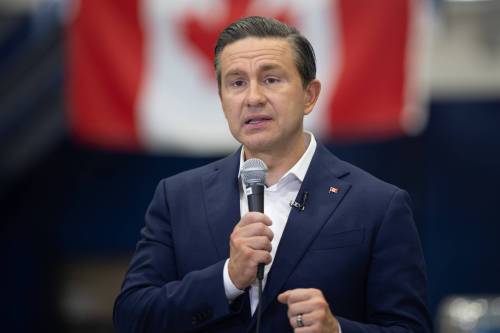
OTTAWA - Conservative Leader Pierre Poilievre has repeatedly accused the Liberal government of entrenching Canada's economic dependence on the United States.

Read this article for free:

or

Already have an account? Log in here »

To continue reading, please subscribe:

Subscribe and receive a limited-edition Free Press branded hat or tote.

Digital Subscription

One year of digital access for only $205*

  • Enjoy unlimited reading on winnipegfreepress.com
  • Read the E-Edition, our digital replica newspaper
  • Access News Break, our award-winning app
  • Play interactive puzzles

*First annual payment billed as $205.00 + GST for one year. This annual subscription will automatically renew at $233.00 + GST every 52 weeks (10% off the regular annual price of $259.35). Offer available to new and qualified returning subscribers only. Cancel any time.

To continue reading, please subscribe:

Add Free Press access to your Brandon Sun subscription for only an additional

$1 for the first 4 weeks*

  • Enjoy unlimited reading on winnipegfreepress.com
  • Read the E-Edition, our digital replica newspaper
  • Access News Break, our award-winning app
  • Play interactive puzzles
Start now

*Your next Brandon Sun subscription payment will increase by $1.00 and you will be charged $17.95 plus GST for four weeks. After four weeks, your payment will increase to $24.95 plus GST every four weeks.

Hey there, time traveller!
This article was published 04/05/2025 (458 days ago), so information in it may no longer be current.

OTTAWA – Conservative Leader Pierre Poilievre has repeatedly accused the Liberal government of entrenching Canada’s economic dependence on the United States.

But political scientists say the reality is more complex, noting a broad trend toward continental integration of national economies that began almost 40 years ago.

On the federal election trail, Poilievre decried a “lost Liberal decade” of economic stagnation. He blamed former prime minister Justin Trudeau’s government for failing to advance resource projects, allowing Canadian energy to head to the United States at a discount and losing billions of investment dollars to American companies.
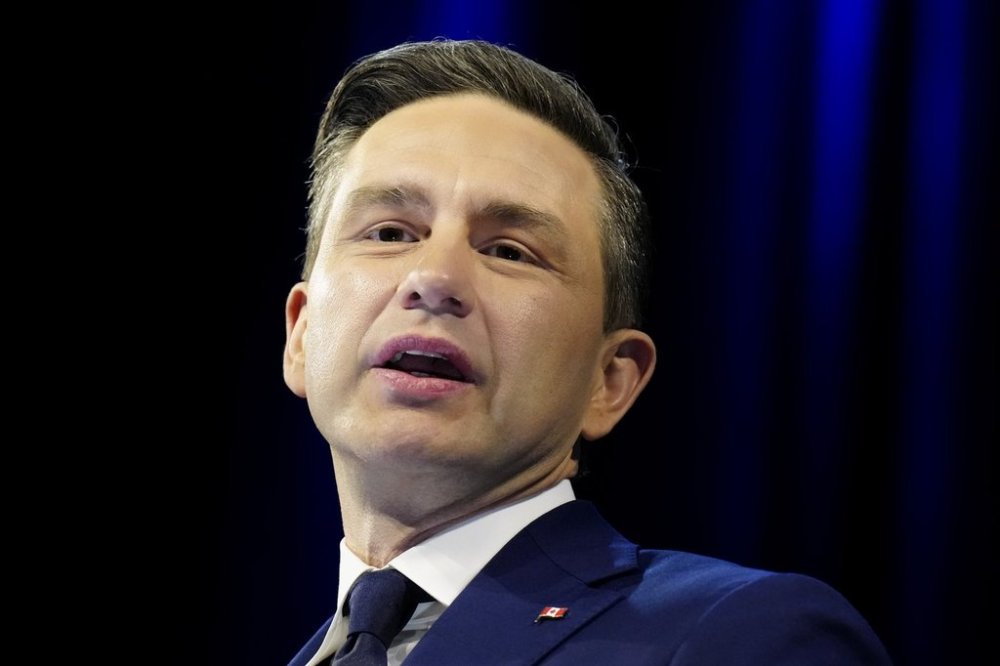
Conservative Leader Pierre Poilievre speaks to supporters on election night in Ottawa, Tuesday, April 29, 2025. Conservative Leader Pierre Poilievre has repeatedly blamed the Liberal government for entrenching Canada's economic dependence on the United States. THE CANADIAN PRESS/Chris Young

It is “kind of silly” to blame Trudeau for Canada’s economic reliance on the United States because it has been a “bipartisan project” since the late 1980s, said Blayne Haggart, a political science professor at Brock University in St. Catharines, Ont.

A desire for more secure access to U.S. markets prompted Progressive Conservative prime minister Brian Mulroney to pursue a free-trade agreement with the United States.

That agreement and its implications for Canadian industry, society and culture became the focus of the 1988 general election that led to Mulroney’s re-election.

The Canada-U.S. free trade agreement would soon expand to include Mexico, forming the basis of trade between the three countries through successive Liberal and Conservative governments to this day.

Greg Anderson, a political science professor at the University of Alberta, said Poilievre had some valid criticisms of the Liberal government’s shaky record on fostering economic growth, especially relative to the United States.

“It really did seem like for a while, you know, Canada couldn’t get anything built,” Anderson said.

U.S. President Donald Trump’s barrage of tariffs on Canadian products and his talk of annexation have rekindled interest in investing in a homegrown Canadian economy and ensuring the efficient east-west flow of energy.

The Conservatives and Liberals made election campaign promises to spur the creation of trade-enabling infrastructure to help transport resources across the country and to markets abroad.

“I find it kind of interesting now that public sentiment around all that has rapidly changed, and people are interested in building these things,” Anderson said, adding “there’s a bit of hindsight in all of it.”

Haggart said the Trudeau government might bear some blame for not seeing the arrival of the first Trump administration – which put trade-related pressures on Canada after taking power in 2016 – as a sign that dependence on the United States was becoming riskier.

“Trudeau didn’t do anything, really, about that. But I certainly didn’t hear any voices from Conservatives at the time … saying that we’ve really got to decrease our dependence on the U.S. market,” Haggart said.

“For the past four years, pretty much everybody was asleep at the wheel.”

Diversifying trade and weaning Canada off the United States market has proved to be difficult, Anderson said.

Commodities and products from different regions of the country, whether it be lumber, agricultural products, potash, energy or automobiles, head south to the United States, he noted. “The gravity of this gigantic consumer market has really been a bit of a challenge,” he said.

It has been similarly hard to eliminate interprovincial trade barriers, Anderson said.

“They’ve been working on this for decades, and it never happens,” he said. “These are really hard things to knock down.”

Haggart said it’s “going to be very expensive” to do what needs to be done to reinforce the economy as Canada’s closest ally becomes increasingly unpredictable.

While Haggart said there seems to be an appetite among Canadians to do big things now, he wonders what kind of “hard choices” Canadians might have to make.

This report by The Canadian Press was first published May 2, 2025.

Report Error Submit a Tip

More Stories

Ticked off by Trump’s tantrums

Scott Forbes 5 minute read Preview

Ticked off by Trump’s tantrums

Scott Forbes 5 minute read Yesterday at 2:01 AM CDT

If Mr. Trump isn’t prepared to step up and better manage his ticks, he’s just blowing smoke.

Read
Yesterday at 2:01 AM CDT

Toronto’s alternative crisis response model deemed a success

Scott Billeck 4 minute read Preview

Toronto’s alternative crisis response model deemed a success

Scott Billeck 4 minute read Yesterday at 2:01 AM CDT

A Toronto emergency response program that helped inspire Winnipeg’s proposed alternative crisis response model has already expanded city-wide, just four years after launching as a pilot project.

The Toronto Community Crisis Service, launched in 2022, has become the city’s fourth emergency service, providing a 24-7, community-based response to people experiencing mental health crises. The service has handled nearly 50,000 calls through 911 and 211, dispatched mobile crisis teams to more than 41,000 incidents, made more than 11,600 referrals to health and social services and resolved the majority of eligible 911 calls without police involvement.

Winnipeg Mayor Scott Gillingham last week proposed creating a similar “fourth crisis response pathway” that would allow 911 calls that aren’t violent or criminal in nature to be transferred to community-based crisis teams.

Under the proposal, which has support from both the Winnipeg Police Service and the Winnipeg Fire Paramedic Service, a centralized crisis dispatch and co-ordination hub would receive triaged calls and match them with citywide response teams, staffed in part through existing community organizations, including the Downtown Community Safety Partnership and The Link’s mobile crisis teams. The goal is to divert appropriate calls away from the WPS and WFPS.

Read
Yesterday at 2:01 AM CDT

Emergency room in Brandon short staffed

Alex Lambert 5 minute read 2:01 AM CDT

BRANDON — The health minister has acknowledged short staffing has created problems at the Brandon hospital emergency department.

“This is, I would say, a long-standing challenge and it’s also a national challenge. We know that there’s a national shortage of ED physicians,” Uzoma Asagwara told the Brandon Sun Tuesday.

The province is tackling the problem from “every possible angle,” including by offering financial incentives, they said.

“That incentive has … helped to stabilize the commitment of baseline hours for doctors in Brandon’s emergency department and it’s also resulted in an additional 700 (annual) hours being added to the schedule,” Asagwara said.

‘This is Mommy’s park’: city honours two-time Olympic champion curler Lawes

Zoe Pierce 4 minute read Preview

‘This is Mommy’s park’: city honours two-time Olympic champion curler Lawes

Zoe Pierce 4 minute read Yesterday at 1:21 PM CDT

When Kaitlyn Lawes drives through her childhood neighbourhood, she’ll now be able to point to a park bearing her name — and tell her daughters that anything is possible.

On Tuesday, the City of Winnipeg officially renamed Lindenwood Drive West Park in honour of the two-time Olympic gold medallist curler.

Lawes won her first Olympic gold medal in 2014 as part of Team Jennifer Jones at the Sochi Winter Olympics in Russia and captured a second gold medal in mixed doubles with John Morris at the 2018 Winter Olympics in PyeongChang, South Korea.

She has also won the 2018 World Women’s Curling Championship and the 2015 Scotties Tournament of Hearts, earned silver and bronze medals at the World Junior Curling Championships, and represented Manitoba at the Canada Games.

Read
Yesterday at 1:21 PM CDT

‘Sewing angels’ come to Folklorama pavilion’s rescue after Ghana dancers’ costumes stolen

Chris Kitching 4 minute read Preview

‘Sewing angels’ come to Folklorama pavilion’s rescue after Ghana dancers’ costumes stolen

Chris Kitching 4 minute read Updated: Yesterday at 8:27 PM CDT

Parents and volunteers had tears in their eyes when dozens of young dancers took to the stage for their opening performances at Folklorama’s Ghana pavilion Sunday night.

Read
Updated: Yesterday at 8:27 PM CDT

Building bridges for the next generation

Zoe Pierce 8 minute read Preview

Building bridges for the next generation

Zoe Pierce 8 minute read Yesterday at 6:00 AM CDT

Change has been the motivation behind Clayton Sandy’s work for decades.

A member of Sioux Valley Dakota First Nation, Sandy is an Indigenous knowledge keeper, cultural advisor and community advocate. His work has taken him into newcomer organizations, schools, hospitals and workplaces across Manitoba, where he teaches Indigenous history, mentors youth and helps build relationships between communities.

Sitting down for an interview with the Free Press, Sandy arrived with a busy calendar in hand, a reflection of the many projects and initiatives that continue to fill his days as he works to create change for future generations.

“I have two boys and I have five grandchildren. The racism I put up with was really bad,” Sandy said. “And I don’t want my grandchildren to put up with that garbage.”

Read
Yesterday at 6:00 AM CDT