Texas leads nation in flood deaths due to geography, size and population

Advertisement

Advertise with us

Even before the Central Texas floods that killed more than 100 people, the state was by far the leader in U.S. flood deaths due partly to geography that can funnel rainwater into deadly deluges, according to a study spanning decades.

Read this article for free:


or

Already have an account? Log in here »

To continue reading, please subscribe:

Subscribe and receive a limited-edition Free Press branded hat or tote.

Digital Subscription

One year of digital access for only $205*

  • Enjoy unlimited reading on winnipegfreepress.com
  • Read the E-Edition, our digital replica newspaper
  • Access News Break, our award-winning app
  • Play interactive puzzles

*First annual payment billed as $205.00 + GST for one year. This annual subscription will automatically renew at $233.00 + GST every 52 weeks (10% off the regular annual price of $259.35). Offer available to new and qualified returning subscribers only. Cancel any time.

To continue reading, please subscribe:

Add Free Press access to your Brandon Sun subscription for only an additional

$1 for the first 4 weeks*

  • Enjoy unlimited reading on winnipegfreepress.com
  • Read the E-Edition, our digital replica newspaper
  • Access News Break, our award-winning app
  • Play interactive puzzles
Start now

*Your next Brandon Sun subscription payment will increase by $1.00 and you will be charged $17.95 plus GST for four weeks. After four weeks, your payment will increase to $24.95 plus GST every four weeks.

Hey there, time traveller!
This article was published 12/07/2025 (454 days ago), so information in it may no longer be current.

Even before the Central Texas floods that killed more than 100 people, the state was by far the leader in U.S. flood deaths due partly to geography that can funnel rainwater into deadly deluges, according to a study spanning decades.

From 1959 to 2019, 1,069 people died in Texas in flooding, which is nearly one-fifth of the total 5,724 flood fatalities in the Lower 48 states in that time, according to a 2021 study in the journal Water. That’s about 370 more than the next closest state, Louisiana.

Flooding is the second leading weather cause of death in the country, after heat, both in 2024 and the last 30 years, averaging 145 deaths a year in the last decade, according to the National Oceanic and Atmospheric Administration.
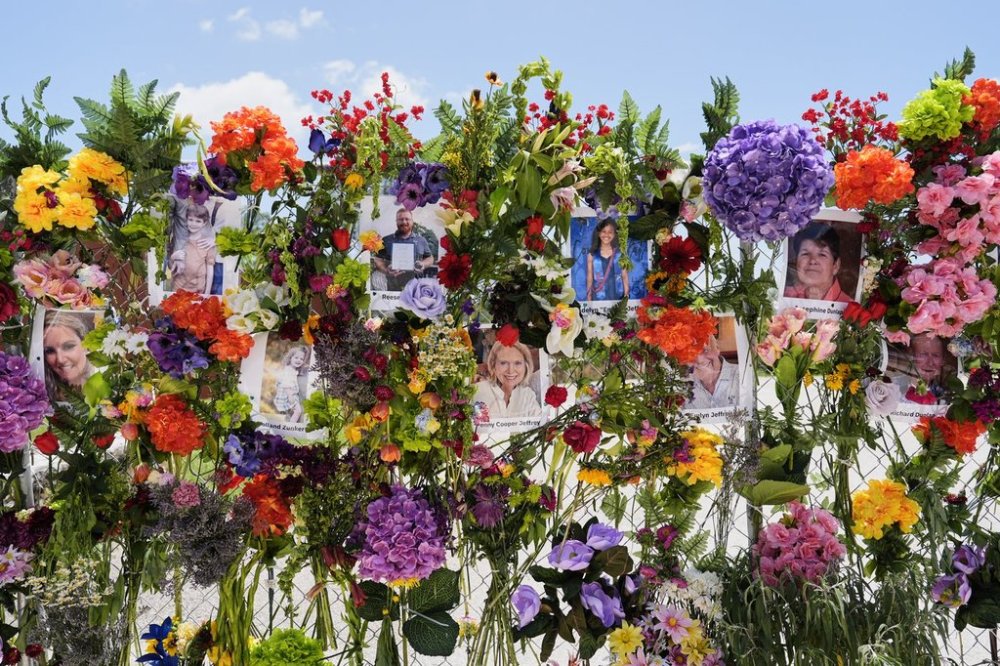
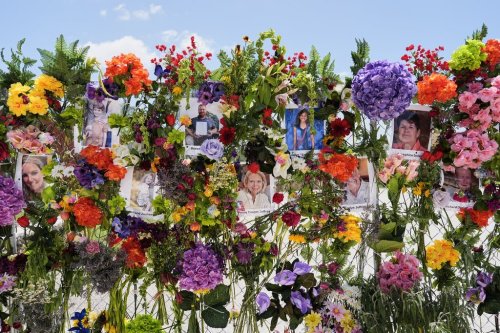
Photographs of flood victims are displayed on a memorial wall in Kerrville, Texas, Thursday, July 10, 2025. (AP Photo/Ashley Landis)

Other floods have turned deadly this year: Last month in San Antonio, 13 people died including 11 people who drove into water thinking they could get through, according to study author Hatim Sharif, a professor of civil and environmental engineering at the University of Texas at San Antonio who studies why people die in floods.

For several years Sharif has urged state and local officials to integrate better emergency action programs to use flood forecasts and save lives by alerting people and closing off vulnerable intersections where roads and water meet.

“I think in Kerr County, if they had an integrated warning system that uses rainfall forecasts to forecast real-time impacts on the ground, that could have saved many lives and could have also helped emergency crews to know which location would be flooded, which roads would be impassable,” Sharif said. “They could have taken action.”

The role of geography and terrain

Texas has so many deaths because of its geography, population and size, experts say. The area where the most recent deadly floods struck is known as flash flood alley because of hills and valleys.

“Steep, hilly terrain produces rapid runoff and quick stream rises, since the water will travel downhill at greater speed into rivers and over land,” said Kate Abshire, lead of NOAA’s flash flood services. “Rocky terrain can exacerbate the development of flash floods and raging waters, since rocks and clay soils do not allow as much water to infiltrate the ground.”

“Urban areas are especially prone to flash floods due to the large amounts of concrete and asphalt surfaces that do not allow water to penetrate into the soil easily,” she said.

Along with those hills, “you’ve got the Gulf of Mexico right there, the largest body of hot water in the entire North Atlantic most of the time,” said Jeff Masters a former government meteorologist who co-founded Weather Underground and now is at Yale Climate Connections. “So you’ve got a ready source of moisture for creating floods.”

Preventable driving deaths

Historically, many of the deaths were preventable across the nation and in Texas alike, according to experts. Masters said nothing illustrates that better than one statistic in Sharif’s study: 86% of flood deaths since 1959 were people driving or walking into floodwaters.

Nearly 58% of the deaths were people in cars and trucks. It’s a problem especially in Texas because of hills and low lying areas that have more than 3,000 places where roads cross streams and waterways without bridges or culverts, Sharif said.

“People in Texas, they like trucks and SUVs, especially trucks,” Sharif said. “They think trucks are tough, and that is I think a factor. So sometimes they use their big car or SUV or truck, and they say they can beat the flood on the street … especially at night. They underestimate the depth and velocity of water.”

Abshire said that not only do people ignore the weather service’s safety mantra, “Turn around, don’t drown,” but studies found that a number of these fatalities occur when people actively drive around barricades and barriers blocking flooded roads.

The latest Texas Hill Country flooding was less typical because so many of the deaths were in a camp where the water overtook the victims, not people going into the water, Sharif said. Only about 8% of flood deaths in the last 60 years happened in permanent homes, mobile homes or camping, according to the study.

The July 4th floods happened at night, a common time for flood deaths. More than half of deaths since 1959 have occurred at night, when it’s dark and people can’t see how much flooding there is or are not awake for the warnings, Sharif’s study found.

As far as demographics, about 62% of U.S. flood deaths were male, according to the study.

“Risk-taking behavior is usually associated with men,” Sharif said, adding that it’s why most fatal victims of car crashes are male.

___

The Associated Press’ climate and environmental coverage receives financial support from multiple private foundations. AP is solely responsible for all content. Find AP’s standards for working with philanthropies, a list of supporters and funded coverage areas at AP.org.


Report Error Submit a Tip

More Stories

Fraser Institute report places Manitoba near bottom of all provinces, states in productivity, income advancement

Gabrielle Piché 5 minute read Preview

Fraser Institute report places Manitoba near bottom of all provinces, states in productivity, income advancement

Gabrielle Piché 5 minute read Yesterday at 8:01 PM CDT

Manitoba trails behind most Canadian provinces and American states in economic well-being, according to a new study.

The Fraser Institute, a right-leaning think tank, compared provinces’ and U.S. states’ GDP per person, among other economic measures, in a report released Thursday.

It places Manitoba 56th of 60 jurisdictions. Most provinces and every state except Mississippi had a higher GDP per person in 2024 than Manitoba, the Fraser Institute calculated.

It used data from Statistics Canada and the United States Census Bureau.

Read
Yesterday at 8:01 PM CDT

Province to fund livestock cop to cut down on theft

Connor McDowell 3 minute read Preview

Province to fund livestock cop to cut down on theft

Connor McDowell 3 minute read Updated: Yesterday at 1:08 PM CDT

BRANDON — The Manitoba government will fund a new RCMP position dedicated to investigating livestock theft.

The province made the announcement Thursday.

Agriculture Minister Ron Kostyshyn said the investigative role will fill a pressing need.

“Personally speaking, I think this has been a long time waiting for this to come to reality,” the Dauphin MLA said Wednesday. “We are doing a great thing for the industry.”

Read
Updated: Yesterday at 1:08 PM CDT

Sex offender who changed name sent back to prison

Dean Pritchard 7 minute read Preview

Sex offender who changed name sent back to prison

Dean Pritchard 7 minute read Wednesday, Oct. 7, 2026

The father of a boy repeatedly abused by convicted sex predator Ryan Knight said he believes his son would have been kept safe had there been a law in place preventing sex offenders from legally changing their name.

Read
Wednesday, Oct. 7, 2026

Other cities build rapid transit, while we wait

Ken Klassen 4 minute read Preview

Other cities build rapid transit, while we wait

Ken Klassen 4 minute read 2:00 AM CDT

Winnipeg’s civic election campaign has produced no shortage of promises to improve transit safety and fix problems with the new network. Those issues are real and urgent. But they should not distract from a larger failure — while other Canadian urban regions secure billions in federal support to transform their transit systems, Winnipeg is falling further behind.

The Winnipeg Transit Master Plan, approved in 2021, sets the right vision — frequent, reliable service anchored by an expanded bus rapid transit (BRT) network. Yet not a single additional BRT corridor has been approved for construction. The modest network proposed in the plan is not projected to be completed until 2045 or beyond. Despite that, city council voted this summer to delay updating the master plan by two years.

The full BRT network was estimated at $588 million to $1.1 billion in 2020 — or roughly $720 million to $1.34 billion today, after accounting for construction inflation. That is substantial, but modest compared with what other cities are spending. Calgary, Edmonton, Hamilton, Ottawa and Quebec City have rapid transit projects under way or recently completed, totalling about $26 billion and backed by $7.3 billion in federal commitments. Vancouver, Toronto and Montreal are spending billions more with federal support.

Other cities build. Winnipeg waits.

Read
2:00 AM CDT

Can’t cut your way to being a better city

Molly McCracken 5 minute read 2:00 AM CDT

The powers that be in Winnipeg have pushed for cheap property taxes for decades. As a result, the city doesn’t have enough money to balance the books, let alone maintain infrastructure, deliver services and respond to challenges like homelessness and the toxic drug crisis.

Winnipeg’s fiscal problem stems from decades of keeping property-tax increases below inflation and relying on inadequate revenues to fund a growing city. The result? Today, Winnipeg spends less money per person on city services than it did in 2001.

A look at the books at city hall is stark. Winnipeg has run a deficit almost every year since the COVID-19 pandemic because of climate-change-driven heavy ice and snowstorms, higher fuel costs and increased policing overtime. During this time, city council tried to cut and freeze public service spending where it could; as a result, community services have been cut to the bone.

Departments responsible for what makes a city a good place to live have been squeezed. Since 1999, community services — responsible for libraries, recreation, swimming lessons and aspects of Winnipeg’s poverty-reduction work — has 149 fewer staff positions, an 18 per cent reduction, even as the city’s population has grown 35 per cent, or by 220,000 people.

Texas leads nation in flood deaths due to geography, size and population

Seth Borenstein, The Associated Press 5 minute read Preview

Texas leads nation in flood deaths due to geography, size and population

Seth Borenstein, The Associated Press 5 minute read Saturday, Jul. 12, 2025

Even before the Central Texas floods that killed more than 100 people, the state was by far the leader in U.S. flood deaths due partly to geography that can funnel rainwater into deadly deluges, according to a study spanning decades.

From 1959 to 2019, 1,069 people died in Texas in flooding, which is nearly one-fifth of the total 5,724 flood fatalities in the Lower 48 states in that time, according to a 2021 study in the journal Water. That's about 370 more than the next closest state, Louisiana.

Flooding is the second leading weather cause of death in the country, after heat, both in 2024 and the last 30 years, averaging 145 deaths a year in the last decade, according to the National Oceanic and Atmospheric Administration.

Other floods have turned deadly this year: Last month in San Antonio, 13 people died including 11 people who drove into water thinking they could get through, according to study author Hatim Sharif, a professor of civil and environmental engineering at the University of Texas at San Antonio who studies why people die in floods.

Read
Saturday, Jul. 12, 2025