What in-flight turbulence is and when it becomes dangerous for passengers and crews
Advertisement
Read this article for free:
or
Already have an account? Log in here »
To continue reading, please subscribe:

Digital Subscription
One year of digital access for only $205*
- Enjoy unlimited reading on winnipegfreepress.com
- Read the E-Edition, our digital replica newspaper
- Access News Break, our award-winning app
- Play interactive puzzles
*First annual payment billed as $205.00 + GST for one year. This annual subscription will automatically renew at $233.00 + GST every 52 weeks (10% off the regular annual price of $259.35). Offer available to new and qualified returning subscribers only. Cancel any time.
To continue reading, please subscribe:
Add Free Press access to your Brandon Sun subscription for only an additional
$1 for the first 4 weeks*
- Enjoy unlimited reading on winnipegfreepress.com
- Read the E-Edition, our digital replica newspaper
- Access News Break, our award-winning app
- Play interactive puzzles
*Your next Brandon Sun subscription payment will increase by $1.00 and you will be charged $17.95 plus GST for four weeks. After four weeks, your payment will increase to $24.95 plus GST every four weeks.
Read unlimited articles for free today:
or
Already have an account? Log in here »
Hey there, time traveller!
This article was published 31/07/2025 (411 days ago), so information in it may no longer be current.
A Delta Air Lines flight from Salt Lake City to Amsterdam that was hit by serious turbulence Wednesday, sending 25 people on board to hospitals and forcing the flight to divert to Minnesota, highlighted the dangers of flying through unstable air.
Several turbulence-impacted flights have been reported this year.
While turbulence-related fatalities are quite rare, the tally of injuries has grown over the years. Some meteorologists and aviation analysts note that reports of turbulence encounters also have been increasing and point to what climate change may be doing to flying conditions.

Planes hitting bumpy air is mostly minor, however, and airlines have tried to improve safety. Experts advise travelers to stay vigilant, stressing wearing a seat belt whenever possible.
What causes turbulence
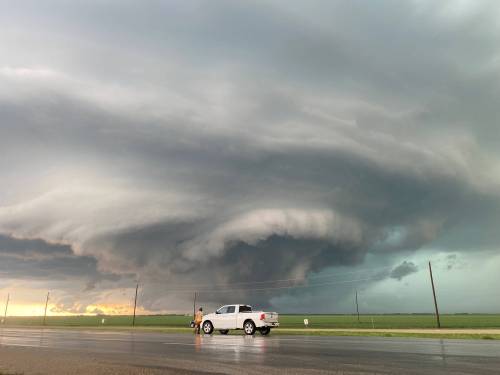
Turbulence is essentially unstable air that moves in a non-predictable fashion. Most people associate it with heavy storms. But the most dangerous is clear-air turbulence, which often occurs with no visible warning.
Clear-air turbulence happens most often in or near the high-altitude rivers of air called jet streams. The culprit is wind shear, which is when two huge air masses close to each other move at different speeds. If the difference in speed is big enough, the atmosphere can’t handle the strain, and it breaks into turbulent patterns like eddies in water.
Recent flights shaken by turbulence
In June, five people were taken to a North Carolina hospital for evaluation after an American Airlines flight from Miami hit turbulence on its way to Raleigh-Durham International Airport. The plane landed safely.
Earlier that month, severe storms in southern Germany forced a Ryanair flight to make an emergency landing after violent turbulence injured nine people, German police said. The flight was traveling from Berlin to Milan with 179 passengers and six crew members. Eight passengers and one crew member were hurt.
In March, a United Airlines flight from San Francisco to Singapore experienced severe turbulence over the Philippines. The plane was carrying 174 passengers and 14 crew members. Five people were injured and the plane landed safely in Singapore.
Several flights were diverted to Waco, Texas, on March 3, because of turbulence. Five people were injured aboard a United Express plane flying from Springfield, Missouri, to Houston.
Last year, Italian authorities launched an investigation after two easyJet flight attendants were injured when their flight from Corfu to London’s Gatwick Airport was buffeted by turbulence. The pilot made an unscheduled landing in Rome.
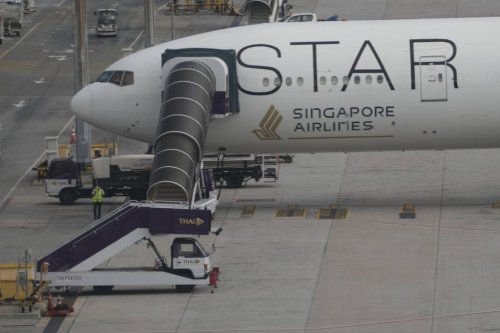
In May 2024, a 73-year-old British man died and dozens of people were injured aboard a Singapore Airlines flight that hit severe turbulence. His death was under investigation. Authorities said he may have had a heart attack.
It’s unclear how common injuries are
Tracking the number of turbulence-related injuries worldwide is difficult. But some countries publish national data.
Most reports of in-flight turbulence from 2009 through 2018 resulted in one or more serious injuries and no damage to the plane, the National Transportation Safety Board reported.
Between 2009 and 2024, 207 people were injured seriously enough during turbulence to require hospital treatment for at least two days, according to the NTSB. Most of them were flight attendants, who are more likely to be out of their seats during a flight.
How pilots try to avoid it
Pilots try to avoid turbulence partly by using a weather radar display. Sometimes they can simply see and fly around thunderstorms.
But clear-air turbulence “is altogether another animal,” said Doug Moss, a former airline pilot and safety consultant. It can be devastating, he said, “because the time before the incident can be very calm, and people are caught off-guard.”
Air traffic controllers will warn pilots after another plane runs into clear-air turbulence, Moss said. Many pilots also look for signs of wind shear, then plan to avoid those areas, he said.
Modern planes are strong enough to handle just about any turbulence. Cabin areas such as overhead bins may receive cosmetic damage, “but these don’t impact the structural integrity of the planes,” Moss said.
Scientists look at climate change’s influence
Some scientists note that reports of turbulence encounters are on the rise. Several researchers have pointed to potential climate impacts as one of the possible explanations.
Professor Thomas Guinn, of Embry-Riddle Aeronautical University, explains that some predict climate change could alter the jet stream and up the wind shear, which would drive up turbulence.
Paul Williams, a professor of atmospheric science at the University of Reading in England, said there was “strong evidence that turbulence is increasing because of climate change.”
Williams said in a statement last year that his research team discovered that severe clear-air turbulence in the North Atlantic has increased by 55% since 1979, for example. The team’s projections signal that severe turbulence in the jet streams could double or triple in the coming decades if global conditions continue as expected, he said.
There could be a rise in overall air traffic that may increase turbulence encounters as the number of flight tracks go up, said Larry Cornman, a project scientist at the National Science Foundation’s National Center for Atmospheric Research.
What travelers can do to stay safe

In short, buckle up. Turbulence can be tricky to predict, but experts stress that the first line of defense is keeping the seat belt fastened, whenever possible.
And airlines have taken steps for safety. Last November, Southwest Airlines said it was ending cabin service earlier so that passengers return to their seats and fasten seat belts sooner.
The change was intended to “reduce the risk of in-flight turbulence injuries,” the company said.
Also last year, Korean Air decided to stop offering a beloved instant noodle, Shin Ramyun.
“This decision is part of proactive safety measures in response to increased turbulence, aimed at preventing burn accidents,” the Seoul-based airline said in a statement.