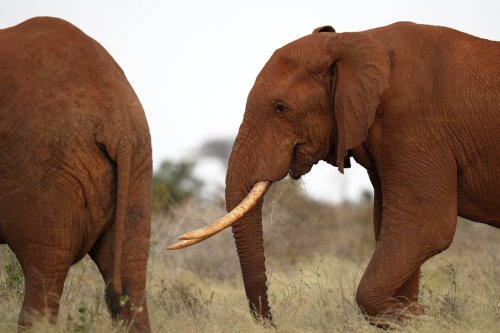
Kenyan farmers use bees and sesame to keep away marauding elephants
Advertisement
Read this article for free:
or
Already have an account? Log in here »
To continue reading, please subscribe:

Digital Subscription
One year of digital access for only $205*
- Enjoy unlimited reading on winnipegfreepress.com
- Read the E-Edition, our digital replica newspaper
- Access News Break, our award-winning app
- Play interactive puzzles
*First annual payment billed as $205.00 + GST for one year. This annual subscription will automatically renew at $233.00 + GST every 52 weeks (10% off the regular annual price of $259.35). Offer available to new and qualified returning subscribers only. Cancel any time.
To continue reading, please subscribe:
Add Free Press access to your Brandon Sun subscription for only an additional
$1 for the first 4 weeks*
- Enjoy unlimited reading on winnipegfreepress.com
- Read the E-Edition, our digital replica newspaper
- Access News Break, our award-winning app
- Play interactive puzzles
*Your next Brandon Sun subscription payment will increase by $1.00 and you will be charged $17.95 plus GST for four weeks. After four weeks, your payment will increase to $24.95 plus GST every four weeks.
Read unlimited articles for free today:
or
Already have an account? Log in here »
Hey there, time traveller!
This article was published 11/08/2025 (415 days ago), so information in it may no longer be current.
TAITA TAVETA, Kenya (AP) — For farmers in the Taita hills in southern Kenya, elephants are a menace: they raid crops and will occasionally injure or even kill people.
Farmer Richard Shika, 68, has had some close encounters. “One time, I was trying to chase away an elephant that was in my maize field, but it turned and charged me,” Shika remembers. “It stopped when it was right in front of me, and I managed to jump out of the way.”
He feels lucky to be alive. Almost exactly two years ago, local media reported that a 3-year-old girl had been trampled to death by an elephant in Taita Taveta county, her mother injured.
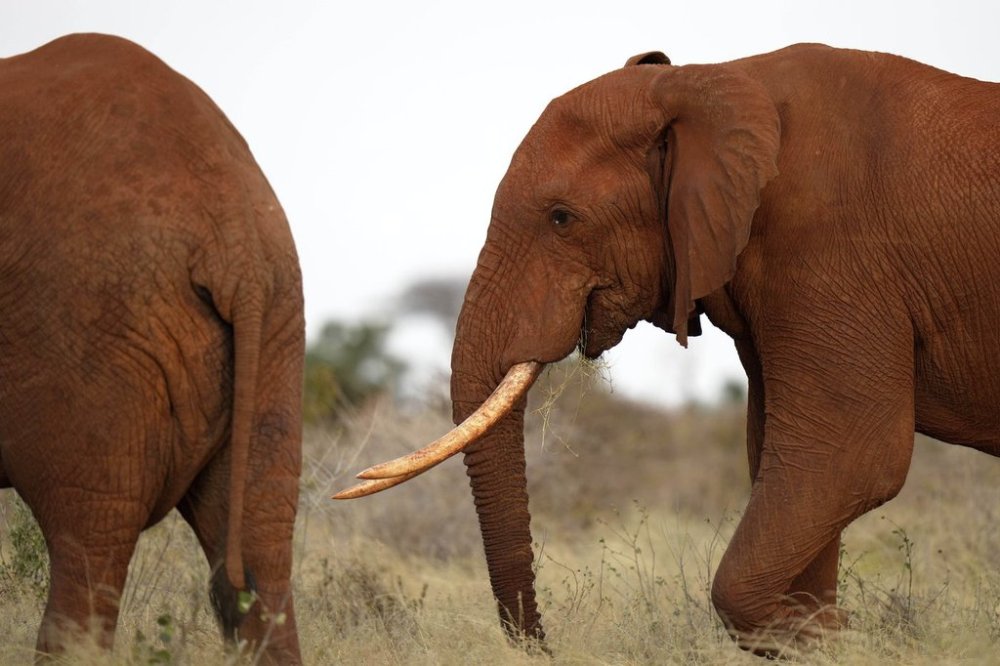
The area where Shika has his farm is almost surrounded by Kenya’s biggest National Park. The border of Tsavo East National Park is less than 10 kilometers (6 miles) to the east, and Tsavo West curves around to the north, west and south. The parks have always been unfenced, allowing animals to migrate. Increasingly, that puts them in the path of humans.
“The places and infrastructure that we humans develop hinder the migratory routes and paths which elephants used to take,” explains Yuka Luvonga, who researches human-elephant coexistence for conservation organization Save The Elephants.
Elephants eat about 150 kilograms (330 pounds) of vegetation a day, so keeping them off farms is tricky, especially if forage is scarce elsewhere. “Elephants are clever creatures,” says Shika. “They will try touching a fence, and once they realize that it is not electrified, they charge through.”
If farmers try to chase them off, as Shika did, the elephants will sometimes turn and defend themselves. Kenya Wildlife Service and conservation organizations tracking human-elephant conflict estimate that 30-35 people are killed every year in elephant-related incidents across Kenya.
Communities will sometimes retaliate by spearing or poisoning elephants, but there are other solutions, as farmers here have found.
One of them is bees.
“Elephants don’t like getting stung by bees, so they keep away from areas where hives are,” Shika says.
With help from Save The Elephants, Shika is one of 50 farmers who have hung beehives from wires between poles around their farms. If an elephant touches the wire, the hives are rocked, disturbing the bees. It’s an army of tiny security guards that keeps elephants well away from the farm.
“With hives acting as a fence, I can continue crop-farming and also earn a livelihood from honey,” Shika says. This year, he’s made almost $250 selling honey.
Changing crops can also make a difference. Elephants love maize and watermelons. But sesame? Blegh.
Sesame plants produce a scent that actively repels elephants, so for 70-year-old Gertrude Jackim, swapping out maize and green grams for sesame was a no-brainer. “Look at me, I’m aging, so I can’t fend off the elephants or chase them away,” she says.
She is one of 100 farmers who have been supported to adopt sesame seed production. The change was urgently needed, she says. “Over the years, the elephants have become too destructive.”
Farming practices that deter elephants – like beekeeping and growing sesame – have made coexistence much easier for farmers like Shika and Jackim.
Conservationists hope that in the long run, this will win hearts and minds in an area where human-elephant conflict had reached worrying levels.
“We have to live harmoniously with these elephants,” says Yuka Luvonga from Save the Elephants, “and to create awareness and sensitize the communities to change their attitudes towards the animals that we have.”
Only then can both people and elephants here continue to thrive.

___
Associated Press writer Nicholas Komu in Nairobi, Kenya, contributed to this report.
___
For more on Africa and development: https://apnews.com/hub/africa-pulse
The Associated Press receives financial support for global health and development coverage in Africa from the Gates Foundation. The AP is solely responsible for all content. Find AP’s standards for working with philanthropies, a list of supporters and funded coverage areas at AP.org.