Russia restricts calls via WhatsApp and Telegram, the latest step to control the internet
Advertisement
Read this article for free:
or
Already have an account? Log in here »
To continue reading, please subscribe:

Digital Subscription
One year of digital access for only $205*
- Enjoy unlimited reading on winnipegfreepress.com
- Read the E-Edition, our digital replica newspaper
- Access News Break, our award-winning app
- Play interactive puzzles
*First annual payment billed as $205.00 + GST for one year. This annual subscription will automatically renew at $233.00 + GST every 52 weeks (10% off the regular annual price of $259.35). Offer available to new and qualified returning subscribers only. Cancel any time.
To continue reading, please subscribe:
Add Free Press access to your Brandon Sun subscription for only an additional
$1 for the first 4 weeks*
- Enjoy unlimited reading on winnipegfreepress.com
- Read the E-Edition, our digital replica newspaper
- Access News Break, our award-winning app
- Play interactive puzzles
*Your next Brandon Sun subscription payment will increase by $1.00 and you will be charged $17.95 plus GST for four weeks. After four weeks, your payment will increase to $24.95 plus GST every four weeks.
Read unlimited articles for free today:
or
Already have an account? Log in here »
Hey there, time traveller!
This article was published 13/08/2025 (399 days ago), so information in it may no longer be current.
Russian authorities announced Wednesday they were “partially” restricting calls in messaging apps Telegram and WhatsApp, the latest step in an effort to tighten control over the internet.
In a statement, government media and internet regulator Roskomnadzor justified the measure as necessary for fighting crime, saying that “according to law enforcement agencies and numerous appeals from citizens, foreign messengers Telegram and WhatsApp have become the main voice services used to deceive and extort money, and to involve Russian citizens in sabotage and terrorist activities.”
The regulator also alleged that “repeated requests to take countermeasures have been ignored by the owners of the messengers.” There was no immediate comment from either platform.
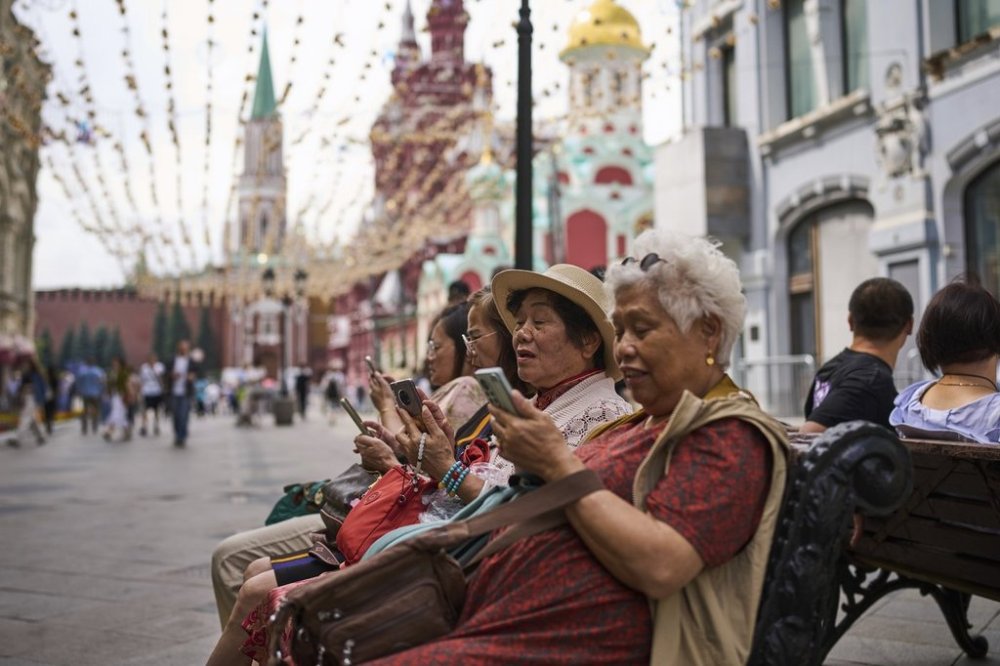
A Whatsapp spokesperson said in a statement that the encrypted messaging app “defies government attempts to violate people’s right to secure communication, which is why Russia is trying to block it from over 100 million Russian people.”
Russian authorities have long engaged in a deliberate and multipronged effort to rein in the internet. Over the years, they have adopted restrictive laws and banned websites and platforms that won’t comply. Technology has been perfected to monitor and manipulate online traffic.
While it’s still possible to circumvent restrictions by using virtual private network services, those are routinely blocked, too.
Authorities further restricted internet access this summer with widespread shutdowns of cellphone internet connections. Officials have insisted the measure was needed to thwart Ukrainian drone attacks, but experts argued it was another step to tighten internet control.
Russia’s Digital Development and Communications Ministry said this month that along with internet providers, it was working on a “white list” of essential websites and services users could access during shutdowns.
In Crimea, which Moscow illegally annexed from Ukraine in 2014, Russian-installed officials said Wednesday that shutdowns of cellphone internet may last indefinitely.
The government adopted a law last month punishing users for searching for content they deem illicit and threatened to go after WhatsApp — one of the most popular platforms in the country — while rolling out a new “national” messaging app that’s widely expected to be heavily monitored.
Reports that calls were being disrupted in WhatsApp and Telegram appeared in Russian media earlier this week, with users complaining about calls not going through or not being able to hear each other speak.
According to Russian media monitoring service Mediascope, WhatsApp in July was the most popular platform in Russia, with over 96 million monthly users. Telegram, with more than 89 million users, came a close second.
Both platforms had their run-ins with the Russian authorities in the past. The Kremlin tried to block Telegram between 2018-20 but failed. After Russia’s full-scale invasion of Ukraine in 2022, the government blocked major social media like Facebook and Instagram, and outlawed their parent company, Meta, that also owns WhatsApp, as extremist.
In July, lawmaker Anton Gorelkin said WhatsApp “should prepare to leave the Russian market,” and a new “national” messenger, MAX, developed by Russian social media company VK, would take its place.
MAX, promoted as a one-stop shop for messaging, online government services, making payments and more, was rolled out for beta tests but has yet to attract a wide following. Over 2 million people registered by July, the Tass news agency reported.
Its terms and conditions say it will share user data with authorities upon request, and a new law stipulates its preinstallation in all smartphones sold in Russia. State institutions, officials and businesses are actively encouraged to move communications and blogs to MAX.
The Digital Development and Communications Ministry said access to calls via WhatsApp and Telegram may be reinstated if the platforms “comply with Russian legislation.” It clarified that the partial restrictions, announced by Roskomnadzor, applied only to audio calls.