Great white sharks are going north. Here’s what the numbers say
Advertisement
Read this article for free:
or
Already have an account? Log in here »
To continue reading, please subscribe:

Digital Subscription
One year of digital access for only $205*
- Enjoy unlimited reading on winnipegfreepress.com
- Read the E-Edition, our digital replica newspaper
- Access News Break, our award-winning app
- Play interactive puzzles
*First annual payment billed as $205.00 + GST for one year. This annual subscription will automatically renew at $233.00 + GST every 52 weeks (10% off the regular annual price of $259.35). Offer available to new and qualified returning subscribers only. Cancel any time.
To continue reading, please subscribe:
Add Free Press access to your Brandon Sun subscription for only an additional
$1 for the first 4 weeks*
- Enjoy unlimited reading on winnipegfreepress.com
- Read the E-Edition, our digital replica newspaper
- Access News Break, our award-winning app
- Play interactive puzzles
*Your next Brandon Sun subscription payment will increase by $1.00 and you will be charged $17.95 plus GST for four weeks. After four weeks, your payment will increase to $24.95 plus GST every four weeks.
Read unlimited articles for free today:
or
Already have an account? Log in here »
Hey there, time traveller!
This article was published 24/08/2025 (388 days ago), so information in it may no longer be current.
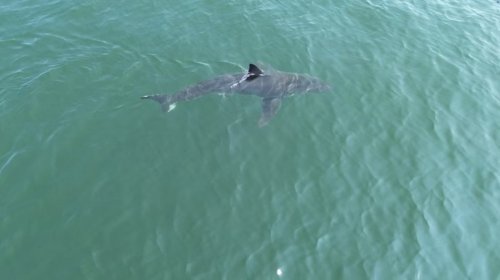
SCARBOROUGH, Maine (AP) — New data shows that great white sharks are spending more time in the chilly waters off New England and Canada’s Atlantic coast.
That means boaters, beachgoers and fishermen who spend time in the northern waters are learning to live with the predators made famous by the movie “Jaws” 50 years ago. Sightings of the sharks are up in places like Maine, where they were once very rarely spotted.
Scientists link the white shark sightings to increased availability of the seals the sharks feast on, and say beachgoers are generally very safe from shark bites.

Here’s a breakdown by the numbers.
93 great white sharks identified off Maine from 2020 to 2024
The Maine Department of Marine Resources has been monitoring great white shark activity in the Gulf of Maine since 2020. The department has said it intends to use the data to better understand white shark distribution off the state’s coast.
Nineteen unique white sharks were recorded in 2024 on 47 unique dates, the department reported.
2 confirmed unprovoked shark attacks in Maine waters since 1837
The first recorded fatal shark attack in Maine happened in 2020 when a great white shark killed 63-year-old Julie Dimperio Holowach off Bailey Island.
Shark experts describe fatal shark bites as exceedingly rare, in Maine and everywhere else.
Nearly 2.5-fold increase in detection of white sharks off Nova Scotia
The number of white sharks detected off Halifax, Nova Scotia, increased about 2.5 times from 2018 to 2022, according to a paper published in May in the journal Marine Ecology Progress Series. Even farther north, the number detected in the Cabot Strait that separates Nova Scotia and Newfoundland increased nearly four times over, the paper said.
8 shark species known to live in Maine waters
In addition to the great white shark, at least seven other shark species live in Maine’s waters. They are the basking shark, porbeagle, blue shark, sand tiger shark, common thresher, shortfin mako and spiny dogfish.
Most of these sharks pose a very minimal threat to humans and some are harmless.
949 unprovoked shark attacks in recorded human history since 1580
The International Shark Attack File at the Florida Museum of Natural History keeps a record of documented shark attacks. While the great white shark holds the record for most documented attacks on humans, the totals are still very low.
The white shark has been the source of 351 documented unprovoked shark attacks, and 59 of those have been fatal, the International Shark Attack File has reported.