Indigenous Peoples grapple with claims downplaying the history of residential schools
Advertisement
Read this article for free:
or
Already have an account? Log in here »
To continue reading, please subscribe:

Digital Subscription
One year of digital access for only $205*
- Enjoy unlimited reading on winnipegfreepress.com
- Read the E-Edition, our digital replica newspaper
- Access News Break, our award-winning app
- Play interactive puzzles
*First annual payment billed as $205.00 + GST for one year. This annual subscription will automatically renew at $233.00 + GST every 52 weeks (10% off the regular annual price of $259.35). Offer available to new and qualified returning subscribers only. Cancel any time.
To continue reading, please subscribe:
Add Free Press access to your Brandon Sun subscription for only an additional
$1 for the first 4 weeks*
- Enjoy unlimited reading on winnipegfreepress.com
- Read the E-Edition, our digital replica newspaper
- Access News Break, our award-winning app
- Play interactive puzzles
*Your next Brandon Sun subscription payment will increase by $1.00 and you will be charged $17.95 plus GST for four weeks. After four weeks, your payment will increase to $24.95 plus GST every four weeks.
Read unlimited articles for free today:
or
Already have an account? Log in here »
Hey there, time traveller!
This article was published 04/10/2025 (371 days ago), so information in it may no longer be current.
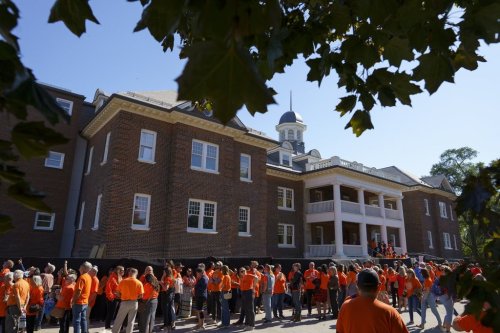
OTTAWA – As Indigenous Peoples marked the National Day for Truth and Reconciliation this week, they also had to confront a persistent problem: public figures claiming the history of residential schools has been exaggerated or falsified.
It’s a problem community leaders say poses a real challenge to reconciliation efforts across the country.
The Truth and Reconciliation Commission, mandated out of a legal settlement between the federal government and survivors of residential schools, concluded the goal of the schools was to erase Indigenous cultures.
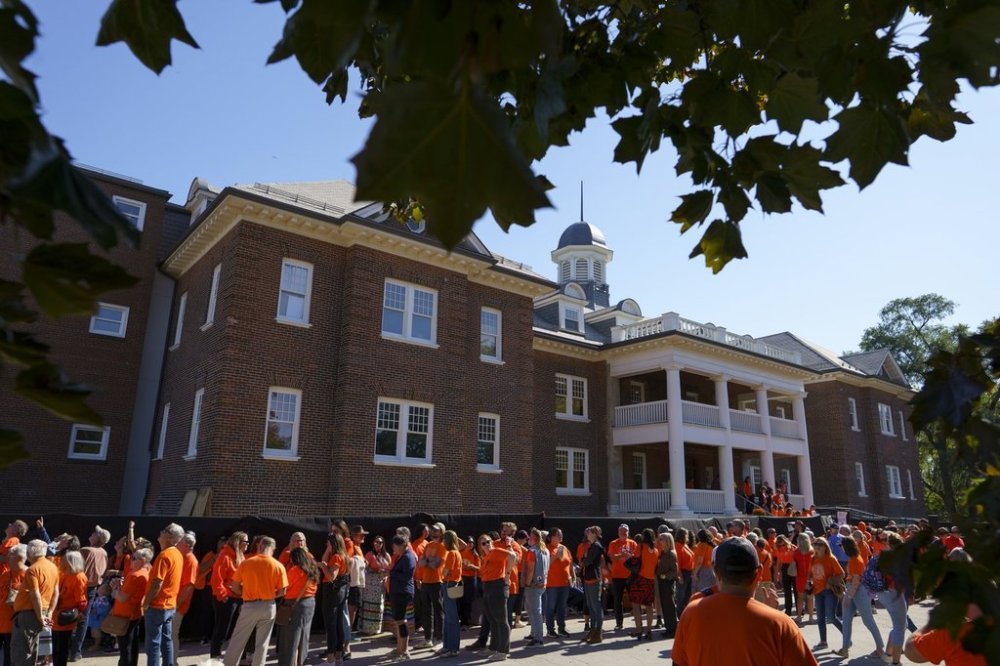
Between 1857 and 1996, 150,000 Indigenous children were forced to attend church-run, government-funded schools. They were barred from speaking their languages in institutions often rife with abuse and located far away from their families and communities.
An estimated 6,000 children died while attending the schools, although experts at the National Centre for Truth and Reconciliation, who continue to comb through millions of records, say the actual number could turn out to be much higher.
The federal government officially recognized Sept. 30 as the National Day for Truth and Reconciliation in 2021, after Tk̓emlúps te Secwépemc First Nation shared preliminary findings from a ground-penetrating radar survey that found some 200 potential unmarked graves on the grounds of a former residential school in Kamloops, B.C.
The weeks leading up to Sept. 30 this year saw some prominent individuals and political figures issue online posts and statements downplaying or denying the history of residential schools.
On Sept. 30, former B.C. Conservative MLA Dallas Brodie — who was ejected from the party in the spring for what party leader John Rustad said were statements “mocking former residential school students giving testimony, including testimony about child sex abuse” — posted a trailer online for a video called “Making a Killing: Reconciliation, Genocide and Plunder in Canada.”
A Conservative Party of British Columbia staffer was fired earlier this week after issuing a social media post calling the Survivors’ flag, meant to honour residential school survivors, a “disgrace” and “fake” flag that perpetuates “untruths” about Canadian history.
And Maxime Bernier, leader of the People’s Party of Canada, took to social media to claim that “no bodies were found, that the residential schools ‘genocide’ is a hoax, and that reconciliation requires an end to the bs, the victim mentality, the fake white guilt, and the grifting based on it.”
In an open letter to Bernier, Indigenous Services Minister Mandy Gull-Masty denounced his remarks “in the strongest possible terms.”
“They show neither humility, nor respect, nor the honesty required of anyone who claims to speak for Canadians,” she wrote.
The Assembly of First Nations told The Canadian Press it referred Bernier’s post to the RCMP as possible hate speech.
“The truth is that First Nations have been experiencing hate speech — and much more discrimination — since this country was created,” the advocacy body said in a statement.
In a subsequent statement, Bernier claimed Assembly of First Nations National Chief Cindy Woodhouse Nepinak “doesn’t care about truth and reconciliation.”
“What she wants is to ban any questioning of the narrative that would threaten the flow of billions of tax dollars from Ottawa,” Bernier wrote, dismissing Gull-Masty’s letter as “irrelevant.”
Historian Sean Carleton has described residential school denialism as a strategy to distort and misrepresent basic facts about residential schools to shake public confidence in the stories of survivors and the reconciliation project itself.
“It’s a constant sowing of seeds of doubt in things that we don’t need to be doubtful about, because we’ve already established the truth about them,” he said.
NDP Leah Gazan introduced a private member’s bill in the last Parliament to criminalize residential school denialism but it died on the order paper when the spring election was called.
The bill proposed that anyone publicly promoting hatred against Indigenous Peoples by “condoning, denying, downplaying or justifying the Indian residential school system in Canada, or by misrepresenting facts related to it,” be subject to a maximum penalty of two years in jail.
Canada enacted a similar law in 2022 to combat Holocaust denialism.
Gazan told The Canadian Press she’s still pushing for her law to move forward — and that survivors are being harmed in the meantime by an onslaught of messages claiming their suffering wasn’t real.
“If we can’t keep survivors safe, we’ve got a problem,” Gazan said, noting the Truth and Reconciliation Commission was reporting on unmarked graves long before 2021, as did Kimberly Murray, the former special interlocutor for the issue whose final report was released last year.
“Let’s not forget the path forward to reconciliation in this country is because of the gift of stories from survivors. We need to honour them.”
Marc Miller, former minister of Crown-Indigenous relations, said 2021 was the moment when many Canadians were first made aware of the history of residential schools.
As non-Indigenous Canada caught up on a history well known to Indigenous communities, he said, some focused on inaccuracies in some reports about the schools to claim that no children had been harmed in the institutions.
“I think we (the federal government) underestimated the need to educate the general public as to what the history is, and to give context and colour so that people wouldn’t just seize on it and say, ‘This never happened,'” Miller told The Canadian Press.
“Atrocities did occur, and they occurred in much the way people have described them. It’s a painful realization for a country like Canada to come to.”
Miller recalled stories survivors told him that illuminated the horrors of the institutions. He said one survivor asked him to sit on her right side because she couldn’t hear well from her left ear.
“I just thought she had a hearing problem, but she went on to tell me that’s where she got thrashed in the ear by her teacher,” he said.

“It was hard to think about anything else for a bit.”
Another told him he liked to play the drum because that was the only time when the priest in his residential school couldn’t abuse him.
“These are not fictitious events,” he said.
“When you talk about denialism, you’re telling these people that what happened to them never occurred.”
This report by The Canadian Press was first published Oct. 4, 2025.