Lawmakers question legality of Border Patrol license plate reader program
Advertisement
Read this article for free:
or
Already have an account? Log in here »
To continue reading, please subscribe:

Digital Subscription
One year of digital access for only $205*
- Enjoy unlimited reading on winnipegfreepress.com
- Read the E-Edition, our digital replica newspaper
- Access News Break, our award-winning app
- Play interactive puzzles
*First annual payment billed as $205.00 + GST for one year. This annual subscription will automatically renew at $233.00 + GST every 52 weeks (10% off the regular annual price of $259.35). Offer available to new and qualified returning subscribers only. Cancel any time.
To continue reading, please subscribe:
Add Free Press access to your Brandon Sun subscription for only an additional
$1 for the first 4 weeks*
- Enjoy unlimited reading on winnipegfreepress.com
- Read the E-Edition, our digital replica newspaper
- Access News Break, our award-winning app
- Play interactive puzzles
*Your next Brandon Sun subscription payment will increase by $1.00 and you will be charged $17.95 plus GST for four weeks. After four weeks, your payment will increase to $24.95 plus GST every four weeks.
Read unlimited articles for free today:
or
Already have an account? Log in here »
Hey there, time traveller!
This article was published 24/11/2025 (306 days ago), so information in it may no longer be current.
WASHINGTON (AP) — A number of Democratic lawmakers are questioning the legality of a U.S. Border Patrol predictive intelligence program that singles out and detains drivers for suspicious travel inside the country.
Sen. Ed Markey of Massachusetts sent a letter Monday to Border Patrol’s parent agency calling the license plate reader program an “invasive surveillance network” that “poses a serious threat to individuals’ privacy and civil liberties” and raised the possibility that the program may run afoul of the U.S. Constitution.
“Such pervasive surveillance — similar to surveillance conducted by authoritarian regimes such as China — not only chills lawful expression and assembly but also raises serious constitutional concerns. Without transparency, accountability, and clear limitations, these practices erode fundamental individual rights and set a dangerous precedent for unchecked government power,” Markey wrote in a letter asking the agency for details about the plate readers and their use.
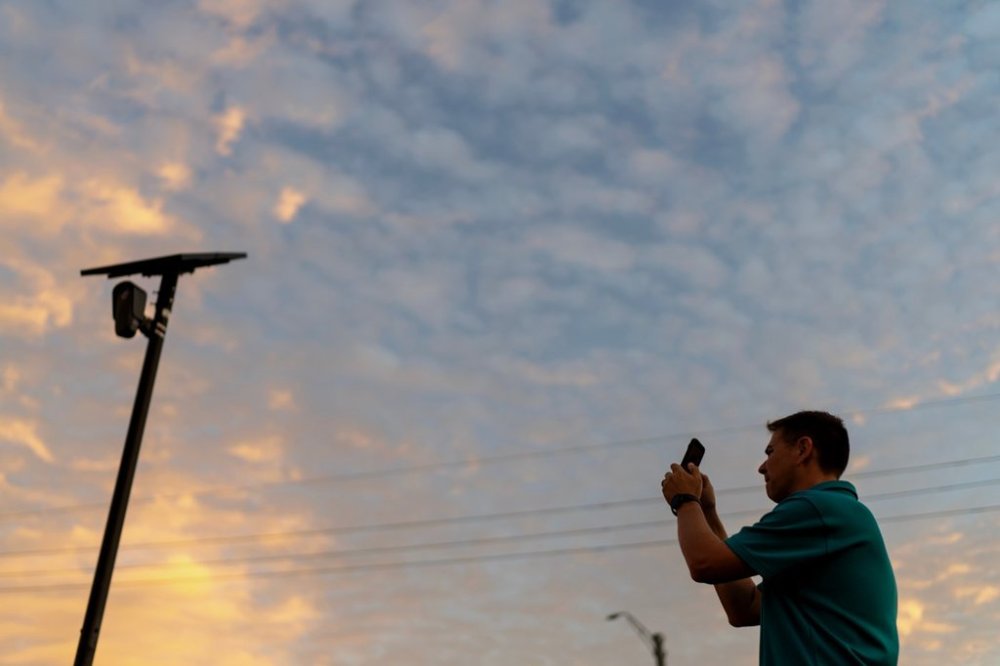
An Associated Press investigation published last week revealed that the U.S. Border Patrol, a component of U.S. Customs and Border Protection, is running a predictive intelligence program monitoring millions of American drivers nationwide to identify and detain people whose travel patterns it deems suspicious. In some instances, Border Patrol concealed its license plate readers in ordinary traffic equipment. The agency also had access to plate data collected by other federal, state and local law enforcement agencies as well as from private companies.
The program, which has existed under administrations of both parties, has resulted in people being stopped, searched and in some cases arrested. A network of cameras scans and records vehicle license plate information, and an algorithm flags vehicles deemed suspicious based on where they came from, where they were going and which route they took. Federal agents in turn sometimes refer drivers they deem suspicious to local law enforcement who make a traffic stop citing a reason like speeding or lane change violations.
Courts have generally upheld license plate reader collection on public roads but have curtailed warrantless government access to other kinds of persistent tracking data that might reveal sensitive details about the movement of individuals, such as GPS devices or cellphone location data. A growing critique by scholars and civil libertarians argues that large-scale collection systems like license plate readers might be unconstitutional under the Fourth Amendment, which protects people from unreasonable searches.
“Increasingly, courts have recognized that the use of surveillance technologies can violate the Fourth Amendment’s protections against unreasonable searches and seizures. Although this area of law is still developing, the use of LPRs and predictive algorithms to track and flag individuals’ movements represents the type of sweeping surveillance that should raise constitutional concerns,” Markey wrote.
CBP did not immediately respond to a request for comment but previously said the agency uses license plate readers to help identify threats and disrupt criminal networks and their use of the technology is “governed by a stringent, multi-layered policy framework, as well as federal law and constitutional protections, to ensure the technology is applied responsibly and for clearly defined security purposes.”
Other lawmakers echoed Markey’s concerns about the legality of the program.
Rep. Dan Goldman, a New York Democrat and member of the House Homeland Security Committee, wrote on the social media site X on Saturday that if CBP “is secretly tracking millions of Americans’ travel patterns and detaining people based on an algorithm, not warrants or evidence, how is that consistent with the Fourth Amendment?”
“Driving isn’t probable cause,” Goldman wrote. “Congress needs full transparency on this program immediately.”
Virginia Sen. Mark Warner, the top Democrat on the Senate Intelligence Committee, also said he had constitutional concerns.

“As Americans across the nation hit the road this holiday season, they shouldn’t have to worry that their travel might make them a target for law enforcement or open them up to undue questioning about their movements, activities, and relationships,” Warner said in a statement.
—-
Tau reported from Washington. Burke reported from San Francisco.
—-
Contact AP’s global investigative team at Investigative@ap.org or https://www.ap.org/tips/.