China exploits US-funded research on nuclear technology, a congressional report says
Advertisement
Read this article for free:
or
Already have an account? Log in here »
To continue reading, please subscribe:

Digital Subscription
One year of digital access for only $205*
- Enjoy unlimited reading on winnipegfreepress.com
- Read the E-Edition, our digital replica newspaper
- Access News Break, our award-winning app
- Play interactive puzzles
*First annual payment billed as $205.00 + GST for one year. This annual subscription will automatically renew at $233.00 + GST every 52 weeks (10% off the regular annual price of $259.35). Offer available to new and qualified returning subscribers only. Cancel any time.
To continue reading, please subscribe:
Add Free Press access to your Brandon Sun subscription for only an additional
$1 for the first 4 weeks*
- Enjoy unlimited reading on winnipegfreepress.com
- Read the E-Edition, our digital replica newspaper
- Access News Break, our award-winning app
- Play interactive puzzles
*Your next Brandon Sun subscription payment will increase by $1.00 and you will be charged $17.95 plus GST for four weeks. After four weeks, your payment will increase to $24.95 plus GST every four weeks.
Read unlimited articles for free today:
or
Already have an account? Log in here »
Hey there, time traveller!
This article was published 17/12/2025 (256 days ago), so information in it may no longer be current.
WASHINGTON (AP) — China is exploiting partnerships with U.S. researchers funded by the Department of Energy to provide the Chinese military with access to sensitive nuclear technology and other innovations with economic and national security applications, according to a congressional report published Wednesday.
The authors of the report say the U.S. must do more to protect high-tech research and ensure that the results of taxpayer-funded work don’t end up benefiting Beijing. They recommended several changes to better protect scientific research in the U.S., including new policies for the Department of Energy to use when deciding whether to fund work that involves Chinese partnerships.
The investigation is part of a congressional push to raise a firewall blocking U.S. research from boosting China’s military buildup when the two countries are locked in a tech and arms rivalry that will shape the future global order.
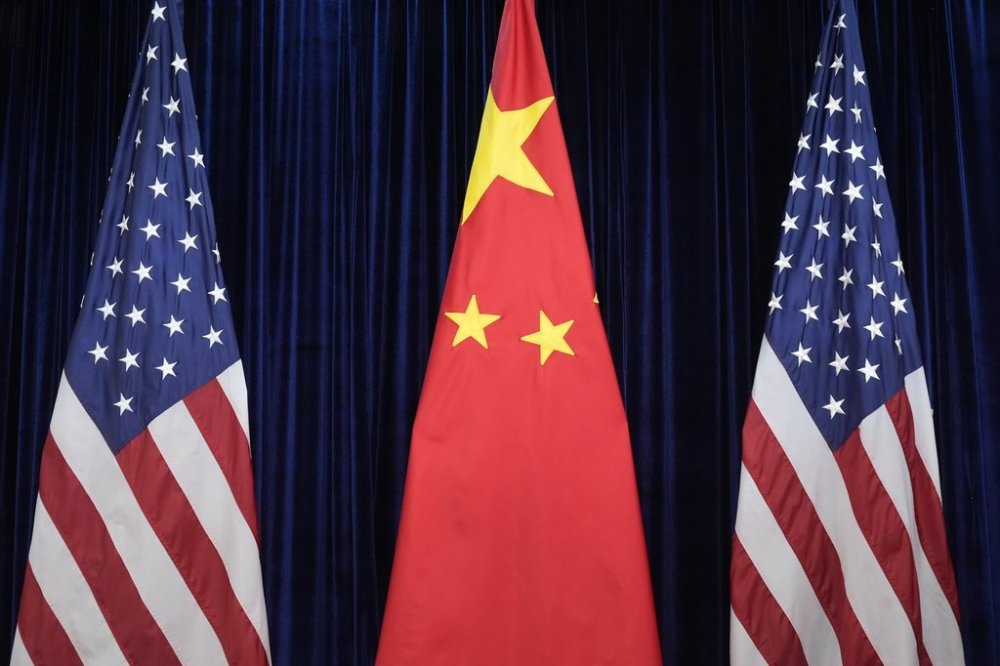
Investigators from the House Select Committee on the Chinese Communist Party and the House Committee on Education and the Workforce identified more than 4,300 academic papers published between June 2023 and June of this year that involved collaborations between DOE-funded scientists and Chinese researchers. About half of the papers involved Chinese researchers affiliated with China’s military or industrial base.
Particularly concerning, investigators found that federal funds went to research collaborations with Chinese state-owned laboratories and universities that work directly for China’s military, including some listed in a Pentagon database of Chinese military companies with operations in the U.S. The report also detailed collaborations between U.S. researchers and groups blamed for cyberattacks as well as human rights abuses in China.
China pushes back on the findings
The Chinese Embassy in Washington said the select committee “has long smeared and attacked China for political purposes and has no credibility to speak of.”
“A handful of U.S. politicians are overstretching the concept of national security to obstruct normal scientific research exchanges, a move that wins no public support and is bound to fail,” embassy spokesperson Liu Pengyu said.
The Energy Department routinely funds advanced research into nuclear energy and the development and disposal of nuclear weaponry, along with a long list of other high-tech fields like quantum computing, materials science and physics. It doles out hundreds of millions of dollars each year for research. The department oversees 17 national laboratories that have led the development in many technologies.
The report followed a number of congressional investigations into federally funded research involving Chinese scientists and researchers. Last year, a report released by Republicans found that partnerships between U.S. and Chinese universities over the past decade had allowed hundreds of millions of dollars in federal funding to help Beijing develop critical technology that could help strengthen its military.
Another investigation this year revealed that the Pentagon in a recent two-year period funded hundreds of projects in collaboration with Chinese entities linked to China’s defense industry.
House committee researchers offer ways to tighten rules
The Energy Department has failed for decades to take steps to ensure the research it funds doesn’t benefit China, the report’s authors found. They made several recommendations to tighten the rules, including a new standardized approach to assessing the national security risks of research, as well as requirements that the department share information about research ties with China with other U.S. government agencies to make it easier to spot problems.
“These longstanding policy failures and inaction have left taxpayer-funded research vulnerable to exploitation by China’s defense research and industrial base and state-directed technology transfer activities,” the authors concluded.
The Department of Energy said in a statement that it will review the report to “better assess, understand, and validate its assertions.”

The department “takes seriously its responsibility to steward federal funds and safeguard critical research capabilities” and “will continue rigorous due diligence and oversight of awards” to ensure its program’s integrity and security, a spokesperson said.
Rep. John Moolenaar, a Michigan Republican who chairs the select committee, said in a statement that the “investigation reveals a deeply alarming problem: The Department of Energy failed to ensure the security of its research and it put American taxpayers on the hook for funding the military rise of our nation’s foremost adversary.”
Moolenaar this year introduced legislation aimed at preventing research funding in science and technology and defense from going to collaborations or partnerships with “foreign adversary-controlled” entities that pose a national security risk.
The legislation cleared the House but failed to advance to become part of the annual sweeping defense policy bill. It was met with strong opposition from scientists and researchers, who argued that the measures were too broad and could chill collaboration and undermine America’s competitive edge in science and technology.
In an October letter, a group of more than 750 faculty members and senior staffers from American universities told congressional leaders overseeing the armed services that the U.S. is in a global competition for talent. They called for “very careful and targeted measures for risk management” to address security concerns.