Canadian researchers develop AI tool to fight online disinformation

Advertisement

Advertise with us

REGINA - Researchers say artificial intelligence has helped them ramp up the fight against online disinformation meant to divide Canadians and distort perceptions of reality.

Read this article for free:


or

Already have an account? Log in here »

To continue reading, please subscribe:

Subscribe and receive a limited-edition Free Press branded hat or tote.

Digital Subscription

One year of digital access for only $205*

  • Enjoy unlimited reading on winnipegfreepress.com
  • Read the E-Edition, our digital replica newspaper
  • Access News Break, our award-winning app
  • Play interactive puzzles

*First annual payment billed as $205.00 + GST for one year. This annual subscription will automatically renew at $233.00 + GST every 52 weeks (10% off the regular annual price of $259.35). Offer available to new and qualified returning subscribers only. Cancel any time.

To continue reading, please subscribe:

Add Free Press access to your Brandon Sun subscription for only an additional

$1 for the first 4 weeks*

  • Enjoy unlimited reading on winnipegfreepress.com
  • Read the E-Edition, our digital replica newspaper
  • Access News Break, our award-winning app
  • Play interactive puzzles
Start now

*Your next Brandon Sun subscription payment will increase by $1.00 and you will be charged $17.95 plus GST for four weeks. After four weeks, your payment will increase to $24.95 plus GST every four weeks.

Hey there, time traveller!
This article was published 14/02/2026 (184 days ago), so information in it may no longer be current.

REGINA – Researchers say artificial intelligence has helped them ramp up the fight against online disinformation meant to divide Canadians and distort perceptions of reality.

The Canadian Institute for Advanced Research says incorporating AI technology into its debunking tool CIPHER has allowed it to better keep up with a constant flow of false and misleading claims.

Brian McQuinn, an associate professor at the University of Regina who is one the project’s leads, said the technology currently only analyzes Russian campaigns but is expected to start decoding those that use Chinese languages.
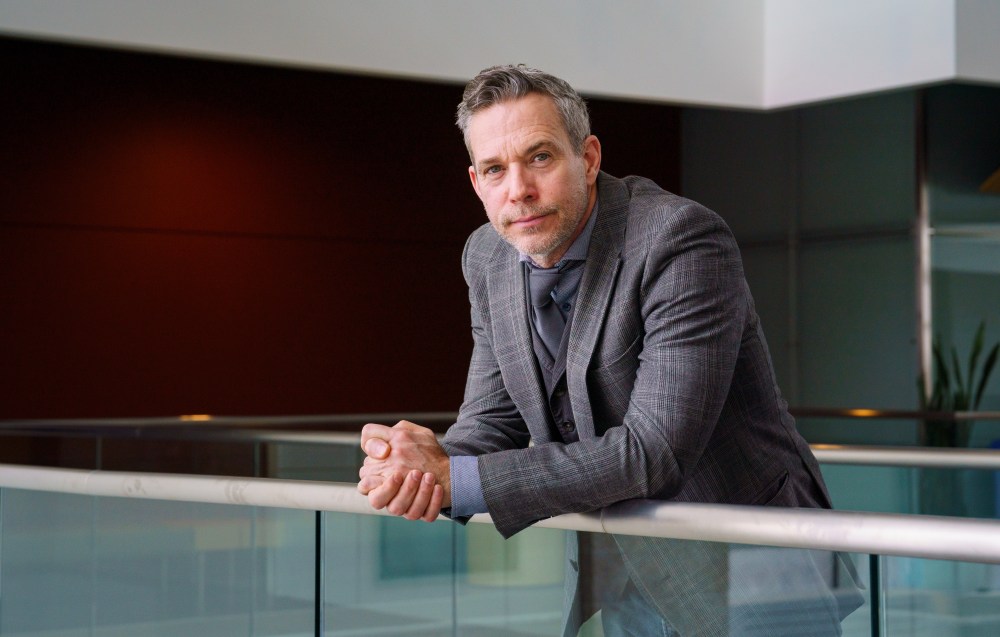
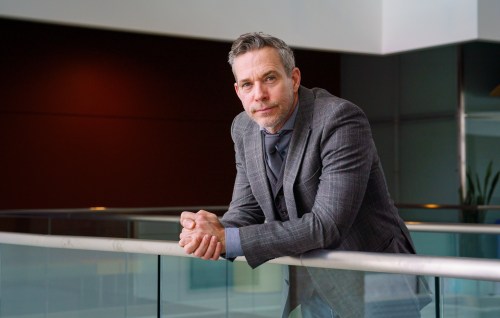
Brian McQuinn, associate professor at the University of Regina and co-lead of CIPHER, stands for a photograph in Regina, on Monday, Feb. 2, 2026. THE CANADIAN PRESS/Heywood Yu

It could also look at information coming from the United States, he added of the tool, which works by scanning foreign media sites for dubious claims that are then assessed by a human fact-checker.

“Russia was the main threat … targeting Canada most generally,” he said in a recent interview. “We are now beginning to shift.”

McQuinn cited a recent example where the system found a Russian media outlet had reported Alberta is moving towards independence, which is factually incorrect. Separatists in the province have held events and reportedly spoke with U.S. officials, but no process is currently underway for Alberta to separate.

“Effective disinformation often has kernels of truth in it,” McQuinn said.

CIPHER launched three years ago after McQuinn and his colleagues released a report that found pro-Kremlin social media accounts targeted far-right and far-left groups in Canada with false notions about the war in Ukraine. That included baseless claims that Russia invaded to root out a neo-Nazi regime and that Ukraine had sought nuclear weapons.

McQuinn said the overarching goal of disinformation campaigns is to tear societies apart and incite violence.

It becomes effective when regular people share it with their friends or family.

“(Campaigns) will use events in the news and tailor stories to advance it in different ways,” McQuinn said.

“It is essential for China and for Russia, especially, to show that it looks like the Western project is decaying, is falling apart economically, politically, socially.”

He said the United States is increasingly becoming a main source of disinformation in Canada.

“You have to always remember that most of Canada’s dialogue when it comes to social media is on U.S. platforms,” McQuinn said.

“We have seen that Canadian news and certain types of Canadian content are being downgraded and throttled within these algorithms.”

Artificial intelligence has been the source of much disinformation on people’s social media feeds, he added, but he said CIPHER needed the technology to make debunking easier.

“We are in an AI arms race around disinformation,” he said.

McQuinn said the goal is to get CIPHER into the hands of government agencies or non-profits.

It’s currently being used by the debunking organization DisinfoWatch, which works to expose falsehoods to Canadians.

DisinfoWatch founder Marcus Kolga called for stronger legislation and regulations on digital media platforms to prevent social media accounts from spreading lies.

“Us doing it alone is not sufficient enough. It requires technology and for us to harness existing technologies in order to sort of make up that gap that we have,” he said.

McQuinn said he’s spoken with government agencies about using CIPHER but declined to provide details. The Canadian Institute for Advanced Research has received funding from the federal and Alberta governments.

He said Canadians should take a beat before sharing what they see on social media.

“If I’m going to forward something, what am I forwarding?” he said.

“The research has shown if you just take like an extra 10 seconds, the amount of disinformation that gets transferred is significantly less.”

This report by The Canadian Press was first published Feb. 14, 2026.

Report Error Submit a Tip

More Stories

Foster mom pleads guilty to assault that left six-year-old-girl paralyzed

Dean Pritchard 4 minute read Preview

Foster mom pleads guilty to assault that left six-year-old-girl paralyzed

Dean Pritchard 4 minute read Friday, Aug. 14, 2026

A Winnipeg foster mother has admitted to violently assaulting her ill foster daughter and leaving her paralyzed after the girl resisted the woman’s efforts to provide her with medication, a court has heard.

Marilyn Keno, 26, pleaded guilty Friday to one count of aggravated assault.

Keno remains in custody and will be sentenced at a later date following the completion of a court-ordered pre-sentence report.

The maximum sentence for aggravated assault is 14 years in prison. Crown attorney Alanna Littman and defence lawyer Jeremy Kostiuk did not disclose what sentences they will be recommending.

Read
Friday, Aug. 14, 2026

Impaired driving victim honoured

Morgan Modjeski 5 minute read Preview

Impaired driving victim honoured

Morgan Modjeski 5 minute read Yesterday at 6:16 PM CDT

Ten years after he was killed in a collision involving an impaired driver in 2016, Robbie Anderson’s name has been added to MADD Canada’s Manitoba Memorial honouring those killed in drunk and drug-impaired-related crashes.

His older brother Chris Anderson, was one of two dozen people who gathered at the Glen Eden Funeral Home and Cemetery in West St. Paul Saturday to remember their loved ones, 86 victims whose names are etched into the granite monument near the heart of the graveyard.

“It’s heavy,” said Anderson when asked what it was like to be part of the ceremony and see his brother’s name added. “It’s been something I’ve been thinking about for a while.”

Grateful for MADD’s work and its efforts to honour Robbie, who was 27 when he died, Anderson said his brother, represented the “absolute best of us.”

Read
Yesterday at 6:16 PM CDT

Hometown hero hits CEBL championship clinching shot

Taylor Allen 4 minute read Preview

Hometown hero hits CEBL championship clinching shot

Taylor Allen 4 minute read 6:34 PM CDT

Chapter 1 of Winnipeg Sea Bears basketball was capped by hometown hero Chad Posthumus.

It was May 27, 2023, and the late, great centre out of River East Collegiate had a put-back basket off a Teddy Allen miss to give the Sea Bears a 90-85 victory over the Vancouver Bandits in Winnipeg’s inaugural game, in front of what was then a record crowd of 7,303.

So, on Saturday, it was rather poetic that Simon Hildebrandt — another Winnipegger and a player Posthumus used to mentor — was the one to put an exclamation mark on the franchise’s latest and greatest chapter.

Hildebrandt drilled a wide-open three in Target Score Time to crown the Sea Bears as the 2026 CEBL champions.

Read
6:34 PM CDT

Puzzles Palace

1 minute read Monday, Jul. 27, 2026

To solve our puzzles, please subscribe with this special offer: |

Men’s recovery home dedicated to ‘homeless hero’ Faron Hall’s memory

Scott Billeck 14 minute read Preview

Men’s recovery home dedicated to ‘homeless hero’ Faron Hall’s memory

Scott Billeck 14 minute read Friday, Aug. 14, 2026

Faron Hall never got the chance to begin recovery. Once heralded as Winnipeg’s “homeless hero” after twice plunging into the Red River to save strangers from drowning, Hall told St. Boniface Street Links executive director Marion Willis shortly before his death in 2014 that he wanted help for his alcoholism.

Read
Friday, Aug. 14, 2026

Proposed Transcona development — which could add 20,000 people — gets thumbs down from residents

Joyanne Pursaga 5 minute read Preview

Proposed Transcona development — which could add 20,000 people — gets thumbs down from residents

Joyanne Pursaga 5 minute read Friday, Aug. 14, 2026

Dozens of Winnipeggers fear plans to make way for up to 20,000 more people to live in south Transcona would dramatically alter their neighbourhood and tie hefty fees for new services to their property titles.

If city council adopts the proposed South Transcona secondary plan, all future development applications would need to conform to its goals. The affected area is located south of Dugald Road, north of St. Boniface Road, east of Plessis Road and west of Murdock Road.

Homeowner Virginia Page Jähne fears the plan could add a massive tab to the title of her 4.3-acre property to cover services required for the development.

“My main concern is that they are wanting to put $1.4 million onto my title to pay for this. Now, they say that I will not have to pay it unless I subdivide. But if a person comes by and wants to buy from me … and they see that $1.4 million … what’s the first thing (they’re) going to do?” said Page Jähne, in an interview.

Read
Friday, Aug. 14, 2026