New study challenges a site that’s key to how humans got to the Americas

Advertisement

Advertise with us

NEW YORK (AP) — For decades, the strongest evidence for the earliest human settlement in the Americas came from a site in Chile called Monte Verde.

Read this article for free:


or

Already have an account? Log in here »

To continue reading, please subscribe:

Subscribe and receive a limited-edition Free Press branded hat or tote.

Digital Subscription

One year of digital access for only $205*

  • Enjoy unlimited reading on winnipegfreepress.com
  • Read the E-Edition, our digital replica newspaper
  • Access News Break, our award-winning app
  • Play interactive puzzles

*First annual payment billed as $205.00 + GST for one year. This annual subscription will automatically renew at $233.00 + GST every 52 weeks (10% off the regular annual price of $259.35). Offer available to new and qualified returning subscribers only. Cancel any time.

To continue reading, please subscribe:

Add Free Press access to your Brandon Sun subscription for only an additional

$1 for the first 4 weeks*

  • Enjoy unlimited reading on winnipegfreepress.com
  • Read the E-Edition, our digital replica newspaper
  • Access News Break, our award-winning app
  • Play interactive puzzles
Start now

*Your next Brandon Sun subscription payment will increase by $1.00 and you will be charged $17.95 plus GST for four weeks. After four weeks, your payment will increase to $24.95 plus GST every four weeks.

NEW YORK (AP) — For decades, the strongest evidence for the earliest human settlement in the Americas came from a site in Chile called Monte Verde.

Scientists found echoes of human presence dating back to around 14,500 years ago, including footprints, wooden tools, foundations for a building and the remains of an ancient fire pit. They dated sediments and artifacts from the site to this time frame.

A new study challenges the age of this important site, suggesting Monte Verde might be much younger than scientists thought. But not everyone agrees with the findings.
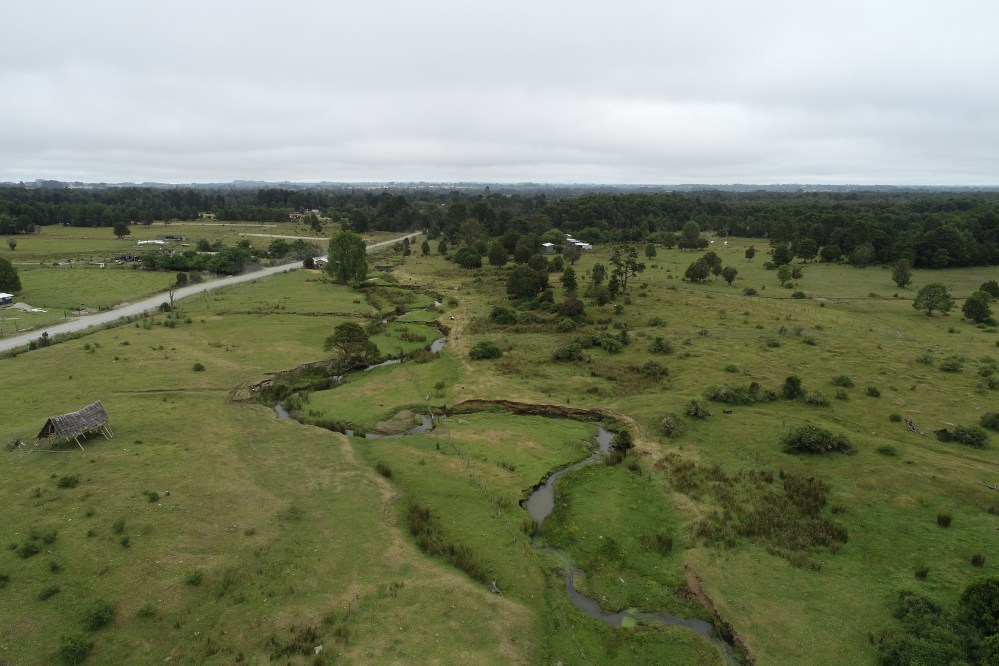
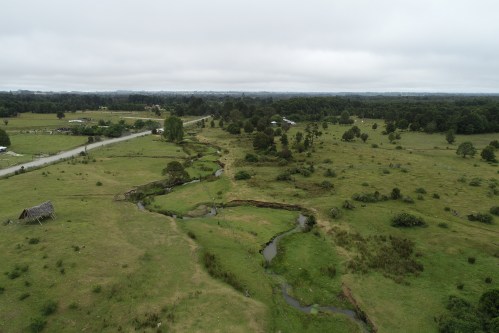
This 2023 image provided by Todd Surovell shows the Monte Verde archaeological site and Chinchihuapi Creek in Chile. (Todd Surovell via AP)

Scientists sampled and dated sediments from nine areas along the Chinchihuapi Creek by the site and analyzed how the landscape changed over thousands of years. They uncovered a layer of volcanic ash from an eruption dating back to about 11,000 years ago.

Anything above that layer — in this case, the Monte Verde wood and artifacts — had to be younger, according to study co-author Claudio Latorre.

“We basically reinterpreted the geology of the site. And we came to the conclusion that the Monte Verde site cannot be older than 8,200 years before present,” said Latorre, who works at the Pontifical Catholic University of Chile.

The researchers think changes to the landscape, including a stream wearing down the rocks, may have mixed old layers with new, causing researchers to date ancient wood as part of the Monte Verde site.

The findings were published Thursday in the journal Science. Several scientists, including those involved with the original excavations, take issue with the results.

“They have provided, at best, a working hypothesis that is not supported by the data they presented,” said Michael Waters of Texas A&M University, who had no role in either study.

Experts not involved with the research say the study includes analysis of samples from the area surrounding Monte Verde, where the geology isn’t comparable to the site itself. And they say there’s not enough evidence that the layer of volcanic ash once covered the entire landscape.

They also say the study doesn’t offer a sufficient explanation for the artifacts found at the site that have been directly dated to 14,500 years ago, including a mastodon tusk fashioned into a tool, a wooden lance and a digging stick with a burned tip.

“This interpretation disregards a vast body of well-dated cultural evidence,” archaeologist Tom Dillehay of Vanderbilt University, who led the site’s first excavation, said in an email.

The new study’s authors disagree with these criticisms, saying they sampled within, upstream and downstream of the site. And there’s not enough evidence that the dated artifacts at the site really are that old, said co-author Todd Surovell, of the University of Wyoming.

The Monte Verde site is critical to scientists’ understanding of how people got to the Americas. Scientists used to think the first arrivals were a group of people 13,000 years ago who made tipped stone tools known as Clovis points. The discovery and dating of Monte Verde, which was initially mired in controversy, appeared to put that to rest.

It’s unclear how a new date for the site might affect the human story. Since Monte Verde, researchers have uncovered sites in North America that predate the Clovis people, such as Cooper’s Ferry in Idaho and the Debra L. Friedkin site in Texas.

But another big question is how, exactly, people got to the Americas from Asia, maneuvering south of two massive ice sheets covering Canada. Did humans arrive in time for the sheets to part, revealing an ice-free corridor? Did they travel along the coast in boats, or over a mix of water and land?

A revised date for Monte Verde could reopen discussions about the most likely route by early humans, said Surovell. Future independent analyses of other early human sites could provide more clarity.

“Given enough time and given the ability to do science, science is self-corrective,” Surovell said. “It eventually reaches the truth.”

___

The Associated Press Health and Science Department receives support from the Howard Hughes Medical Institute’s Department of Science Education and the Robert Wood Johnson Foundation. The AP is solely responsible for all content.

Report Error Submit a Tip

More Stories

New businesses start to creep up in former Winnipeg Slurpee shops

Tiago Resko 5 minute read Preview

New businesses start to creep up in former Winnipeg Slurpee shops

Tiago Resko 5 minute read Thursday, Aug. 27, 2026

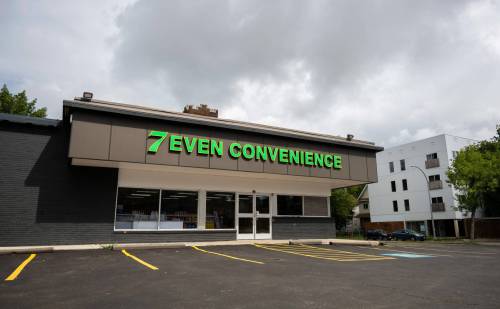
The remnants of 7-Eleven can still be seen as new businesses move into spaces where Slurpee machines and taquitos once ruled.

As fresh paint dries on several new ventures — such as a pizza place and a convenience store with a name that might make a customer do a double-take — holes across Winnipeg once occupied by the international convenience chain are slowly being filled.

Business at a Domino’s Pizza in Elmwood, formerly a 7-Eleven, has been booming since it opened June 1, the store manager said.

“The issues that 7-Eleven would have had might be different than what we would have. They were dealing with a lot of theft where people can just walk in and out, but Domino’s isn’t set up that way,” said Paul Hemmerling.

Read
Thursday, Aug. 27, 2026

Bombers play most complete game of season to dump powerhouse Alouettes

Taylor Allen 6 minute read Preview

Bombers play most complete game of season to dump powerhouse Alouettes

Taylor Allen 6 minute read Friday, Aug. 28, 2026

The Winnipeg Blue Bombers had to play four of their best quarters of football to even stand a chance.

There was no denying it, because with the powerhouse Montreal Alouettes in town, everyone knew it was going to take that — and then some — to slay the CFL’s top team.

Recent weeks suggested the Bombers weren’t capable of such a performance, but they dug deep at the perfect time and silenced a never-ending list of doubters to prevail 44-28 on Friday night at Princess Auto Stadium.

Where the heck have these Bombers been all year?

Read
Friday, Aug. 28, 2026

Winnipeg man among those missing in Nepal flash flood

Free Press staff 2 minute read Preview

Winnipeg man among those missing in Nepal flash flood

Free Press staff 2 minute read Yesterday at 10:06 AM CDT

A Winnipeg man on a pilgrimage in Nepal is among nearly 2,000 people missing after a deadly flash flood devastated a popular tourist region along the Himalayan border earlier this week.

Mohit Kaushik, 49, was travelling with a tour group taking part in the Kailash Manasarovar Yatra, a sacred, days-long pilgrimage to Mount Kailash and Lake Manasarovar in neighbouring Tibet, according to social media posts.

“Our friend and neighbour, Mohit Kaushik, a resident of Winnipeg, Canada, has been out of contact since yesterday while travelling from Timure during his pilgrimage to Kailash Mansarovar,” Swikriti Pokhrel wrote in a social media post. “If you have seen him or find his name on any hospital list, please let us know. Thank you.”

Kaushik has not been heard from since Wednesday, when a glacier collapse in the nearby Himalayas triggered catastrophic flooding and landslides, sending a torrent of ice, rock and debris roughly 100 kilometres downstream.

Read
Yesterday at 10:06 AM CDT

Hydro announces CEO out after two years

Chris Kitching 6 minute read Preview

Hydro announces CEO out after two years

Chris Kitching 6 minute read Friday, Aug. 28, 2026

Allan Danroth is out as Manitoba Hydro’s president and CEO — a departure that came as a surprise to some observers — just two years after he was hired.

Danroth left for personal reasons, the Crown corporation’s board chair, Jamie Wilson, said Friday, while announcing chief operating officer Hal Turner as interim president and CEO ahead of a national and international search for a replacement.

“Today’s one of those days where you have a lot of mixed emotions,” Turner told reporters at Hydro’s downtown Winnipeg headquarters. “I just want to say on behalf of all the employees in Manitoba Hydro, we very much appreciate Allan’s leadership over the last two years.”

Turner wouldn’t say whether he will apply to be the next permanent CEO.

Read
Friday, Aug. 28, 2026

No kidding with comment on son’s resemblance

Maureen Scurfield 5 minute read Yesterday at 2:00 AM CDT

DEAR MISS LONELYHEARTS: I saw someone on the beach I used to love. She was with her husband, who had just gone into the water. She had several children with her, playing in the sand.

Her oldest kid looked right up at me and I said to my ex in a shocked whisper, “He looks like me!”

She replied in a whisper, “And my husband looks a lot like you, too, you idiot. My son was born two years after we broke up. He’s not yours, and you and I mean nothing to each other anymore.”

Interesting! That child had my colour of eyes and my colour of curly hair. Now what?

New study challenges a site that’s key to how humans got to the Americas

Adithi Ramakrishnan, The Associated Press 4 minute read Preview

New study challenges a site that’s key to how humans got to the Americas

Adithi Ramakrishnan, The Associated Press 4 minute read Thursday, Mar. 19, 2026

NEW YORK (AP) — For decades, the strongest evidence for the earliest human settlement in the Americas came from a site in Chile called Monte Verde.

Scientists found echoes of human presence dating back to around 14,500 years ago, including footprints, wooden tools, foundations for a building and the remains of an ancient fire pit. They dated sediments and artifacts from the site to this time frame.

A new study challenges the age of this important site, suggesting Monte Verde might be much younger than scientists thought. But not everyone agrees with the findings.

Scientists sampled and dated sediments from nine areas along the Chinchihuapi Creek by the site and analyzed how the landscape changed over thousands of years. They uncovered a layer of volcanic ash from an eruption dating back to about 11,000 years ago.

Read
Thursday, Mar. 19, 2026