Africa’s solar boom faces higher costs as China cuts export subsidies

Advertisement

Advertise with us

NAIROBI, Kenya (AP) — China’s decision to end value-added tax rebates on solar panel exports and phase out incentives for making battery storage equipment could push up the cost of solar installations in Africa, which relies heavily on imported Chinese technology.

Read this article for free:

or

Already have an account? Log in here »

To continue reading, please subscribe:

Subscribe and receive a limited-edition Free Press branded hat or tote.

Digital Subscription

One year of digital access for only $205*

  • Enjoy unlimited reading on winnipegfreepress.com
  • Read the E-Edition, our digital replica newspaper
  • Access News Break, our award-winning app
  • Play interactive puzzles

*First annual payment billed as $205.00 + GST for one year. This annual subscription will automatically renew at $233.00 + GST every 52 weeks (10% off the regular annual price of $259.35). Offer available to new and qualified returning subscribers only. Cancel any time.

To continue reading, please subscribe:

Add Free Press access to your Brandon Sun subscription for only an additional

$1 for the first 4 weeks*

  • Enjoy unlimited reading on winnipegfreepress.com
  • Read the E-Edition, our digital replica newspaper
  • Access News Break, our award-winning app
  • Play interactive puzzles
Start now

*Your next Brandon Sun subscription payment will increase by $1.00 and you will be charged $17.95 plus GST for four weeks. After four weeks, your payment will increase to $24.95 plus GST every four weeks.

NAIROBI, Kenya (AP) — China’s decision to end value-added tax rebates on solar panel exports and phase out incentives for making battery storage equipment could push up the cost of solar installations in Africa, which relies heavily on imported Chinese technology.

The changes, expected to take effect April 1 for solar panels and beginning next year for batteries, may complicate efforts to expand renewable energy to close vast electricity gaps across Africa, though experts say the impact likely will be manageable.

“We are likely to see solar panel prices increase in Africa because most of the inputs come from China,” said Wangari Muchiri, an energy analyst focused on Africa’s clean energy sector. “Removing the rebate will add to existing costs, especially when you consider shipping, logistics, and other import fees.”
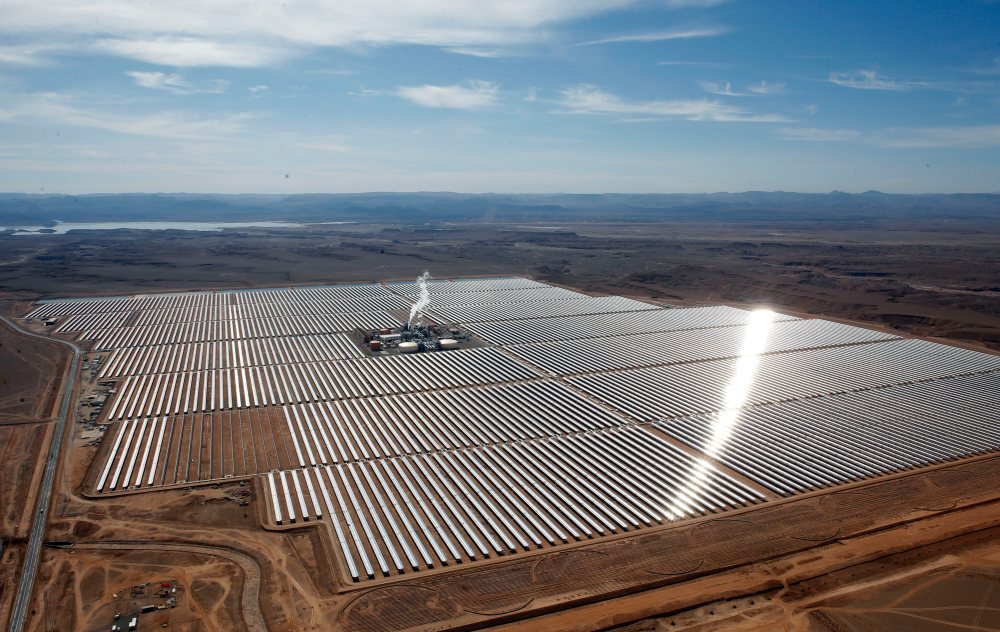
FILE - An aerial view of a solar power plant in Ouarzazate, central Morocco on Feb.4, 2016. (AP Photo/Abdeljalil Bounhar, File)

Africa already pays significantly more for solar equipment than other regions because of transport costs, smaller import volumes and tariffs.

China’s policy change reflects broader shifts after fierce competition among Chinese manufacturers pushed solar module prices to as little as $0.07 per watt in 2025, from $0.25 in 2022. That helped drive global adoption of solar energy, but left many companies with heavy losses.

Some Chinese companies built VAT rebates into their export pricing, effectively transferring those subsidies to their overseas buyers. But Beijing has cut back on those payments as it reins in overcapacity and shifts toward more advanced technologies.

Rather than a sharp price shock, the loss of such rebates will likely gradually raise prices, setting a firmer global price floor.

“The changes are significant, but not catastrophic,” said John van Zuylen, CEO of the Africa Solar Industry Association.

“The entire recent solar boom was built on artificially cheap Chinese pricing,” van Zuylen said. “That era is now ending.”

“When a structural rebate is removed, exporters typically either absorb the cost, raise prices, or reduce discounting,” van Zuylen said. “African countries will likely feel this as a gradual upward shift in pricing rather than a single dramatic spike.”

Even with modest price increases, solar is expected to remain competitive across much of the continent since it’s the cheapest source of energy in Africa, Muchiri said.

“Even with higher panel prices, it will still be significantly cheaper than alternatives like diesel,” she said.

“It will increase project costs slightly and might delay the project construction pipeline due to supply chain shortages and contractual changes, stockpiling rush, congestion in shipment for the countries heavily reliant on Chinese imports,” said Sonia Dunlop, CEO of the Global Solar Council, an industry association.

Battery storage, critical for providing electricity after sunset, may face a bigger challenge as incentives are phased out through 2027. Higher costs may affect smaller users the most, van Zuylen said.

“Batteries matter more than panels for Africa because storage is what makes solar reliable for off-grid and backup users,” he said.

Basil Abia, co-founder of the Nigerian energy research firm Truva Intelligence, said that “batteries have historically been expensive, and many solar installations in Africa were built without them.”

“Only recently have we started seeing more systems combining solar with battery storage,” Abia said.

He said that even without rebates, solar modules remain relatively affordable. Through 2024 and early 2025, module prices fell sharply from around $0.25 per watt in previous years to as low as $0.07 per watt.

Demand for solar, which now supplies 3% of power generation in Africa, is expected to continue growing as storage improves reliability. Meanwhile, the heavy dependence on Chinese equipment is drawing attention to limited local manufacturing capacity.

“The VAT removal will slow, but not reverse Africa’s clean energy transition,” Abia said. “Countries that use this moment to accelerate local manufacturing will emerge stronger. Those that do not will remain exposed to Beijing’s next industrial policy adjustment.”

___

The Associated Press’ climate and environmental coverage receives financial support from multiple private foundations. AP is solely responsible for all content. Find AP’s standards for working with philanthropies, a list of supporters and funded coverage areas at AP.org.


Report Error Submit a Tip

More Stories

Today’s horoscope

Georgia Nicols 4 minute read Preview

Today’s horoscope

Georgia Nicols 4 minute read 2:00 AM CDT

MOON ALERT: Avoid shopping (except food and gas) and important decisions from 7 a.m. until 4 p.m. today. After that, the moon moves from Pisces into Aries.

ARIES (March 21-April 19)

The day is a mixed bag. There are still fun opportunities to play and enjoy socializing with others. However, you might be sandbagged by someone who is critical or negative. Be careful with whom you choose to associate, because they might irk you. Focus on home repairs.

TAURUS (April 20-May 20)

Read
2:00 AM CDT

Hydro scrambling to restore power to remaining 4,500 customers after storm; some outages will continue into Saturday

Chris Kitching 5 minute read Preview

Hydro scrambling to restore power to remaining 4,500 customers after storm; some outages will continue into Saturday

Chris Kitching 5 minute read Friday, Jul. 31, 2026

Power outages could stretch into a third day for some Manitobans — mainly in and around Winnipeg — while crews continued to repair widespread damage caused by powerful thunderstorms.

About 4,500 Manitoba Hydro customers were still without electricity at 2:30 p.m. Friday, after more than 30,000 lost power while powerful winds brought down trees and power lines Wednesday night and early Thursday.

The Crown corporation said it is aiming to have all outages with greater numbers of customers restored by Friday night, but some customers may remain without power into Saturday.

“The challenge is just the sheer scale of this thing — hundreds of different outages spread across a large part of the city,” Hydro spokesman Peter Chura said. “Just getting to all of them in a timely fashion is very difficult.”

Read
Friday, Jul. 31, 2026

Manitoba Hydro expects storm-related power outages to be repaired Saturday

Zoe Pierce 6 minute read Preview

Manitoba Hydro expects storm-related power outages to be repaired Saturday

Zoe Pierce 6 minute read Yesterday at 5:46 PM CDT

As Manitoba Hydro crews work to restore the last pockets of power following this week’s severe storms, some Winnipeg residents say the prolonged outages left them effectively stranded, unable to safely leave their apartments or charge essential mobility devices.

More than 30,000 Manitoba Hydro customers lost power after powerful storms swept across southern Manitoba Wednesday and Thursday, bringing down trees and power lines. Environment and Climate Change Canada recorded wind gusts of 133 km/h in Brandon, 113 km/h in Souris and 91 km/h in Winnipeg, along with more than 2,900 lightning strikes within 50 kilometres of the city.

In an update posted to social media Saturday morning, Manitoba Hydro said about 500 customers remained without power. The utility said it hoped to restore all remaining storm-related outages later in the day.

“Right now, we’re prioritizing customers that have been out the longest,” the post reads. “The final restoration work will still take time, in part because we’re dealing with small, localized outages and need to travel across a widespread area.”

Read
Yesterday at 5:46 PM CDT

Brighter days ahead after Camp Arnes

Joshua Frey-Sam 5 minute read Preview

Brighter days ahead after Camp Arnes

Joshua Frey-Sam 5 minute read Yesterday at 6:00 AM CDT

Keishna Abenstein remembers what it was like to be a teenager who was stuck in her shell.

She also recalls how much going to summer camp at Camp Arnes helped her spread her wings.

Abenstein has watched her middle child, Teagen, go through a similar roller-coaster as a teenager. Teagen, described as a social butterfly in his childhood, has become a bit more reserved in his adolescence after many of his closest elementary school friends went to a different middle school, forcing him to make new friends as he began the next chapter of his education.

Abenstein saw an opportunity for a similar experience at Camp Arnes that could impact her son the same way it did for her.

Read
Yesterday at 6:00 AM CDT

Crop storage headaches loom on horizon

Laura Rance-Unger 4 minute read Preview

Crop storage headaches loom on horizon

Laura Rance-Unger 4 minute read Yesterday at 2:01 AM CDT

A sense of calm descends over Prairie fields this time of year — at least on the surface.

Activities become more limited in the weeks leading up to harvest. There’s not much farmers can do now to support this year’s crop, other than monitor and protect it from diseases such as sclerotinia in canola and leaf stripe and fusarium head blight in wheat and barley.

July is when you might see farmers wading into a thick stand of canola, conducting a so-called “wet pants test” to get a low-tech read on how much disease-inducing moisture is lurking in the canopy.

Disease pressure is high in a humid, hot summer like this one and it’s kept aerial applicators busy applying fungicides. Sclerotinia spores live on plant residues in the soil and blossom into a mould that destroys the canola stem, starving the maturing pods.

Read
Yesterday at 2:01 AM CDT

Brandon laying groundwork for Arabian championship

Connor McDowell 4 minute read Preview

Brandon laying groundwork for Arabian championship

Connor McDowell 4 minute read Yesterday at 2:01 AM CDT

BRANDON — It’s time to dish the dirt on what’s about to happen at Brandon’s Keystone Centre.

Hundreds of horses and hundreds more spectators are about to descend on the site for Canada’s National Arabian Championship Aug. 6 to 15, and before that happens, the staging surface has to be perfect.

“We have been working on this day in and day out,” said Devin Epp, sales manager in the Ag Centre at the Keystone Centre.

Since July 24, staff have been working on a 24-hour schedule to build the competition floor. Dirt was hauled into the arena and has since been worked into place with tractors and hand-pushed equipment.

Read
Yesterday at 2:01 AM CDT