Parents see hope in back-to-back rulings that social media providers failed to protect young users
Advertisement
Read this article for free:
or
Already have an account? Log in here »
To continue reading, please subscribe:

Digital Subscription
One year of digital access for only $205*
- Enjoy unlimited reading on winnipegfreepress.com
- Read the E-Edition, our digital replica newspaper
- Access News Break, our award-winning app
- Play interactive puzzles
*First annual payment billed as $205.00 + GST for one year. This annual subscription will automatically renew at $233.00 + GST every 52 weeks (10% off the regular annual price of $259.35). Offer available to new and qualified returning subscribers only. Cancel any time.
To continue reading, please subscribe:
Add Free Press access to your Brandon Sun subscription for only an additional
$1 for the first 4 weeks*
- Enjoy unlimited reading on winnipegfreepress.com
- Read the E-Edition, our digital replica newspaper
- Access News Break, our award-winning app
- Play interactive puzzles
*Your next Brandon Sun subscription payment will increase by $1.00 and you will be charged $17.95 plus GST for four weeks. After four weeks, your payment will increase to $24.95 plus GST every four weeks.
Read unlimited articles for free today:
or
Already have an account? Log in here »
Walker Montgomery was just 16 when someone pretending to be a teenage girl messaged him through Instagram and seduced him into cybersex.
Within hours he was dead. Caught up in a sextortion scheme, the Mississippi teen killed himself.
—-
EDITOR’S NOTE — This story includes discussion of suicide. If you or someone you know needs help, the national suicide and crisis lifeline in the U.S. is available by calling or texting 988.
—-
His father, Brian Montgomery, will never get over losing his son but he was among many parents celebrating this week as social media giant Meta lost two court cases where juries in different states ruled the platforms hook young users without concern for their well being.
Montgomery sees it as a reckoning.
“We’re talking about the most financially sound business that the planet has ever known. This will set an expectation,” said Montgomery on Wednesday after juries in New Mexico and Los Angeles found social media providers failed to protect young users.
And he isn’t alone.
Other parents agree: There have been too few safeguards, and kids are suffering.
Verdicts show shift in public’s perception
The first blow came Tuesday when jurors in New Mexico sided with state prosecutors who argued that Meta — which owns Instagram, Facebook and WhatsApp — prioritized profits over safety and imposed a $375 million penalty.
Then on Wednesday, jurors in a separate case in Los Angeles found that Meta and Google-owned YouTube designed their platforms to hook young users without concern for their well being. The companies issued statements vowing to explore their legal options, which includes appeals.
The verdicts illustrate a growing shift in the public’s perception of social media companies and their responsibilities in keeping young people safe on their platforms.
For years, social media companies have disputed allegations that they harm children’s mental health through deliberate design choices that addict kids to their platforms and fail to protect them from sexual predators and dangerous content. This year, several state and federal court cases are heading to trial, and while the details may vary, they all seek to hold companies responsible for what happens on their platforms.
Montgomery, not a plaintiff in either case, said the next step is legislation. “They’ve proven,” he said of the social media industry,” that they can’t regulate themselves.”
Parents sad that change is coming too late
He said his son — an athlete who loved the outdoors — went to bed happy before encountering a scammer from Nigeria.
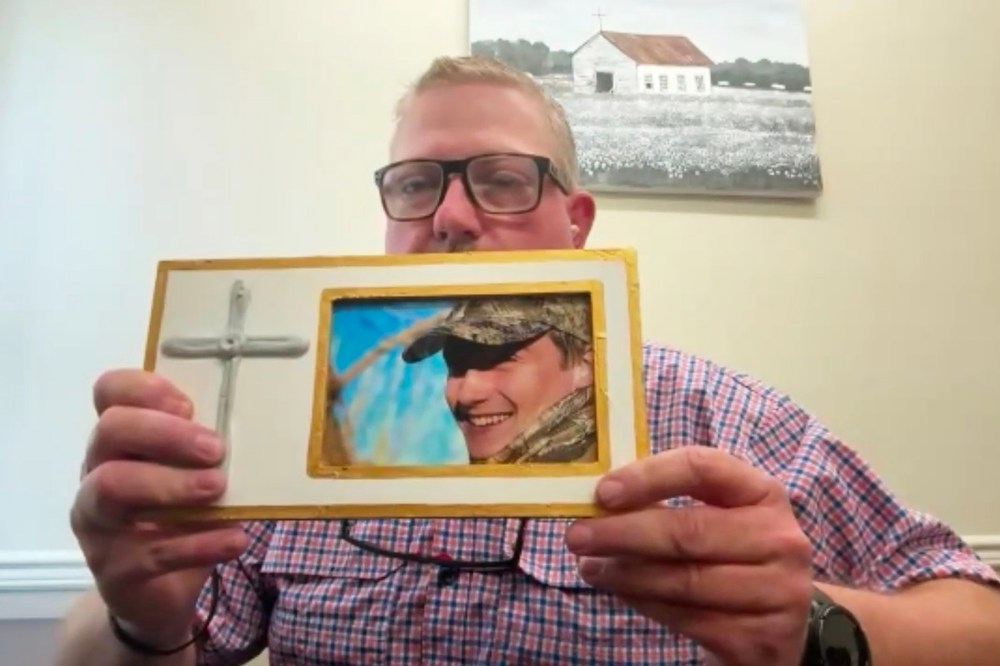
“We didn’t get to see him the next morning,” the farmer and crop insurance salesman said, a picture of his son, taken during a duck hunting trip just months before his Dec. 1, 2022, death, displayed on his desk.
He is struck now by a mix of joy and sadness, knowing the change he sees coming is too late for his family. “Walker’s not coming back,” he said.
In Dedham, Massachusetts, on the outskirts of Boston, Deb Schmill, understands all too well the messy mix of emotions the rulings bring. Her daughter, Becca Schmill, was 18 in September 2020 when she died of fentanyl poisoning from drugs she purchased through a social media platform.
“That’s the painful part of all of this,” said Schmill, also not a plaintiff in the lawsuits. “If this could have been done five years ago, 10 years ago. Things would be so different.”
Her daughter’s overdose happened after the teen was sexually assaulted by someone she met online and then became a victim of revenge porn.
“She was a wonderful child, but she was just tortured,” said her mother.
Efforts to keep kids safe
Like Montgomery, she has advocated for a bill aimed at protecting kids from the harms of social media, gaming sites and other online platforms. Called the Kids Online Safety Act, it has passed the U.S. Senate two years ago, but not the House.
With appeals and any settlement discussions, the cases against social media companies could take years to resolve. And unlike in Europe and Australia, tech regulation in the United States is moving at a glacial pace.
“We know, the parents know better than anyone that when we are unable to hold the social media companies accountable, children die,” she said. “And it’s just absurd that this is happening in our country.”
Parents less hard-hit by tragedy are also growing wary. As Charles Halley dropped his son off at an Alameda, California, school, he explained that the fifth-grader doesn’t have a phone because of concerns that social media is harmful for kids.
“The divisiveness, the beauty standard, consumerism, just everything that’s wrong with society kind of packaged up and marketed to kids,” he said.

He said parents are fed up and organizing in an effort to curtail the harms, although he isn’t certain they can be stopped altogether.
“People my age, younger, older, have seen what social media has done to our behavior, the way we deal with each other,” he said, describing crashes caused by people who can’t stay off their phones. “And I would just assume that the effect is magnified for kids whose brains are still developing, and it’s just a shame to see them exposed that way.
“That’s why I’m keeping my kid off social media.”
——
Terry Chea contributed from Alameda, California.