Artemis II astronauts bound for moon after rocketing away on NASA’s first lunar voyage in decades

Advertisement

Advertise with us

CAPE CANAVERAL, Fla. (AP) — Four astronauts embarked on a high-stakes flight around the moon Wednesday, humanity’s first lunar voyage in more than half a century and the thrilling leadoff in NASA’s push toward a landing in two years.

Read this article for free:


By clicking the button above, an account will be created and you will begin to receive some of our recommended newsletters. You may opt out of any newsletter by visiting your Email and Communication Preferences page or by clicking "unsubscribe" at the bottom of any email.

or

Already have an account? Log in here »

To continue reading, please subscribe:

Digital Subscription

One year of digital access for only $1.44 a week*

  • Enjoy unlimited reading on winnipegfreepress.com
  • Read the E-Edition, our digital replica newspaper
  • Access News Break, our award-winning app
  • Play interactive puzzles

*Billed as $5.77 plus GST every four weeks. After 52 weeks, price increases to the regular rate of $19.95 plus GST every four weeks. Offer available to new and qualified returning subscribers only. Cancel any time.

To continue reading, please subscribe:

Add Free Press access to your Brandon Sun subscription for only an additional

$1 for the first 4 weeks*

  • Enjoy unlimited reading on winnipegfreepress.com
  • Read the E-Edition, our digital replica newspaper
  • Access News Break, our award-winning app
  • Play interactive puzzles
Start now

*Your next Brandon Sun subscription payment will increase by $1.00 and you will be charged $17.95 plus GST for four weeks. After four weeks, your payment will increase to $24.95 plus GST every four weeks.

Hey there, time traveller!
This article was published 01/04/2026 (209 days ago), so information in it may no longer be current.

CAPE CANAVERAL, Fla. (AP) — Four astronauts embarked on a high-stakes flight around the moon Wednesday, humanity’s first lunar voyage in more than half a century and the thrilling leadoff in NASA’s push toward a landing in two years.

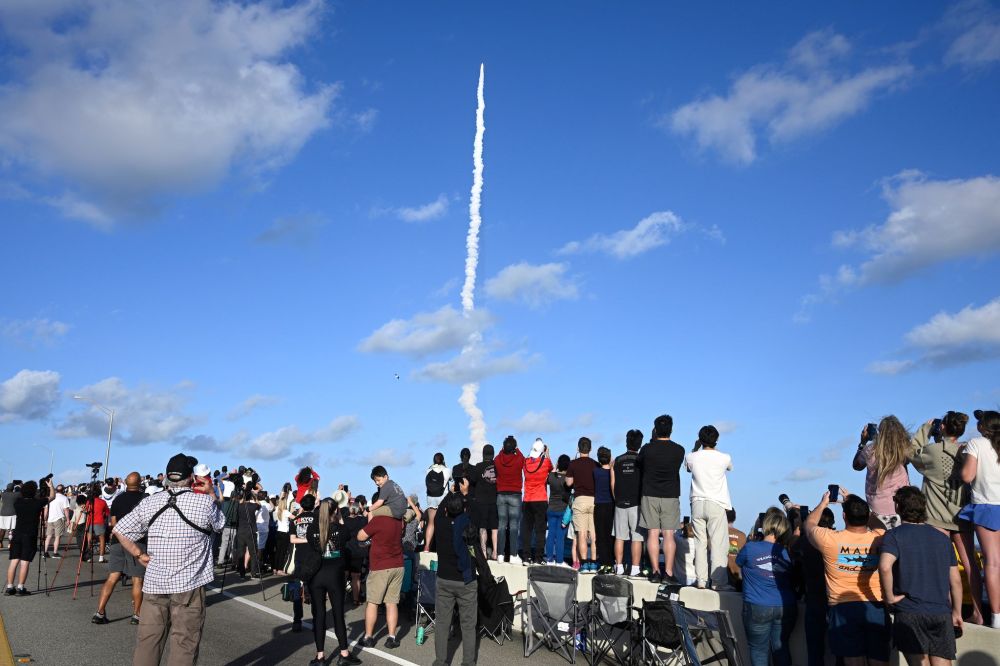
Carrying three Americans and one Canadian, the 32-story rocket rose from NASA’s Kennedy Space Center where tens of thousands gathered to witness the dawn of this new era. Crowds also jammed the surrounding roads and beaches, reminiscent of the Apollo moonshots in the 1960s and ’70s. It is NASA’s biggest step yet toward establishing a permanent lunar presence.

“On this historic mission, you take with you the heart of this Artemis team, the daring spirit of the American people and our partners across the globe, and the hopes and dreams of a new generation,” launch director Charlie Blackwell-Thompson told the crew right before liftoff. “Good luck, Godspeed Artemis II. Let’s go.”

Artemis II set sail from the same Florida launch site that sent Apollo’s explorers to the moon so long ago. The handful still alive cheered this next generation’s grand adventure as the Space Launch System rocket thundered into the early evening sky, a nearly full moon beckoning some 248,000 miles (400,000 kilometers) away.

Five minutes into the flight, Commander Reid Wiseman saw the team’s target: “We have a beautiful moonrise, we’re headed right at it,” he said from the capsule. On board with him are pilot Victor Glover, Christina Koch and Canada’s Jeremy Hansen. It is the most diverse lunar crew ever with the first woman, person of color and non-U. S. citizen riding in NASA’s new Orion capsule.

“NASA is back in the business of sending astronauts to the moon,” NASA Administrator Jared Isaacman told reporters following liftoff, calling the half-century hiatus a brief intermission.

Tensions high in the hours leading up to launch

Tensions were high earlier in the day as hydrogen fuel started flowing into the rocket. Dangerous hydrogen leaks erupted during a countdown test earlier this year, forcing a lengthy flight delay.
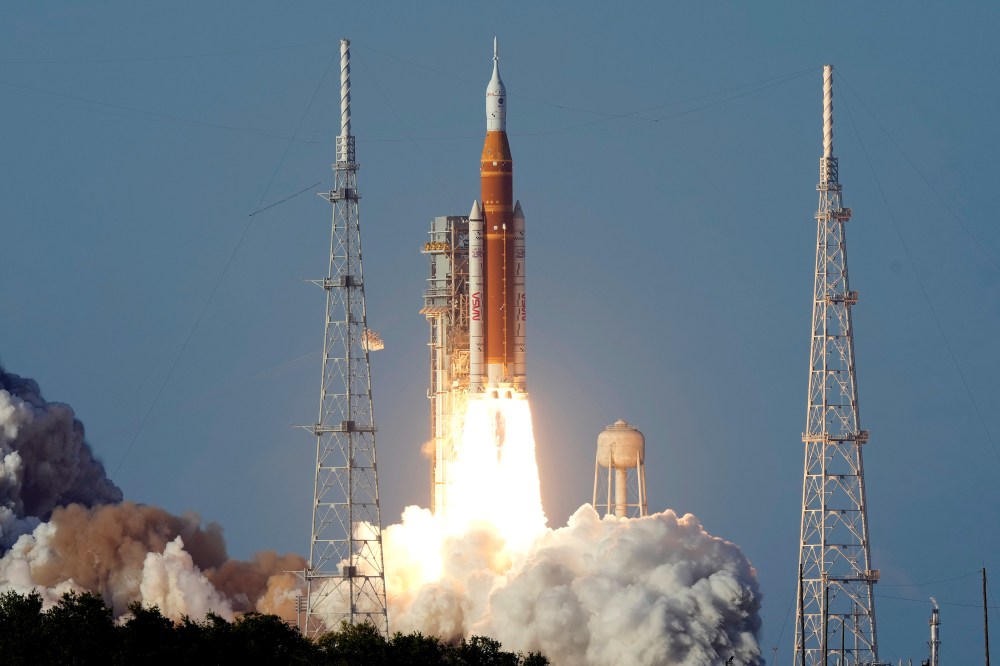
NASA's Artemis II moon rocket lifts off from the Kennedy Space Center's Launch Pad 39-B Wednesday, April 1, 2026, in Cape Canaveral, Fla. (AP Photo/Chris O'Meara)

To NASA’s relief, no significant hydrogen leaks occurred. The launch team loaded more than 700,000 gallons of fuel (2.6 million liters) into the 32-story Space Launch System rocket on the pad, a smooth operation that set the stage for the Artemis II crew to board.

Then NASA had to overcome a flurry of last-minute technical issues — bad battery sensors and an inability to get commands through to the rocket’s flight termination system. In both cases, the issues were quickly resolved, allowing the launch to proceed.

What’s on tap for 10-day test flight?

The astronauts will stick close to home for the first 25 hours of their 10-day test flight, checking out the capsule in orbit around Earth before firing the main engine that will propel them to the moon.

They won’t pause for a stopover or orbit the moon like Apollo 8’s first lunar visitors did so famously on Christmas Eve 1968, reading from Genesis. But they stand to become the most distant humans ever when their capsule zooms past the moon and continues another 4,000 miles (6,400 kilometers) beyond, before making a U-turn and tearing straight home to a splashdown in the Pacific.
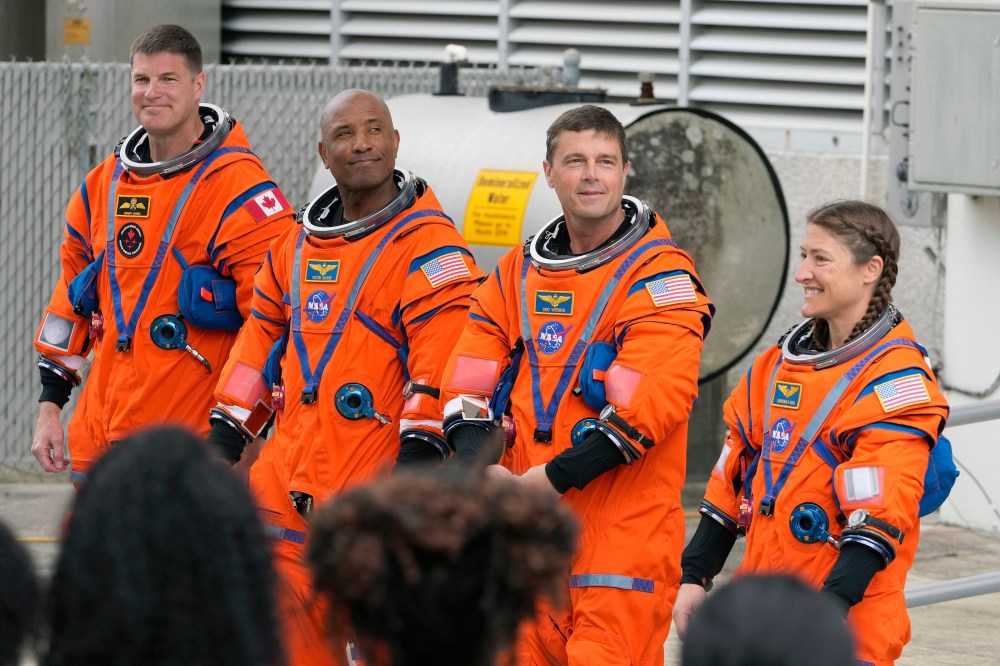
Astronauts, from left, Mission Specialist Jeremy Hansen, of Canada,, Pilot Victor Glover, Commander Reid Wiseman, and Mission Specialist Christina Koch pose for a photo after leaving the Operations and Checkout Building for a trip to Launch Pad 39-B and a planned liftoff on NASA's Artermis II moon rocket at the Kennedy Space Center Wednesday, April 1, 2026, in Cape Canaveral, Fla. (AP Photo/Chris O'Meara)

Once settled in a high orbit around Earth, the astronauts assumed manual control and practiced steering their capsule around the rocket’s detached upper stage, venturing as close as 33 feet (10 meters). NASA wants to know how Orion handles in case the self-flying feature fails and the pilots need to take control.

Crew has an amazing sight in store

During Monday’s lunar flyby, the moon will appear to be the size of a basketball held at arm’s length. The astronauts will take turns peering through Orion’s windows with cameras. If the lighting is right, they should see features never before viewed through human eyes. They’ll also catch snippets of a total solar eclipse, donning eclipse glasses as the moon briefly blocks the sun from their perspective and the corona is revealed.

All of NASA’s moon plans — a surge in launches over the next several years leading to a sustainable moon base for astronauts assisted by robotic rovers and drones — hinge on Artemis II going well.

It’s been more than three years since Artemis I, the only other time NASA’s SLS rocket and Orion capsule have soared. With no one aboard, the Artemis I capsule lacked life-support equipment and other crew essentials like a water dispenser and toilet.
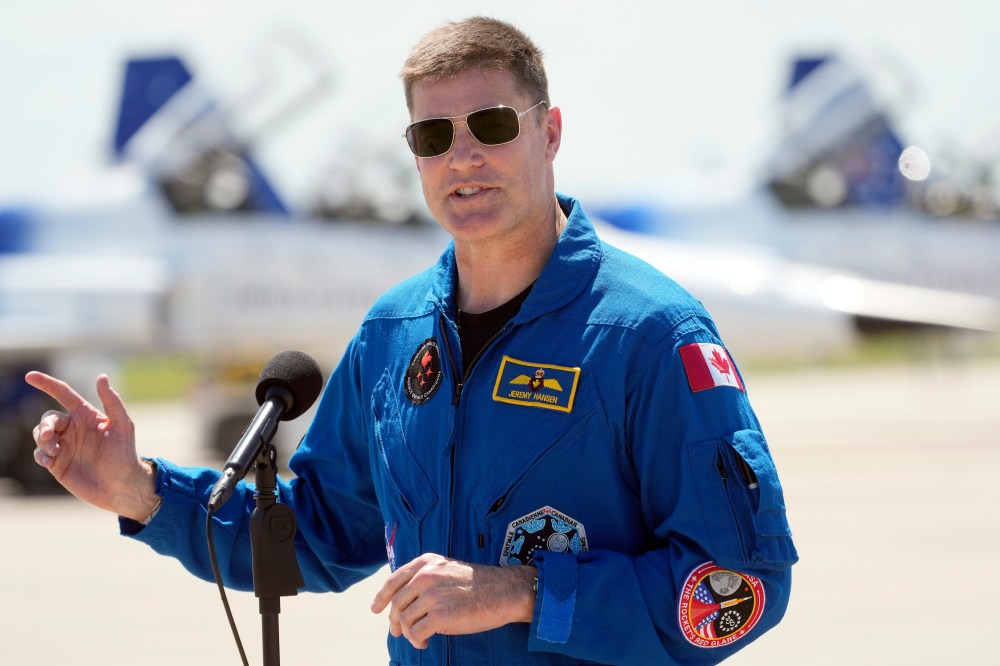
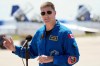
Artemis 2 crew member Mission Specialist Jeremy Hansen, of Canada, speaks to the media after the crew's arrival at the Kennedy Space Center Friday, March 27, 2026, in Cape Canaveral, Fla. (AP Photo/Chris O'Meara)

These systems are now making their space debut on Artemis II, ratcheting up the risk. That’s why NASA is waiting a full day before committing Wiseman and his crew to a four-day trip to the moon and four-day journey back.

The capsule’s toilet is already acting up. Koch informed Mission Control that it shut down seconds after she activated it. Mission Control advised her to to use a handheld bag-and-funnel system for now — CCU, short for Collapsible Contingency Urinal — while engineers pondered how to deal with the so-called lunar loo.

“There’s always been a lot riding on this mission,” NASA’s Lori Glaze said ahead of launch. But the teams are even more “energized” now that the space agency is finally accelerating the lunar launch pace and laser-focusing on surface operations — seismic changes recently announced by Isaacman.

Artemis offers a fresh beginning

With half the world’s population not yet born when NASA’s 12 moonwalkers left their boot prints in the gray lunar dust, Artemis offers a fresh beginning, NASA’s science mission chief Nicky Fox said earlier this week.
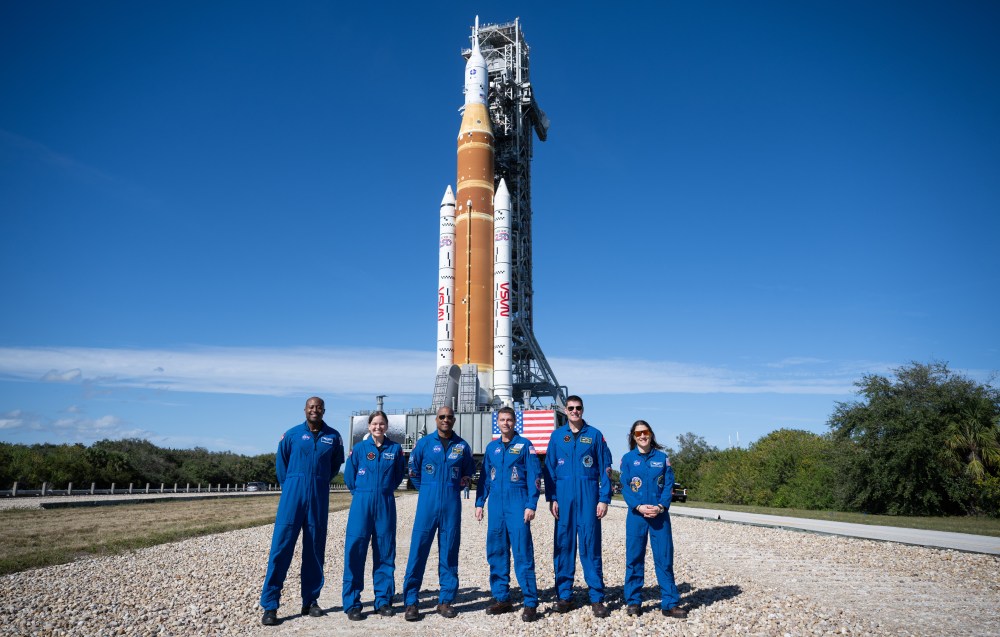
Artemis II backup crewmembers NASA astronaut Andre Douglas, left to right, and Canadian Space Agency astronaut Jenni Gibbons pose for a group photo with prime crewmembers NASA astronauts Victor Glover, Reid Wiseman, CSA astronaut Jeremy Hansen, and NASA astronaut Christina Koch, in front of NASA's Space Launch System (SLS) rocket and Orion spacecraft, secured to the mobile launcher, as it makes the 4.2 mile journey from the Vehicle Assembly Building to Launch Pad 39B at NASA's Kennedy Space Center in Cape Canaveral, Fla., in a Saturday, Jan. 17, 2026, handout photo. THE CANADIAN PRESS/Handout - NASA, Joel Kowsky (Mandatory Credit)

“There are a lot of people who don’t remember Apollo. There are generations who weren’t alive when Apollo launched. This is their Apollo,” said Fox, who was 4 when Apollo 17 closed out the era.

NASA is in it for the long haul this time. Unlike Apollo, which focused on fast flags and footprints in a breakneck race against the Soviet Union, Artemis is striving for a sustainable moon base elaborate enough to satisfy even the most hard-core science fiction fans. But make no mistake: Isaacman and the Trump Administration want the next boot prints to be made by Americans, not the Chinese.

Until Isaacman’s program makeover, Artemis III was crawling toward a moon landing no sooner than 2029. The billionaire spacewalker slid in a new Artemis III for 2027 so astronauts could practice docking their Orion capsule with a lunar lander in orbit around Earth. Astronauts’ momentous landing near the moon’s south pole shifted to Artemis IV in 2028 — two years before an anticipated Chinese crew’s arrival.

Like Apollo 13 — astronauts’ only moon landing miss — Artemis II will use a free-return, lunar flyby trajectory to get home with gravity’s tug and a minimum of gas. The gravity of both the moon and Earth will provide much if not most of the oomph to keep Orion on its out-and-back, figure-eight loop.

There are inherent dangers
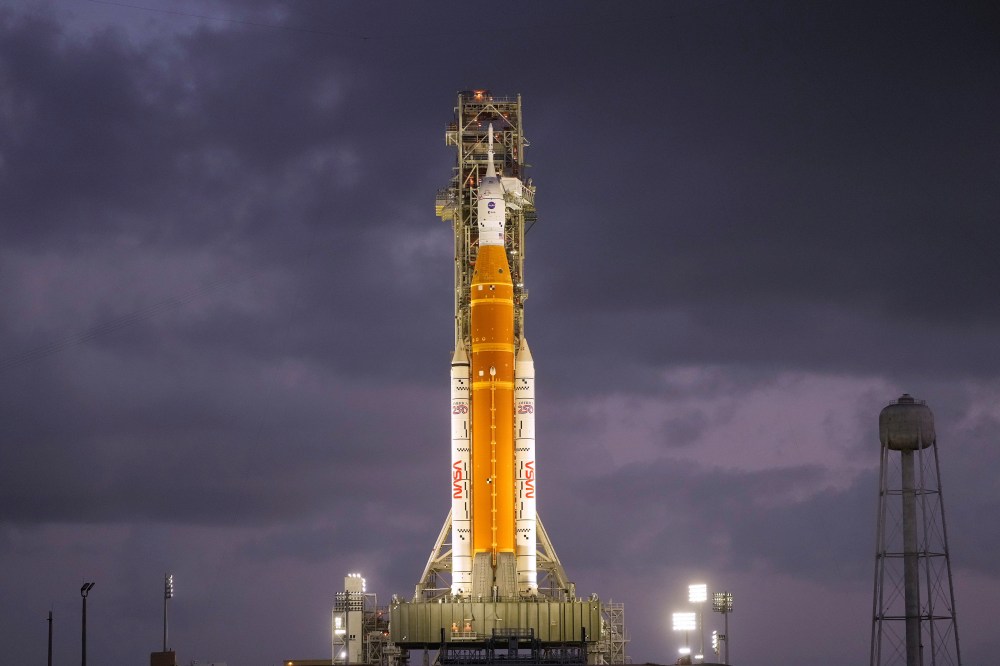
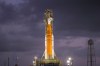
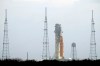
NASA's Artemis II moon rocket sits on Launch Pad 39-B just before sunrise at the Kennedy Space Center Tuesday, March 31, 2026, in Cape Canaveral, Fla. (AP Photo/Chris O'Meara)

The danger is right up there for Artemis II. NASA has refused to release its risk assessment for the mission. Managers contend it’s better than 50-50 — the usual odds for a new rocket — but how much more is murky.

The SLS rocket leaked flammable hydrogen fuel during ground tests, a recurring problem that engineers still do not completely understand. The hydrogen leaks and unrelated helium blockages stalled the flight for two months, coming on top of years of vexing delays and cost overruns. Both problems also thwarted Artemis I, whose capsule returned with excessive heat shield damage. To NASA’s relief, Wednesday’s countdown was leak-free.

Beating the Soviet Union to the moon made the huge risks acceptable for Apollo, said Charlie Duke, one of only four surviving moonwalkers.

“I’m cheering you on,” Duke said in a note to Wiseman and his crew before their flight.

During a weekend news conference, Koch stressed how humanity’s path to Mars goes through the moon, the proving ground for points beyond.
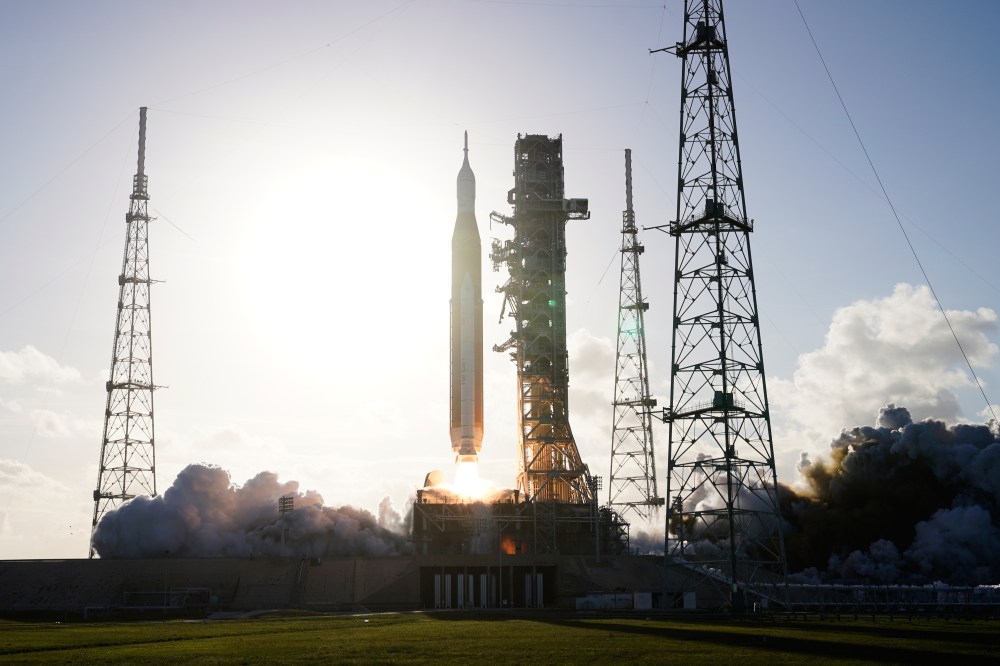
The NASA Artemis II SLS (Space Launch System) rocket with the Orion spacecraft launches at the Kennedy Space Center, Wednesday, April 1, 2026, in Cape Canaveral, Fla. (AP Photo/John Raoux)

“It is our strong hope that this mission is the start of an era where everyone, every person on Earth, can look at the moon and think of it as also a destination,” she said.

Added Glover: “It’s the story of humanity. Not Black history, not women’s history, but that it becomes human history.”

___

The Associated Press Health and Science Department receives support from the Howard Hughes Medical Institute’s Department of Science Education and the Robert Wood Johnson Foundation. The AP is solely responsible for all content.
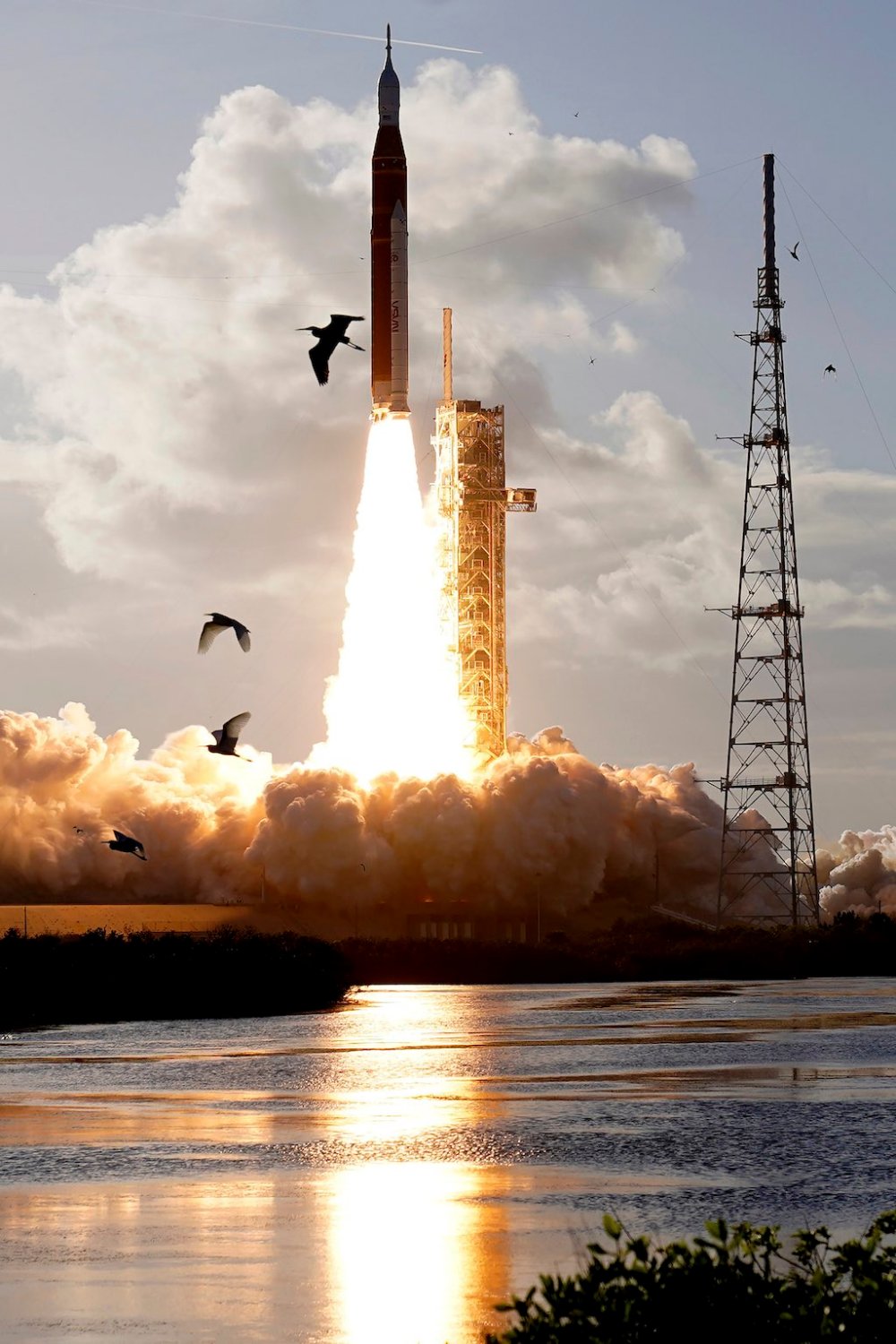
NASA's Artemis II moon rocket lifts off from the Kennedy Space Center's Launch Pad 39-B Wednesday, April 1, 2026, in Cape Canaveral, Fla. (AP Photo/Chris O'Meara)
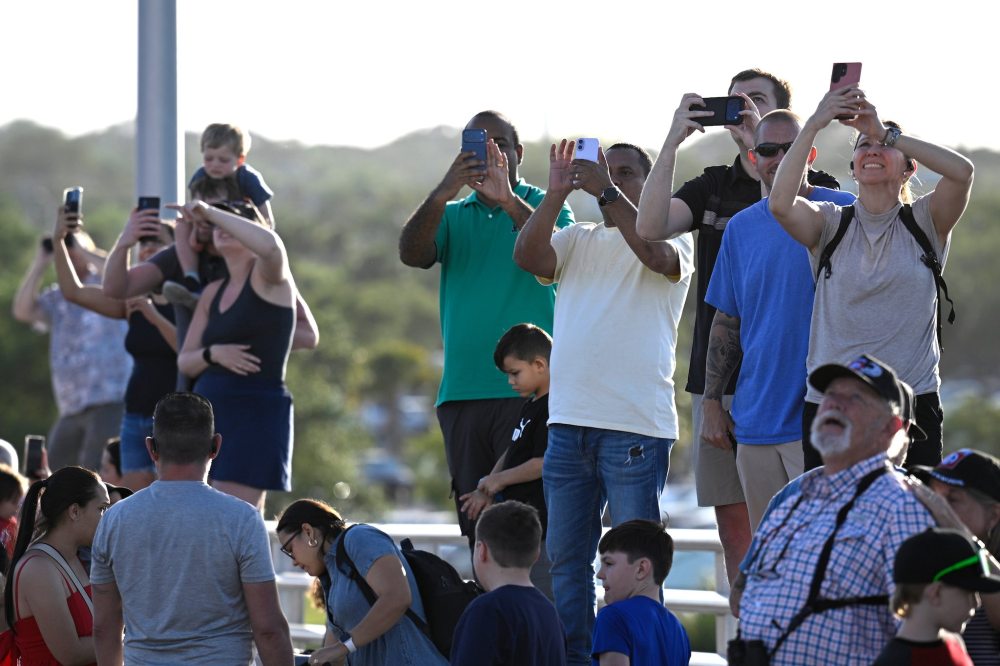
Spectators look on from the A. Max Brewer Bridge as NASA's Artemis II moon rocket lifts off Wednesday, April 1, 2026, as seen from Titusville, Fla. (AP Photo/Phelan M. Ebenhack)
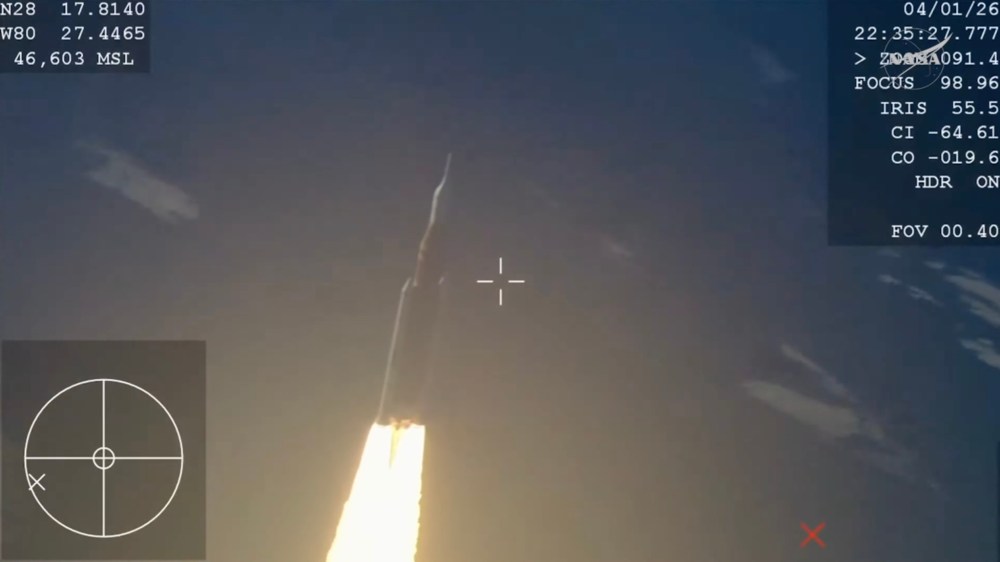
In this image from video provided by NASA, the Artemis II moon rocket with the Orion spacecraft launches from the Kennedy Space Center in Cape Canaveral, Fla., on Wednesday, April 1, 2026. (NASA via AP)
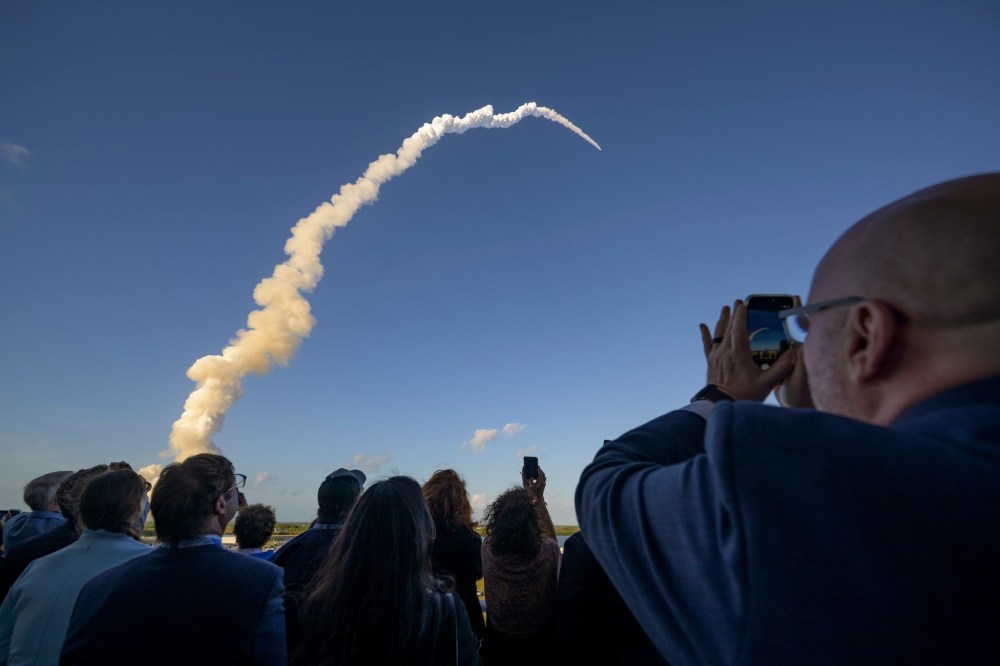
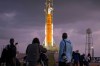
In this photo provided by NASA, guests watch the launch of the Space Launch System (SLS) rocket and Orion spacecraft for the Artemis II mission to the moon at NASA's Kennedy Space Center in Florida on Wednesday, April 1, 2026. (Bill Ingalls/NASA via AP)
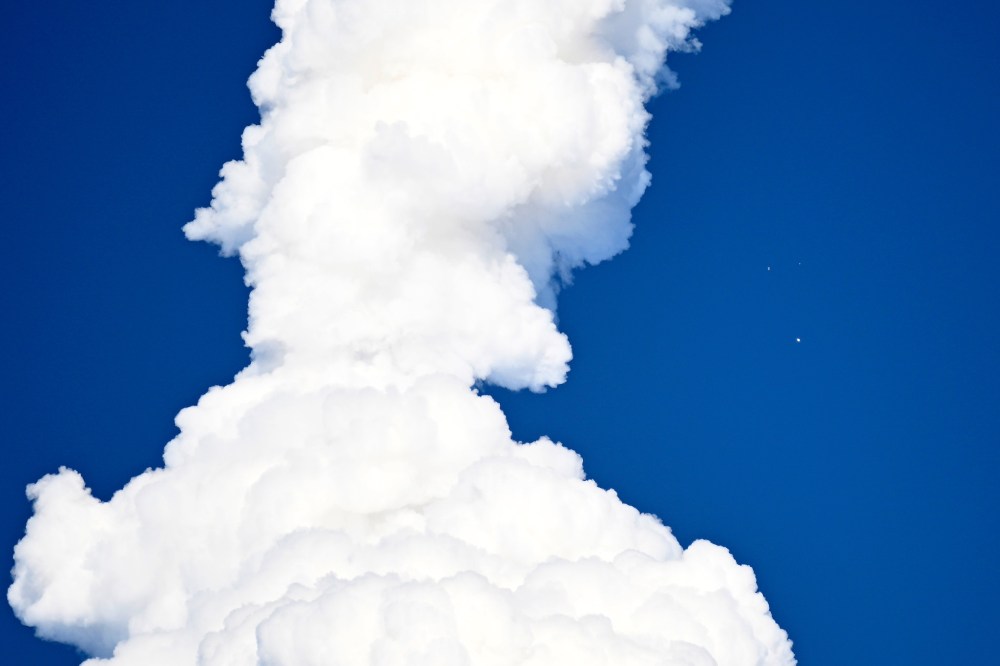
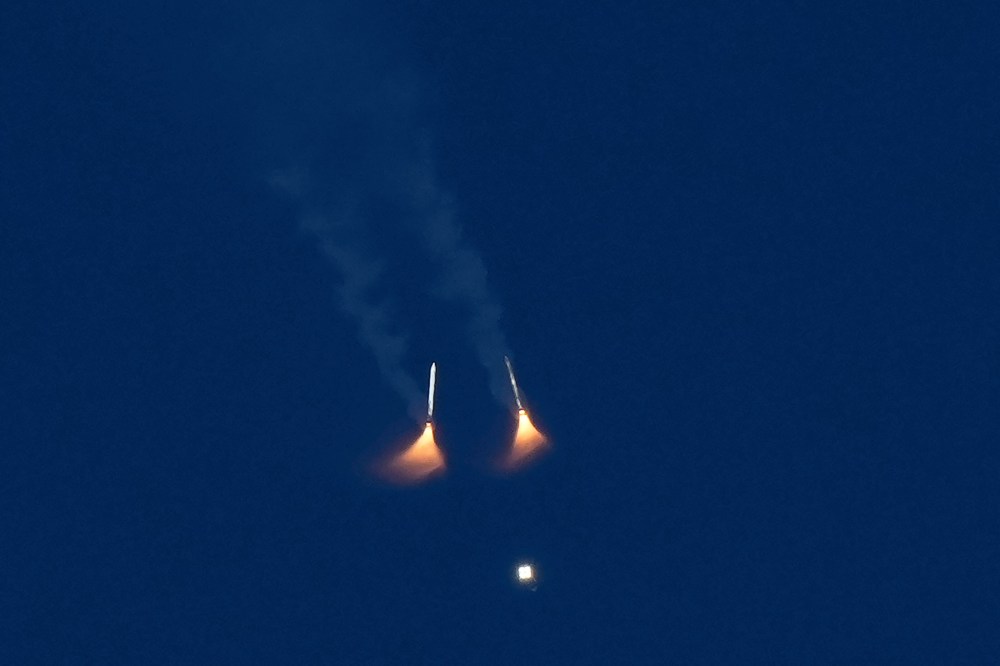
Boosters fall next to the vapor trail after separating from NASA's Artemis II moon rocket following launch, Wednesday, April 1, 2026, as seen from Titusville, Fla. (AP Photo/Phelan M. Ebenhack)
The solid rocket boosters on NASA's Artemis II moon rocket fall away after lifting off from the Kennedy Space Center's Launch Pad 39-B Wednesday, April 1, 2026, in Cape Canaveral, Fla. (AP Photo/Chris O'Meara)
Members of the Cleveland Guardians warm up as NASA'S Artemis ll rocket is seen prior to launch from Launch Complex 39B at Kennedy Space Center on the big screen above them prior to a baseball game against the Los Angeles Dodgers, Wednesday, April 1, 2026, in Los Angeles. (AP Photo/Mark J. Terrill)
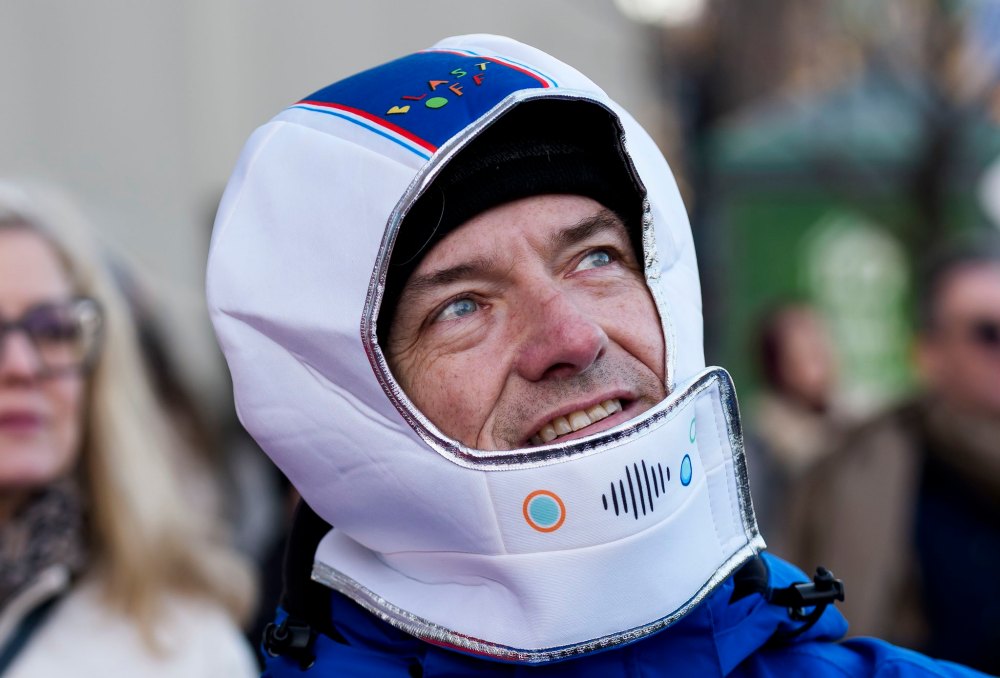
Ottawa city councillor Tim Tierney wears a costume astronaut helmet as he joins others watching the launch of Artemis II on a livestream displayed on the Kipnes Lantern of the National Arts Centre in Ottawa, on Wednesday, April 1, 2026. THE CANADIAN PRESS/Justin Tang
Employees of the Canadian Space Agency react during the successful launch of the Artemis II mission, at the Canadian Space Agency, in Longueuil, Que., on Wednesday, April 1, 2026. THE CANADIAN PRESS/Christopher Katsarov
Spectators view NASA's Artemis II moon rocket launch from the A. Max Brewer Bridge, Wednesday, April 1, 2026, in Titusville, Fla. (AP Photo/Phelan M. Ebenhack)
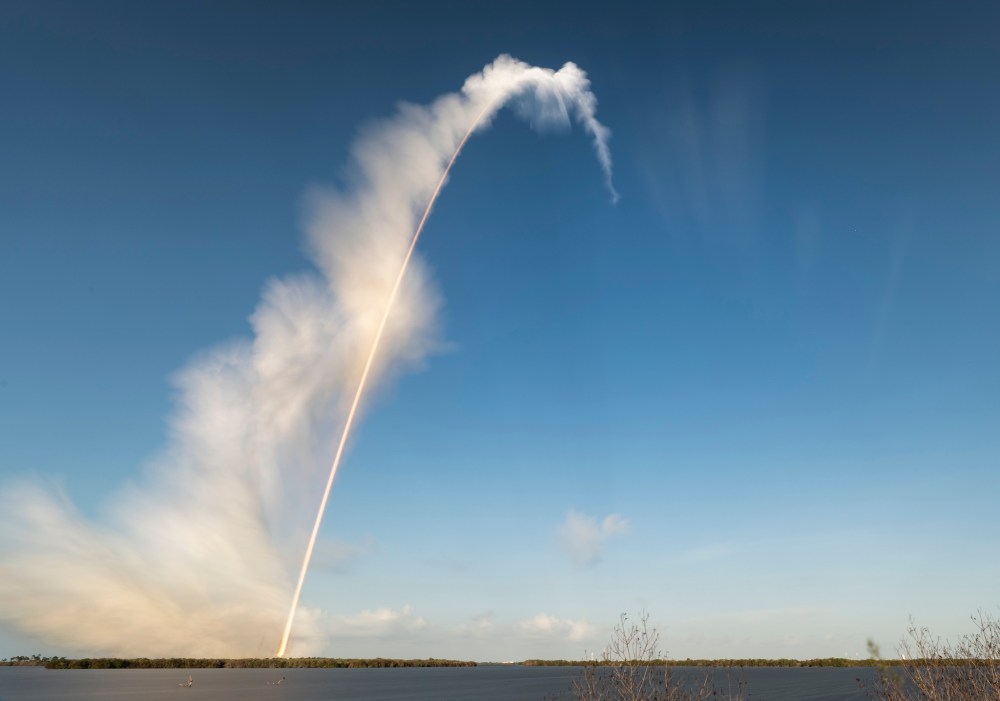
In this photo provided by NASA, the Space Launch System (SLS) rocket and Orion spacecraft for the Artemis II mission launches from the Kennedy Space Center in Florida on Wednesday, April 1, 2026, seen in a three-minute exposure. (Keegan Barber NASA via AP)
Report Error Submit a Tip

More Stories

Police probe weekend vandalism spree as dozens of school buses taken out of service

Chris Kitching 5 minute read Preview

Police probe weekend vandalism spree as dozens of school buses taken out of service

Chris Kitching 5 minute read Updated: Yesterday at 4:57 PM CDT

Vandals used fire extinguishers to damage dozens of Winnipeg School Division buses and an elementary school in a pair of weekend break-ins, disrupting transportation or lessons for potentially hundreds of students.

Several buses were taken out of service, resulting in cancellations or delays on some routes Monday, after 45 parked vehicles were damaged in a lot on Selkirk Avenue, west of Keewatin Street.

“We occasionally will have a fire extinguisher stolen or a little bit of damage, but this was certainly the largest-scale vandalism that we’ve seen in our (transportation) yard,” said Matt Henderson, superintendent of Manitoba’s largest school division.

“The result of that was a number of bus routes had to be cancelled (Monday), which is really problematic. There’s an added stress on families to get their children to school.”

Read
Updated: Yesterday at 4:57 PM CDT

Winnipeggers unhappy with city leadership, but mostly unwilling to do anything about it

Dan Lett 5 minute read Preview

Winnipeggers unhappy with city leadership, but mostly unwilling to do anything about it

Dan Lett 5 minute read Yesterday at 12:54 PM CDT

This is not an endorsement (not my job) nor is it a prediction (predictions are for suckers) of what will happen Wednesday in Winnipeg’s mayoral race. It is, however, a call to arms for voters.

Read
Yesterday at 12:54 PM CDT

Cabinet minister guilty of ethics violation may have buyer for family business two years after offering to sell

Carol Sanders 3 minute read Preview

Cabinet minister guilty of ethics violation may have buyer for family business two years after offering to sell

Carol Sanders 3 minute read Yesterday at 6:46 PM CDT

Natural Resources and Indigenous Futures Minister Ian Bushie has a potential buyer for Grandpa George’s gas and convenience store at Hollow Water First Nation after offering it to sell it two years ago when he was found guilty of an ethics violation.

“Grandpa George’s is currently in negotiations with a buyer and that process is ongoing,” Bushie’s press secretary Caedmon Malowany said in a prepared statement Monday.

Bushie held a news conference in 2024 to say he would voluntarily sell the business after he violated provincial ethics rules.

The MLA for Keewatinook, who was not available for an interview Monday, was not required to sell the gas bar after former ethics commissioner Jeffrey Schnoor ruled in September 2024 that Bushie inadvertently violated the new Conflict of Interest (Members and Ministers) Act.

Read
Yesterday at 6:46 PM CDT

Artemis II astronauts bound for moon after rocketing away on NASA’s first lunar voyage in decades

Marcia Dunn, The Associated Press 11 minute read Preview

Artemis II astronauts bound for moon after rocketing away on NASA’s first lunar voyage in decades

Marcia Dunn, The Associated Press 11 minute read Wednesday, Apr. 1, 2026

CAPE CANAVERAL, Fla. (AP) — Four astronauts embarked on a high-stakes flight around the moon Wednesday, humanity’s first lunar voyage in more than half a century and the thrilling leadoff in NASA’s push toward a landing in two years.

Carrying three Americans and one Canadian, the 32-story rocket rose from NASA’s Kennedy Space Center where tens of thousands gathered to witness the dawn of this new era. Crowds also jammed the surrounding roads and beaches, reminiscent of the Apollo moonshots in the 1960s and ’70s. It is NASA’s biggest step yet toward establishing a permanent lunar presence.

“On this historic mission, you take with you the heart of this Artemis team, the daring spirit of the American people and our partners across the globe, and the hopes and dreams of a new generation,” launch director Charlie Blackwell-Thompson told the crew right before liftoff. “Good luck, Godspeed Artemis II. Let’s go.”

Artemis II set sail from the same Florida launch site that sent Apollo’s explorers to the moon so long ago. The handful still alive cheered this next generation’s grand adventure as the Space Launch System rocket thundered into the early evening sky, a nearly full moon beckoning some 248,000 miles (400,000 kilometers) away.

Read
Wednesday, Apr. 1, 2026

Connor Hellebuyck breaks silence after trade from Jets

Mike McIntyre 8 minute read Preview

Connor Hellebuyck breaks silence after trade from Jets

Mike McIntyre 8 minute read Saturday, Oct. 24, 2026

It took until the very end of his introductory news conference Saturday — right around the 15-minute mark — before Connor Hellebuyck was finally asked the question that hockey fans back in Winnipeg were likely waiting for.

“Is there anything you’d like to say to Jets fans?” a reporter who covers Hellebuyck’s new team, the New Jersey Devils, put to him during the session held inside the Prudential Center in Newark.

A short pause followed.

“I mean, there’s a lot. There’s a lot that I need to say,” Hellebuyck began, no doubt raising plenty of eyebrows around here and the hockey world in general.

Read
Saturday, Oct. 24, 2026

Ceramic artist brings double-edged works to exhibition

AV Kitching 5 minute read Preview

Ceramic artist brings double-edged works to exhibition

AV Kitching 5 minute read 2:00 AM CDT

Drawing on her Afro-Jamaican and Red River Métis heritage, Winnipeg-based ceramic artist PJ Anderson’s richly ornamented sculptural works explore adornment as a form of protection, resistance and self-definition.

Her pieces are currently being shown in the After the Island: Caribbean Canadian Ceramics exhibition at the Gardiner Museum in Toronto.

The exhibition is a collaboration between the museum, Black Artists’ Networks in Dialogue (BAND) and the Museum of the African Diaspora (MoAD) in San Franciso, resulting in two shows presented concurrently at the Gardiner and MoAD.

Anderson is the only artist featured in both shows who was not born in the Caribbean.

Read
2:00 AM CDT