The data center boom meets resistance in Maine as lawmakers pass a yearlong freeze
Advertisement
Read this article for free:
or
Already have an account? Log in here »
To continue reading, please subscribe:

Digital Subscription
One year of digital access for only $205*
- Enjoy unlimited reading on winnipegfreepress.com
- Read the E-Edition, our digital replica newspaper
- Access News Break, our award-winning app
- Play interactive puzzles
*First annual payment billed as $205.00 + GST for one year. This annual subscription will automatically renew at $233.00 + GST every 52 weeks (10% off the regular annual price of $259.35). Offer available to new and qualified returning subscribers only. Cancel any time.
To continue reading, please subscribe:
Add Free Press access to your Brandon Sun subscription for only an additional
$1 for the first 4 weeks*
- Enjoy unlimited reading on winnipegfreepress.com
- Read the E-Edition, our digital replica newspaper
- Access News Break, our award-winning app
- Play interactive puzzles
*Your next Brandon Sun subscription payment will increase by $1.00 and you will be charged $17.95 plus GST for four weeks. After four weeks, your payment will increase to $24.95 plus GST every four weeks.
Read unlimited articles for free today:
or
Already have an account? Log in here »
PORTLAND, Maine (AP) — Maine could impose the nation’s first statewide moratorium on energy-hungry data centers in a sign of growing political opposition to tech giants’ massive structures that have stoked fears about blackouts, rising electricity bills and voracious water needs.
The legislation arose in a state that isn’t necessarily a destination for the computer-stocked warehouses that power artificial intelligence, but a couple of proposals there generated intense community backlash and helped propel a measure quickly through the state’s Democratic-controlled Legislature. Lawmakers on Tuesday approved sending the bill to Gov. Janet Mills, a Democrat who is running for U.S. Senate.
It’s the latest sign that increasingly stiff opposition at the local level is gaining a foothold higher up the political ladder. Tech giants and the data centers they are building have high-level support from President Donald Trump’s administration and many governors, who see them as economic engines and essential for winning the artificial intelligence race with China, even as voters raise concerns about the enormous amount of power data centers use. Analysts also warn of the possibility of blackouts in the mid-Atlantic grid in the coming years.
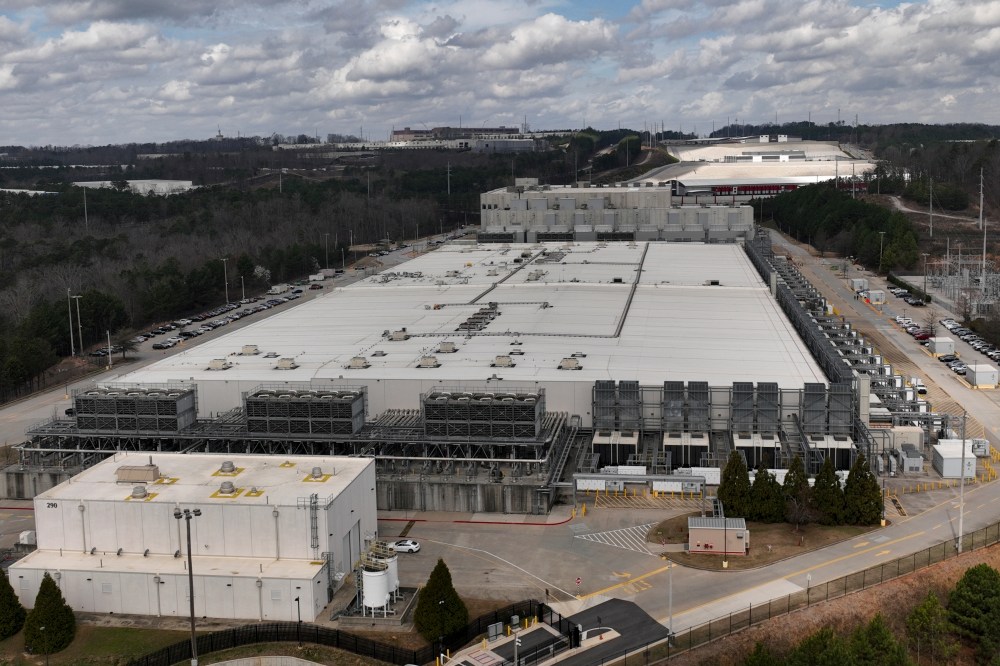
Proposals to slap a moratorium on data centers have been introduced in at least a dozen states, but other than Maine’s, none have even passed a legislative chamber. That’s as some states struggle to meet clean energy goals and the centers emerge as a barrier.
Maine’s legislation would institute a moratorium for more than a year on data centers above a certain size, and create a special council to help towns vet potential projects. Mills’ office did not respond to a request for comment Wednesday on whether she plans to sign the bill.
“It’s not that there’s no place for data centers in Maine,” said Democratic Rep. Melanie Sachs, who sponsored the measure. “Frankly, the tradeoffs have not been shown to be of benefit to our ratepayers, water usage or community benefit in terms of economic activity.”
Why Maine?
Despite Maine’s relatively low profile among developers of massive data centers, called hyperscalers, supporters of the projects said the moratorium will still matter long into the future to all sorts of industries.
“It says that the state is willing to essentially put a blanket ban on you if it decides that you may be politically unfavorable,” said Dan Diorio of the Data Center Coalition, a trade association that includes tech companies and developers.
They said it could deter data center developers from going to Maine and deprive the state of a long-term economic development anchor that attracts other industries. It also means local builders and labor unions won’t develop the skills necessary to build the facilities and might leave them lagging behind other states, they said.
“We think that these data centers could bring good jobs, good opportunities to these regions,” said Montana Towers, a policy analyst with the free market Maine Policy Institute. “And a lot of these concerns about them are luddite in nature.”
Nonetheless, several communities in Maine have raised concerns about a lack of transparency in potential data center projects. The Maine moratorium is largely about getting those communities to have input in the development process, said Joe Oliva, a spokesperson for the Maine Broadband Coalition and GrowSmart Maine, which both supported the moratorium.
“If this is going to come, we want to be in early and often on the conversation,” Oliva said.
Growing opposition
Since last summer, community opposition has become a serious concern for data center developers, with numerous municipalities defeating their proposals in planning and zoning board votes before packed rooms of angry residents.
A handful of counties and municipalities in the U.S. have imposed a moratorium, and some bills emerged in states where development is brisk such as Virginia, Michigan and Wisconsin. Voters in Festus, Missouri, a suburb of St. Louis, replaced half of their city’s eight-member city council this month amid a backlash over a data center project.
Some bills died without action, like one in Georgia, a data center hotspot. Other states have explored other ways to rein in data centers, such as by imposing tougher standards around water and energy use, transparency and protection of ratepayers and communities.
In Ohio, residents are trying to bypass the Legislature and get a measure on the ballot in November that is designed to permanently ban hyperscale data centers. They’ll need to gather more than 400,000 voter signatures by July 1 in what is perhaps the strictest measure of any under consideration.
Public officials, developers and other interests could otherwise “make this state a virtually unbroken field of data centers,” said Austin Baurichter, a Cincinnati-area lawyer who is helping organize the effort.
In South Dakota, a one-year moratorium bill failed in a state Senate committee amid opposition from power plant owners and data center developers. The governor also opposed it, telling senators that such planning is best done at the local level and that a statewide moratorium holds back municipalities that want a data center.
The sponsor, Republican Sen. Taffy Howard, told senators that “citizens are asking for this” and that the opponents are all lobbyists, “billion-dollar corporations” and government officials.

“Are you going to listen to the people or the paid lobbyists?” she asked.
___
Levy reported from Harrisburg, Pennsylvania.
___
Follow Patrick Whittle on X at https://x.com/pxwhittle and Marc Levy at https://x.com/timelywriter