A bank robber’s cellphone gave him away. Now the Supreme Court is hearing his case

Advertisement

Advertise with us

WASHINGTON (AP) — Okello Chatrie's cellphone gave him away.

Read this article for free:


or

Already have an account? Log in here »

To continue reading, please subscribe:

Subscribe and receive a limited-edition Free Press branded hat or tote.

Digital Subscription

One year of digital access for only $205*

  • Enjoy unlimited reading on winnipegfreepress.com
  • Read the E-Edition, our digital replica newspaper
  • Access News Break, our award-winning app
  • Play interactive puzzles

*First annual payment billed as $205.00 + GST for one year. This annual subscription will automatically renew at $233.00 + GST every 52 weeks (10% off the regular annual price of $259.35). Offer available to new and qualified returning subscribers only. Cancel any time.

To continue reading, please subscribe:

Add Free Press access to your Brandon Sun subscription for only an additional

$1 for the first 4 weeks*

  • Enjoy unlimited reading on winnipegfreepress.com
  • Read the E-Edition, our digital replica newspaper
  • Access News Break, our award-winning app
  • Play interactive puzzles
Start now

*Your next Brandon Sun subscription payment will increase by $1.00 and you will be charged $17.95 plus GST for four weeks. After four weeks, your payment will increase to $24.95 plus GST every four weeks.

WASHINGTON (AP) — Okello Chatrie’s cellphone gave him away.

Chatrie made off with $195,000 from the bank he robbed in suburban Richmond, Virginia, and eluded the police until they turned to a powerful technological tool that erected a virtual fence and allowed them collect the location history of cellphone users near the crime scene.

The geofence warrant police served on Google found that Chatrie’s cellphone was among a handful of devices in the vicinity of the bank around the time it was robbed.
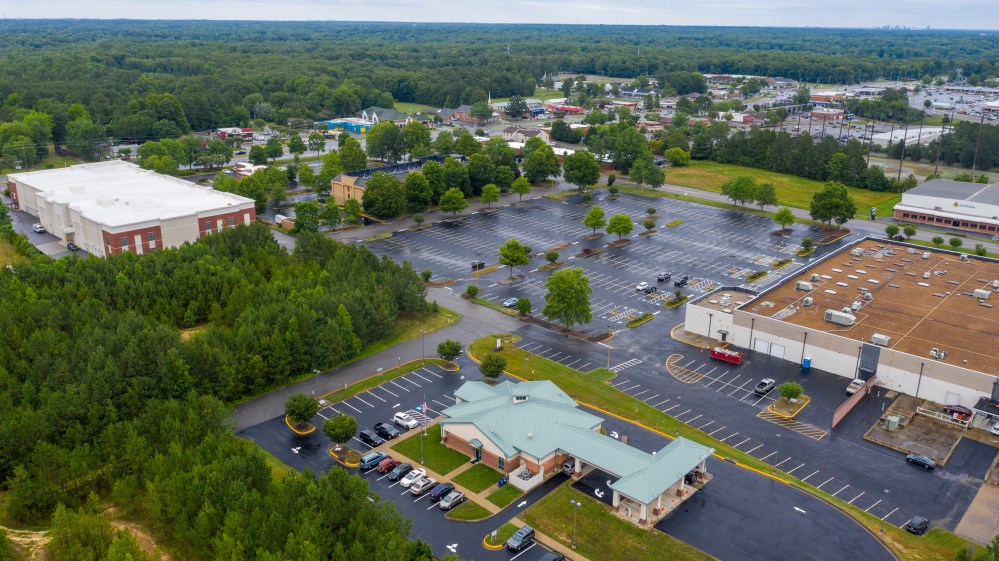
FILE - A drone photo taken on June 16, 2020, shows the Call Federal Credit Union, front, a bank robbed by Okello Chatrie in 2019 in Midlothian, Va. (AP Photo/Steve Helber, File)

Now the Supreme Court will decide whether geofence warrants violate the Fourth Amendment’s ban on unreasonable searches. It’s the latest high court case that forces the justices to wrestle with how a constitutional provision ratified in 1791 applies to technology the nation’s founders could not have contemplated in their wildest dreams.

Chatrie’s appeal is one of two cases being argued Monday. The other is an effort by Bayer to have the court block thousands of state lawsuits alleging the global agrochemical manufacturer failed to warn people that its popular Roundup weedkiller could cause cancer.

Geofence warrants turn the usual way of pursuing suspects on its head. Typically, police identify a suspect and then obtain a warrant to search a home or a phone.

With geofence warrants, police do not have a suspect, only a location where a crime took place. They work in reverse to identify people who were in the area.

Prosecutors credit the warrants with helping crack cold cases and other crimes where surveillance cameras did not reveal suspects’ faces or license plates.

Civil libertarians say that geofences amount to fishing expeditions that subject many innocent people to searches of private records merely because their cellphones happened to be in the vicinity of a crime. A Supreme Court ruling in favor of the technique could “unleash a much broader wave of similar reverse searches,” law professors who study digital surveillance wrote the court.

Investigators used geofence warrants to identify supporters of President Donald Trump who attacked the Capitol in the riot on Jan. 6, 2021, as well as in the search for the person who planted pipe bombs outside the Democratic and Republican party headquarters the night before.

Police also credit these warrants with helping identify suspects in killings in several states, including California, Georgia and North Carolina.

An academic group that works to bridge gaps between the police and communities wrote that the court should avoid an all-or-nothing approach in Chatrie’s case.

The Trump administration’s position would allow police to use geofence warrants and similar tools “with no judicial supervision or constitutional safeguards,” according to the Policing Project at the New York University School of Law. Chatrie’s lawyers want the court to rule out any use of geofence warrants at all, impeding “legitimate law enforcement activities,” the group wrote.

In Chatrie’s case, the geofence warrant invigorated an investigation that had stalled. After determining that Chatrie was near the Call Federal Credit Union in Midlothian around the time it was robbed in May 2019, police obtained a search warrant for his home. They found nearly $100,000 in cash, including bills wrapped in bands signed by the bank teller.

He pleaded guilty and was sentenced to nearly 12 years in prison. Chatrie’s lawyers argued on appeal that none of the evidence should have been used against him.

They challenged the warrant as a violation of his privacy because it allowed authorities to gather the location history of people near the bank without having any evidence they had anything to do with the robbery. Prosecutors argued that Chatrie had no expectation of privacy because he voluntarily opted into Google’s location history.

A federal judge agreed that the search violated Chatrie’s rights, but allowed the evidence to be used because the officer who applied for the warrant reasonably believed he was acting properly.

The federal appeals court in Richmond upheld the conviction in a fractured ruling. In a separate case, the federal appeals court in New Orleans ruled that geofence warrants “are general warrants categorically prohibited by the Fourth Amendment.”

In the Supreme Court’s last case on digital-age searches, in 2018, the court divided 5-4 in favor of a defendant whose movements were tracked by authorities for nearly four months, without a warrant, through the review of cellphone tower data.

An issue in that case that also appears in Chatrie’s is whether the defendant had an expectation of privacy that would trigger Fourth Amendment protections.

The Supreme Court has previously ruled that information shared with third parties cannot be considered private.

But Chief Justice John Roberts wrote in his majority opinion about the extraordinary computing power of cellphones, describing “seismic shifts in digital technology” and “the exhaustive chronicle of location information casually collected by wireless carriers today.”
Report Error Submit a Tip

More Stories

Longtime voice of the Blue and Gold marks major milestone

David Sanderson 8 minute read Preview

Longtime voice of the Blue and Gold marks major milestone

David Sanderson 8 minute read Friday, Oct. 9, 2026

Bob McGregor made his debut as the Winnipeg Blue Bombers’ public-address announcer on June 7, 1997, during a pre-season game at Winnipeg Stadium between the hometown Blue Bombers and their western rivals, the Calgary Stampeders.

McGregor will be behind the microphone again this Saturday, detailing the action on the field in addition to leading a boisterous Princess Auto Stadium crowd through what has become his signature call, “And that is another Winnipeg Blue Bombers first down!”

The Bombers’ final home date of the 2026 regular season will mark a major milestone for McGregor, and the former newscaster feels it’s only fitting the same two teams as 10,717 days ago — the Bombers and Stampeders — will be the ones butting helmets.

“I knew at the start of the season I was closing in on 300 games as the PA guy, only it wasn’t until I went through the schedule that I realized my 300th would be Winnipeg-Calgary, which struck me as kind of cool,” McGregor says, seated in a St. James breakfast nook, dressed in dark trousers and a blue-and-gold Blue Bombers golf shirt.

Read
Friday, Oct. 9, 2026

Final hurdles are moving on in your mind and life

Maureen Scurfield 3 minute read Yesterday at 2:01 AM CDT

DEAR MISS LONELYHEARTS: I just ran into my former husband with his new woman. It was a shock. She looked nothing like me — not nearly as good. In fact, she’s the opposite of me — red-haired, freckled, tall and skinny like a rake. I’m short, dark, with golden skin from my Italian background. That was what my husband used to say he loved in a woman.

Does that mean he lied — that he really didn’t like my looks and secretly longed for the opposite? That seems crazy to me. But I should mention that in our last miserable years together he didn’t even want to hold me in his arms and look at me. He sometimes slept at his office (or so he said) because he was “too tired to drive home.”

He could have been elsewhere — like in some other woman’s home — because he always used his cellphone to call me, not his office line.

How can I forget about the man I loved so much and finally move on?

Late philanthropist, family fill Harvest’s Empty Bowls with record-setting $5-M donation

Morgan Modjeski 3 minute read Preview

Late philanthropist, family fill Harvest’s Empty Bowls with record-setting $5-M donation

Morgan Modjeski 3 minute read Friday, Oct. 9, 2026

It was a record-breaking night for Harvest Manitoba made possible by a genuine Winnipeg hero and his family.

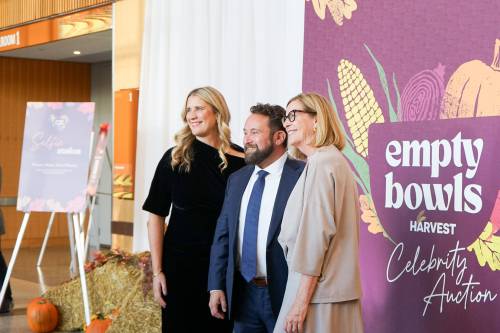
The organization’s annual Empty Bowls Celebrity Auction Dinner on Thursday raised $6.5 million to support Manitobans facing hunger and food insecurity.

And it was a $5-million legacy donation from late city philanthropist Doug Harvey and his family that will see the event go down in the history books as the largest gala fundraising total ever recorded in Manitoba.

“There was literally nothing that lit my dad up more than contributing himself, but even more so, inspiring others to give,” his daughter Lauren Harvey said Friday.

Read
Friday, Oct. 9, 2026

A Rocky day on the mayoral campaign trail for Kevin Klein

Malak Abas 12 minute read Preview

A Rocky day on the mayoral campaign trail for Kevin Klein

Malak Abas 12 minute read Friday, Oct. 9, 2026

Kevin Klein acknowledges it’s hard to foresee what he’ll wake up to each morning in the final weeks of a mayoral campaign.

But the seasoned politician, who has served as both a city councillor and a provincial cabinet minister, couldn’t have predicted the events — what he describes as “drama” — that unfolded last Sunday.

Fellow mayoral candidate Mike Vogiatzakis accused Klein’s campaign team of offering him a job to drop out of the race, while a guest writer’s column in the Winnipeg Sun that questioned the deaths of Indigenous children at residential schools, just days after the National Day for Truth and Reconciliation, sparked condemnation from a prominent Indigenous organization. (Klein is the CEO of the Klein Group, the company that owns the Sun. He has maintained he is not involved in its operations while running for mayor.)

The Free Press had already been scheduled to join Klein on the campaign trail Monday, intending to document a day in the life of the front-running candidate to unseat incumbent Scott Gillingham, before the controversies hit.

Read
Friday, Oct. 9, 2026

Protein crests current appetite wave

Laura Rance-Unger 4 minute read Preview

Protein crests current appetite wave

Laura Rance-Unger 4 minute read Yesterday at 2:01 AM CDT

Holiday feasts often reflect the latest fads and trends influencing how we eat.

This Thanksgiving’s table is likely to feature more Canadian content than it might otherwise as a point of national pride.

In the recent past, the carb-free craze has made cauliflower a substitute for the mashed potatoes on some family spreads. Some have gone meatless, while others have added more. Still others offer gluten-free, dairy-free or fat-free alternatives.

Nowadays, it seems consumers can’t get enough protein. Desmond Sobool, deputy chief economist Farm Credit Canada, told a recent economic update for the agri-food sector there are two converging influences in play.

Read
Yesterday at 2:01 AM CDT

Puppies, stocks — ‘zoomies’ abound

Andrew Froese 4 minute read Yesterday at 2:01 AM CDT

This spring, I adopted a three-month-old rescued German Shepherd mix. To say she is easily excitable is an understatement.

It is not really her fault. A puppy’s frontal cortex, the part of the brain that helps with decision-making and impulse control, is still developing. When an older dog, or a human, gets tired, we generally understand we should rest. Puppies have not quite figured that out. They often interpret tiredness as a signal something is wrong, which makes them more alert, more reactive and harder to settle.

That creates a feedback loop. The puppy gets tired, which makes her frantic, which makes her more tired, which makes her even more frantic. Eventually, this becomes what people call the “zoomies”: frantic sprinting, biting, jumping and general chaos.

From the outside, it looks like the puppy has too much energy. In reality, the opposite is true. The zoomies are not a sign of excess energy. They are a sign the puppy is overtired and does not know it yet.