National artificial intelligence strategy to be released next week, Carney says
Advertisement
Read this article for free:
or
Already have an account? Log in here »
To continue reading, please subscribe:

Digital Subscription
One year of digital access for only $205*
- Enjoy unlimited reading on winnipegfreepress.com
- Read the E-Edition, our digital replica newspaper
- Access News Break, our award-winning app
- Play interactive puzzles
*First annual payment billed as $205.00 + GST for one year. This annual subscription will automatically renew at $233.00 + GST every 52 weeks (10% off the regular annual price of $259.35). Offer available to new and qualified returning subscribers only. Cancel any time.
To continue reading, please subscribe:
Add Free Press access to your Brandon Sun subscription for only an additional
$1 for the first 4 weeks*
- Enjoy unlimited reading on winnipegfreepress.com
- Read the E-Edition, our digital replica newspaper
- Access News Break, our award-winning app
- Play interactive puzzles
*Your next Brandon Sun subscription payment will increase by $1.00 and you will be charged $17.95 plus GST for four weeks. After four weeks, your payment will increase to $24.95 plus GST every four weeks.
Read unlimited articles for free today:
or
Already have an account? Log in here »
OTTAWA – The federal government is set to introduce its AI strategy within days — a long-awaited policy that has been delayed amid increasing public concern about the social impacts and safety of the technology.
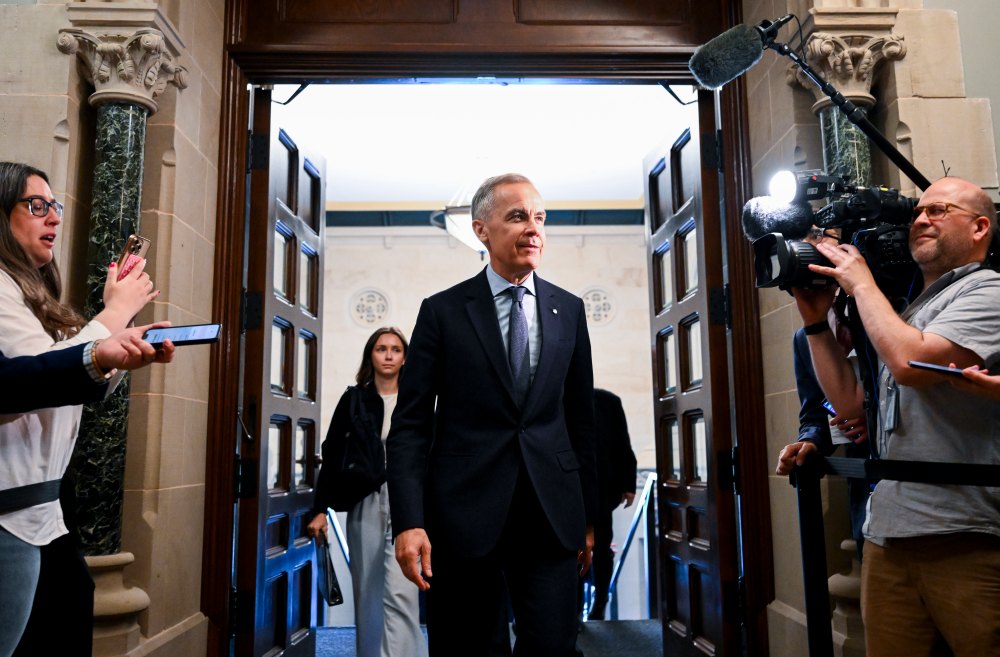
“It’s coming out next week,” Prime Minister Mark Carney told reporters on Parliament Hill Wednesday.
Artificial Intelligence Minister Evan Solomon initially promised the strategy would be tabled by the end of last year.
The government at first signalled an adoption-focused approach to AI. Critics said the group Ottawa asked to advise it on the technology leaned too much on the perspective of industry and the tech sector.
The public conversation around AI has since shifted to focus more on concerns about safety and the social effects of the technology, while Canada also has strengthened relationships with other middle powers that are more pro-regulation than the United States.
Teresa Scassa, a law professor at the University of Ottawa and Canada Research Chair in information law and policy, told The Canadian Press earlier this month the ground has “shifted somewhat under the government’s feet.”
Scassa cited widespread alarm about the role AI chatbots may have played in the mass shooting in Tumbler Ridge, B.C., and concerns about social media addiction, cybersecurity and cognitive, labour and environmental impacts.
Pollsters have also said Canadians are wary of the potential risks associated with AI.
In August, a Leger poll found a large majority of respondents said governments should regulate AI tools to ensure their ethical and safe use. In November, a majority of respondents told North Poll Strategies they would prefer the government to be skeptical and do its best to ensure Canadians aren’t harmed or deceived by the technology.
Solomon said earlier this month the national AI strategy will consider the technology’s impacts on the labour market. He said the impact of AI has been changing and he was still consulting on the strategy, citing meetings with labour leaders, environmentalists and young people.
Solomon also has said recently that Canada must strike a balance between AI cheerleaders and those who are completely opposed to the technology.
In its spring economic statement, the government outlined six pillars of the upcoming strategy.
They include previously announced priorities like introducing new privacy and online safety laws, building sovereign compute infrastructure, supporting the growth of Canadian AI companies and co-ordinating with international allies.
The document also said the strategy would provide AI training and education for Canadians and that the “gains of AI will come from putting it to work across the Canadian economy and developing pro-worker, industrial AI technologies.”
It’s not clear to what extent the strategy will deal with regulating the technology — and how much of that will be left to two pieces of legislation the federal government has promised to introduce.
Solomon is expected to bring forward a bill to update Canada’s private sector privacy laws, while Culture Minister Marc Miller is taking the lead on upcoming online harms legislation, which may include AI chatbots. The government already has introduced a justice bill that would criminalize sexual deepfakes.
As part of its work on the strategy, the government held a public consultation last fall that received more than 11,000 comments, which the government sorted through using AI.
“Stakeholders were divided between optimism for AI’s potential and skepticism about its risks. Supporters see opportunities for productivity gains and economic growth, while critics warn of ethical, environmental and social harms,” the government said in a summary document.
It added that key concerns included loss of intellectual property, foreign dominance, a “lack of regulation and accountability” and “environmental degradation and job displacement.”
This report by The Canadian Press was first published May 27, 2026.