SpaceX’s Starship rockets are grounded pending investigation after test flight
Advertisement
Read this article for free:
or
Already have an account? Log in here »
To continue reading, please subscribe:

Digital Subscription
One year of digital access for only $205*
- Enjoy unlimited reading on winnipegfreepress.com
- Read the E-Edition, our digital replica newspaper
- Access News Break, our award-winning app
- Play interactive puzzles
*First annual payment billed as $205.00 + GST for one year. This annual subscription will automatically renew at $233.00 + GST every 52 weeks (10% off the regular annual price of $259.35). Offer available to new and qualified returning subscribers only. Cancel any time.
To continue reading, please subscribe:
Add Free Press access to your Brandon Sun subscription for only an additional
$1 for the first 4 weeks*
- Enjoy unlimited reading on winnipegfreepress.com
- Read the E-Edition, our digital replica newspaper
- Access News Break, our award-winning app
- Play interactive puzzles
*Your next Brandon Sun subscription payment will increase by $1.00 and you will be charged $17.95 plus GST for four weeks. After four weeks, your payment will increase to $24.95 plus GST every four weeks.
Read unlimited articles for free today:
or
Already have an account? Log in here »
CAPE CANAVERAL, Fla. (AP) — SpaceX Starship launches are on hold pending an investigation into last week’s test flight.
The Federal Aviation Administration announced Wednesday that the hourlong spaceflight resulted in a mishap based on the performance of the mega rocket’s first-stage booster.
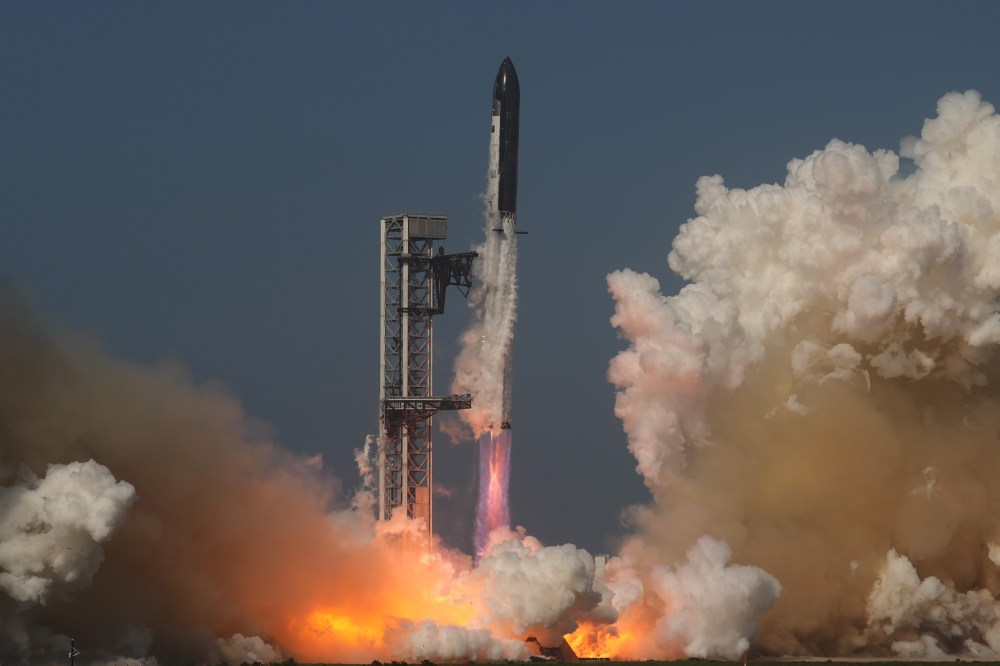
Minutes after Starship blasted off from Texas on Friday, the booster separated as normal but engines conked out as it made its way back to Earth. Instead of a controlled splashdown in the Gulf of Mexico, the booster came in hard. There were no reports of injury or property damage, according to the FAA, which will oversee the company’s investigation.
The spacecraft continued around the world, releasing 20 mock satellites before ending the mission as planned with a fiery splashdown in the Indian Ocean.
The 407-foot (124-meter) rocket is SpaceX CEO Elon Musk’s biggest and most powerful Starship yet, designed to carry crews to Mars. NASA is looking for it to land astronauts on the moon as soon as 2028 and help build a lunar base.

___
The Associated Press Health and Science Department receives support from the Howard Hughes Medical Institute’s Department of Science Education and the Robert Wood Johnson Foundation. The AP is solely responsible for all content.