Cybersecurity executives urge the Trump administration to ease restrictions on Anthropic AI models
Advertisement
Read this article for free:
or
Already have an account? Log in here »
To continue reading, please subscribe:

Digital Subscription
One year of digital access for only $205*
- Enjoy unlimited reading on winnipegfreepress.com
- Read the E-Edition, our digital replica newspaper
- Access News Break, our award-winning app
- Play interactive puzzles
*First annual payment billed as $205.00 + GST for one year. This annual subscription will automatically renew at $233.00 + GST every 52 weeks (10% off the regular annual price of $259.35). Offer available to new and qualified returning subscribers only. Cancel any time.
To continue reading, please subscribe:
Add Free Press access to your Brandon Sun subscription for only an additional
$1 for the first 4 weeks*
- Enjoy unlimited reading on winnipegfreepress.com
- Read the E-Edition, our digital replica newspaper
- Access News Break, our award-winning app
- Play interactive puzzles
*Your next Brandon Sun subscription payment will increase by $1.00 and you will be charged $17.95 plus GST for four weeks. After four weeks, your payment will increase to $24.95 plus GST every four weeks.
Read unlimited articles for free today:
or
Already have an account? Log in here »
SAN FRANCISCO (AP) — A group of cybersecurity executives and experts is asking the Trump administration to lift its directive preventing the use of Anthropic’s latest artificial intelligence models by foreign nationals, saying the move could help U.S. adversaries more than it hurts them.
Anthropic said Friday it has taken its latest artificial intelligence models, known as Fable 5 and Mythos 5, offline to comply with the directive. The AI giant said it did not believe the steps taken by the government were warranted by the concern it flagged about a potential security issue.
Anthropic has said it was limiting use of some its latest technology to select customers because of its ability to surpass human cybersecurity experts in finding and exploiting computer vulnerabilities. The San Francisco-based company has had discussions with the White House previously about the latest models’ capabilities.
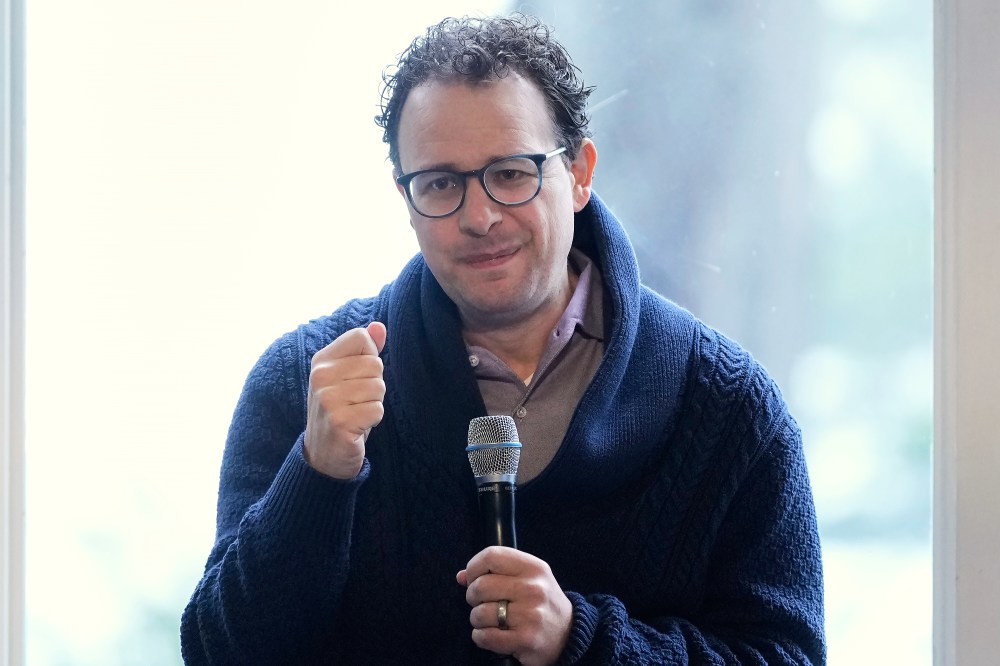
In the letter Sunday, more than 100 cybersecurity experts and leaders from companies including Adobe and Nvidia asked the U.S. government to lift the export control directives on the Anthropic models and “commit to an open, scientific and transparent process of handling AI risk assessments in the future.”
The letter said that while Anthropic’s Mythos models are “quite good” at finding flaws in software and weaponizing exploits, they are ”not uniquely good at these tasks” and many of the letter’s signatories regularly use other foundation and open-source models for security audits and training.
The letter said it is dangerous to take away the best cyber defense capabilities “without a good reason” when America’s adversaries are rapidly advancing.
China’s models, the letter said, are “only months behind the best American models,” and it is even likely that China’s government has access to private capabilities beyond what’s been made public.

The export controls marked the U.S. government’s most significant step yet to restrict access to the most advanced AI models. Anthropic released Fable widely last week. That model is a limited version of the more advanced Mythos, to which the company has tightly limited access due to cybersecurity fears.
The Commerce Department did not immediately respond to a request for comment on Monday.
Friday’s directive came 10 days after President Donald Trump signed an executive order to establish a framework for the federal government to vet the national security risks of the most advanced AI systems for up to a month before their public release. Participation by AI developers would be voluntary, the order said.
Tensions have been running high between the Trump administration and the safety-conscious Anthropic, which has sought to put guardrails on the development of AI to minimize any potential risks and maximize its economic and national security benefits for the U.S.
After a contract dispute with the Pentagon, Defense Secretary Pete Hegseth sought to declare Anthropic a supply chain risk, an unprecedented move against a U.S. company that Anthropic has challenged in two federal courts. The company said it wanted assurance the Pentagon would not use its technology in fully autonomous weapons and the surveillance of Americans. Hegseth said the company must allow for any uses the Pentagon deemed lawful.