Beyond the gold rush: Totem poles at the Chilkoot Trail mark route’s long history

Advertisement

Advertise with us

Two carved cedar totems now flank either side of the Canadian end of the Chilkoot Trail, a permanent reminder that the route best known as the path to the Yukon gold fields during the 1890s gold rush has a history that stretches back much further.

Read this article for free:


or

Already have an account? Log in here »

To continue reading, please subscribe:

Subscribe and receive a limited-edition Free Press branded hat or tote.

Digital Subscription

One year of digital access for only $205*

  • Enjoy unlimited reading on winnipegfreepress.com
  • Read the E-Edition, our digital replica newspaper
  • Access News Break, our award-winning app
  • Play interactive puzzles

*First annual payment billed as $205.00 + GST for one year. This annual subscription will automatically renew at $233.00 + GST every 52 weeks (10% off the regular annual price of $259.35). Offer available to new and qualified returning subscribers only. Cancel any time.

To continue reading, please subscribe:

Add Free Press access to your Brandon Sun subscription for only an additional

$1 for the first 4 weeks*

  • Enjoy unlimited reading on winnipegfreepress.com
  • Read the E-Edition, our digital replica newspaper
  • Access News Break, our award-winning app
  • Play interactive puzzles
Start now

*Your next Brandon Sun subscription payment will increase by $1.00 and you will be charged $17.95 plus GST for four weeks. After four weeks, your payment will increase to $24.95 plus GST every four weeks.

Two carved cedar totems now flank either side of the Canadian end of the Chilkoot Trail, a permanent reminder that the route best known as the path to the Yukon gold fields during the 1890s gold rush has a history that stretches back much further.

The 53-kilometre Chilkoot Trail runs between Dyea, Alaska, and Bennett, B.C., and was the treacherous route taken by prospectors looking to strike it rich in the Klondike. It’s now used by thousands of hikers each year. 

Sean McDougall, the acting executive director for the Carcross/Tagish First Nation in the Yukon said talk about installing the poles with Parks Canada has been going on for years.
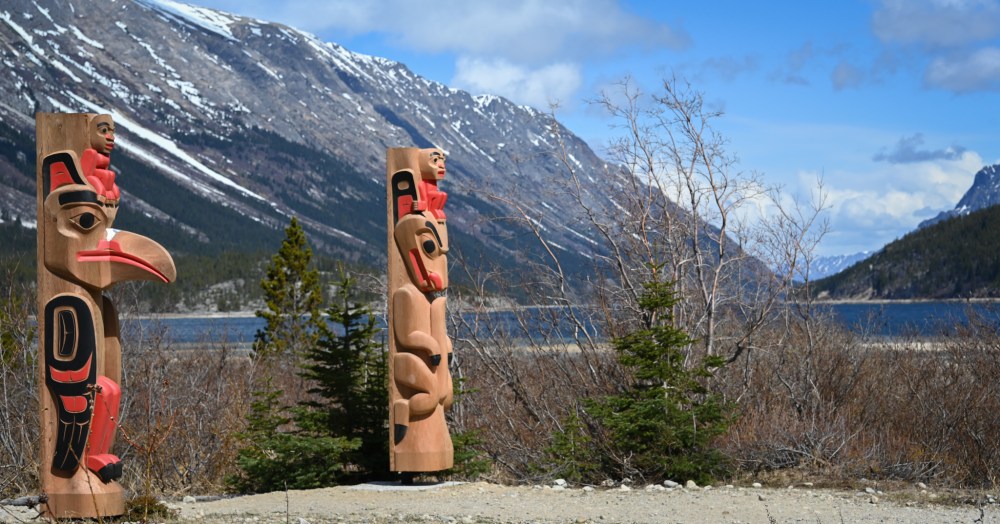
Two newly installed totem poles, shown in this undated handout photo, stand on either side of the Canadian end of the Chilkoot Trail in Bennett, B.C. The cedar poles represent the raven and the wolf, the two groups that encompass the six traditional clans of the Carcross/Tagish First Nation. THE CANADIAN PRESS/Handout — Max Leighton (Mandatory Credit)

“(We) started talking about rebranding and telling the complete history of the trail, instead of what was done at that time, which was focused primarily on the whole gold rush,” he said in an interview. 

“It’s an important thing for us to recognize that the trail has a much longer and much deeper history than what was being told.”

The Chilkoot Trail is a Canadian national historic site because of the role it played in the mass movement of prospectors during the gold rush.

The poles represent the raven and the wolf, the two groups that encompass the six traditional clans of the Carcross/Tagish First Nation.

It took six months for the artist with the help of a team to carve the poles, which were later transported by train before being installed at the foot of the trail in Bennett. 

The poles came up to Bennett in May on a flatbed section of the train that’s commonly used by tourists and were unveiled to the public on Friday.

Historical photos show long lines of men waist-deep in muddy snow making their way over the nearly vertical “golden staircase” as part of the final push to the gold fields. 

But for eons, First Nations communities used the trail to move between the Interior and the coast for survival. 

“If we go back in our clan stories, stories that have been passed down through generations in our oratory way, these trails can date back at the time of the last ice age” McDougall said.

“We have clan stories that have talked about the different times that we would go from the coast to the Interior.”

McDougall describes the Chilkoot Trail as “one of the main bloodlines” that connected First Nations, used for migration by the Tlingit and Tagish people, who primarily live in the Yukon, northern B.C., and Alaska. 

“The trail was originally used for trade because there was a number of food items and medicines that we would have in the Interior that they wouldn’t have on the coast, and vice versa. So, we set up and established these trade routes,” he said.

He said the focus of those trips was survival in times of need, like food shortages and smallpox, as well as for trade and marriages between communities.

“It was really a lifeline that really brought our coastal relatives and our Interior relatives together,” he said.

McDougall’s great uncle was Keish, also known as Skookum Jim, who was part of the group to first discover the gold that would set off the Klondike rush.

Renowned carver Keith Wolfe Smarch, whose work has been displayed around the world and is in the private collection of King Charles, worked on the poles with his team for months and said it’s the first time one of his poles has travelled by train.

He said he decided to carve the wolf and the raven to represent First Nations people.

“What I think people will get when they walk by them is, they’ll recognize that we have a presence here, and we’re still here, it’s not all gold rush,” he said.

This report by The Canadian Press was first published June 20, 2026
Report Error Submit a Tip

More Stories

You’re a solid, loyal sister, so worry not

Maureen Scurfield 5 minute read 2:00 AM CDT

DEAR MISS LONELYHEARTS: I ran into my sister’s husband at the bar recently. He was drinking with a bunch of people from his work. I noticed he was sitting close to a young woman, with his arm around her.

I just nodded without a smile as I slowly passed them. I kept on going, but he knew I saw them together. A few minutes later he came over — obviously drunk — and said, “You’re a good girl! You won’t say anything to your sister, will you?” Ha! I looked at him and said, “Of course I’m going to say something!”

My loyalty will always be to my sister. I phoned my sis in my car and blabbed. She tried to laugh it off, but she’s gone silent since — not answering my calls or messages. So apparently now I’m the troublemaker? That’d be just her style! What should I do?

— Worried About Us, North Kildonan

Thriller has steam to spare, but story slogs

Alison Gillmor 5 minute read Preview

Thriller has steam to spare, but story slogs

Alison Gillmor 5 minute read 2:01 AM CDT

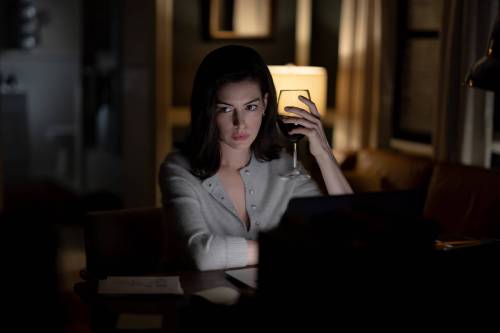
Based on a 2018 book by hugely popular, wildly polarizing author Colleen Hoover (whose novels It Ends with Us, Regretting You and Reminders of Him have also been made into movies), this new adaptation is being billed as a sexy psychological thriller.

There is sex — quite a lot of sex. As for those other descriptors, Verity is not only lacking in thrills. It’s almost laughably light on plausible human psychology.

Plausibility can be overrated, of course. Scripter Nick Antosca (2026’s Cape Fear) and director Michael Showalter (The Idea of You) could have thrown plausibility out the window and gone all-in on escapist fun.

But while there is a gorgeous modernist lake house and some excellent knitwear here, and Anne Hathaway, at least, seems to be having a ball with her deliciously two-faced role, Verity is mostly a sloggy mess, with draggy pacing, flat characters and a fatal lack of atmosphere.

Read
2:01 AM CDT

Face up to fact you blew it with ex-wife

Maureen Scurfield 4 minute read Yesterday at 2:01 AM CDT

DEAR MISS LONELYHEARTS: My ex-wife just moved back to town and looks like a changed woman. She spent years married to me, and our kids just graduated in a city where we once lived together. That was without help from me, other than minor financial stuff.

She has found a great new job back in Winnipeg and she’ll do very well. I admire her more than any other woman I ever met, but she’s not interested in me at all.

I once had a solid, responsible job and then got into drinking, and I cheated on her. That’s why she left town. Now I’ve been sober and sorry for many years.

I asked her last weekend if I could take her out to dinner and she said no and changed the subject.

Kent Monkman debuts beaver sculpture in Toronto’s ambitious new waterfront park

Alex Nino Gheciu, The Canadian Press 2 minute read Preview

Kent Monkman debuts beaver sculpture in Toronto’s ambitious new waterfront park

Alex Nino Gheciu, The Canadian Press 2 minute read Wednesday, Sep. 30, 2026

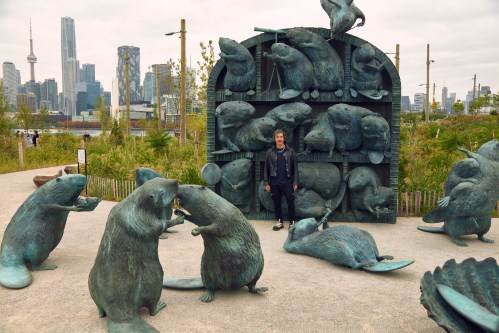
TORONTO - Kent Monkman’s first-ever public art installation is dam good.

The celebrated Cree artist’s new permanent sculpture, dubbed “The Colony,” debuts Wednesday in Toronto’s east end.

The 15-foot-high bronze structure features beavers dancing, feasting and celebrating, evoking Indigenous ceremonies.

It highlights the vital role of beavers in the natural, Indigenous and colonial histories of Turtle Island, says a release.

Read
Wednesday, Sep. 30, 2026

Transit, roads and city council’s priorities

Erna Buffie 5 minute read Preview

Transit, roads and city council’s priorities

Erna Buffie 5 minute read 2:00 AM CDT

Did any of you happen to notice that the week of Sept. 14 marked an interesting confluence of events in Winnipeg? First up was the mayoral debate on public transit. Second was an announcement that the city would be undertaking a survey to determine whether their citizens’ “transportation needs” are being met.

The debate on our public bus system, from which our current Mayor Scott Gillingham was tellingly absent, focused primarily on safety rather than the efficiency of the system.

Which, on one level, is no great surprise.

After all unlawful incidents on buses and at transit stops have increased by 280 per cent compared to levels recorded around 2016. Moreover, the candidates were primarily speaking to the bus drivers’ union that organized the event, and bus drivers are often the victims of violent episodes.

Read
2:00 AM CDT

Virgo Rising’s debut LP is visceral, vulnerable

Ben Waldman 5 minute read Preview

Virgo Rising’s debut LP is visceral, vulnerable

Ben Waldman 5 minute read 2:00 AM CDT

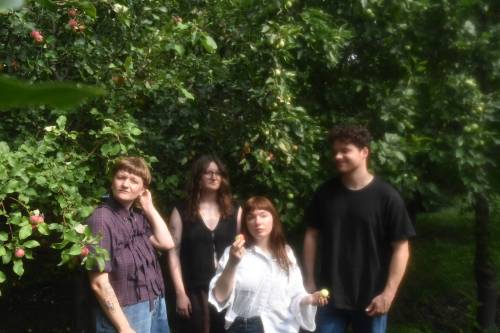
Lauren Wittmann’s apartment was bright and trinket-filled, and Emily Sinclair felt nostalgia for it as soon as she walked through the door.

It was 2018 or so, and as Sinclair, the lead vocalist for Winnipeg indie quartet Virgo Rising, tells it, crossing the transom and kicking off her shoes into a pile of strange soles felt like “bursting into the world” for the very first time.

“I was finally meeting my people,” Sinclair recalls.

A few years later, that same unit came up for rent, and Sinclair moved in, unboxing her possessions and hanging her frames on the hammered nails of prior tenants.

Read
2:00 AM CDT