Parks Canada working to curb spread of deadly white-nose syndrome in Alberta bats
Advertisement
Read this article for free:
or
Already have an account? Log in here »
To continue reading, please subscribe:

Digital Subscription
One year of digital access for only $205*
- Enjoy unlimited reading on winnipegfreepress.com
- Read the E-Edition, our digital replica newspaper
- Access News Break, our award-winning app
- Play interactive puzzles
*First annual payment billed as $205.00 + GST for one year. This annual subscription will automatically renew at $233.00 + GST every 52 weeks (10% off the regular annual price of $259.35). Offer available to new and qualified returning subscribers only. Cancel any time.
To continue reading, please subscribe:
Add Free Press access to your Brandon Sun subscription for only an additional
$1 for the first 4 weeks*
- Enjoy unlimited reading on winnipegfreepress.com
- Read the E-Edition, our digital replica newspaper
- Access News Break, our award-winning app
- Play interactive puzzles
*Your next Brandon Sun subscription payment will increase by $1.00 and you will be charged $17.95 plus GST for four weeks. After four weeks, your payment will increase to $24.95 plus GST every four weeks.
Read unlimited articles for free today:
or
Already have an account? Log in here »
Parks Canada crews are at work in Alberta’s bat caves, spreading a blend of bacteria to try to save the flying night mammals from a deadly, and accelerating, fungal infection.
Nina Veselka, a biologist with Parks Canada, has already seen the effects of the infection at a cave in Jasper National Park, where weary bats had fallen from the limestone walls and struggled to survive from the cave floor.
“We could be looking at, like, local extinction,” Veselka said of the cave.
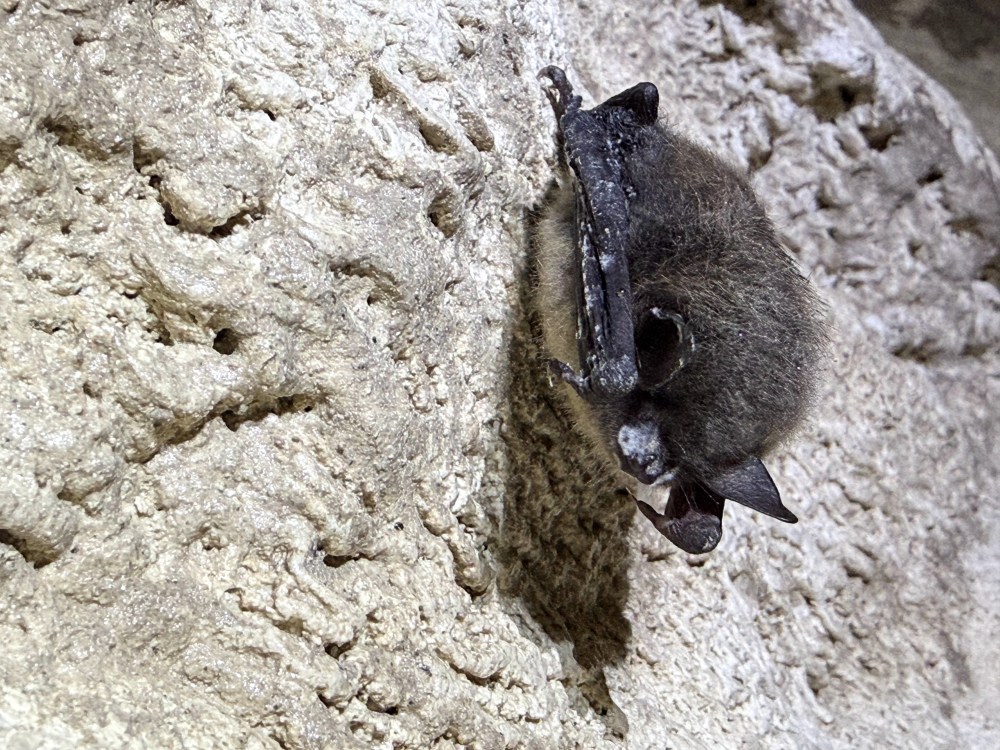
The scourge is white-nose syndrome and threatens Alberta’s entire hibernating bat population.
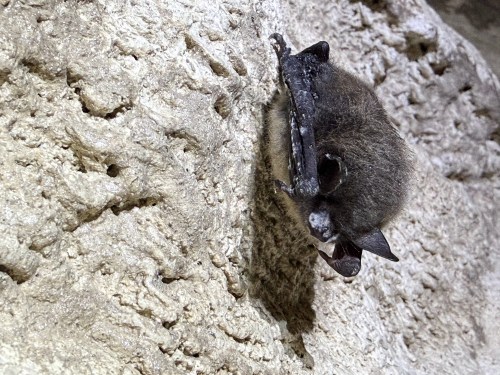
It’s caused by a fungus that grows in cold and damp areas, such as bat caves, and can enter into the tissues of bats. It appears on the nocturnal creatures as a fuzzy, white growth on their snouts and wings.
The fungus causes hibernating bats to wake up, draining precious fat reserves that can’t be replenished in winter, putting the bats at risk of starvation.
The fungus poses no risk to humans but can spread and kill as much as 98 per cent of a bat colony.
Veselka visited the cave in March with Parks Canada’s ecological monitoring team who found nearly a dozen dead bats at the entrance of a cave in Jasper National Park that is host to a hibernating bat colony.
A count later would number the dead at about 69, compared with three dead for each of the past two years.
Veselka would not disclose the location of the cave, to deter visitors.
Crews are fighting back with fungi-fighting probiotics being spread at the entrances of known maternity roosts in Jasper and even inside some attic spaces with confirmed roosts.
“We get it as like a freeze-dried vial and it has four bacterial strains and they have been shown to inhibit the growth of the fungus that causes white nose,” said Veselka.
Those strains are spread where the bats roost and are meant to transfer to the wings, tails and faces of bats to slow the fungal growth.
She compared it to rubbing in hand sanitizer and touching a dirty surface.
“Any bacteria that get on your hands or any fungus or any germs don’t really have the chance to establish and grow on your hand,” she said.
In Alberta, the strains of probiotics are being used to treat the disease, whereas in B.C., where the spread has not taken hold, it’s being as a preventive measure.
“It’s very sad, but also knowing that there is something that we can do brings a little bit of hope because it’s not just a lost cause,” Veselka said.
The fungus that causes white-nose syndrome was found in Europe in the early 1900s, but bats there appear to have adapted. It arrived in New York two decades ago and spread across North America, killing millions of bats. It appeared in Alberta in 2022.
Veselka and the monitoring team counted 615 bats in March. The populations are small in Alberta and the Rocky Mountains, she said.
“So, even the bats that survive there might be not enough of them to, kind of, huddle and stay warm or even reproduce,” said Veselka, who has been working with bats for nearly two decades.
Those bats can also spread the fungus to each other and Alberta is expecting to see an explosion of infections, Veselka said.
Without the bug-eating bats, insect populations — including mosquitoes and agricultural pests — could boom.
Lisa Wilkinson, a biologist and bat specialist for the Alberta government, said the spread of white-nose syndrome has long-term repercussions.
“It just takes bat populations a really long time to recover, because they typically only have one pup per year,” Wilkinson said in an interview.
She said the province treated two sites with the probiotics last year and have added another five more to their treatment plans this year.
“There’s a lot of research going on,” she said.
“(But) at this point, there isn’t any silver bullet that’s going to prevent it, cure it or eradicate the fungus.”
This report by The Canadian Press was first published June 22, 2026.