A large, harmless asteroid will zip past Earth this weekend
Advertisement
Read this article for free:
or
Already have an account? Log in here »
To continue reading, please subscribe:

Digital Subscription
One year of digital access for only $205*
- Enjoy unlimited reading on winnipegfreepress.com
- Read the E-Edition, our digital replica newspaper
- Access News Break, our award-winning app
- Play interactive puzzles
*First annual payment billed as $205.00 + GST for one year. This annual subscription will automatically renew at $233.00 + GST every 52 weeks (10% off the regular annual price of $259.35). Offer available to new and qualified returning subscribers only. Cancel any time.
To continue reading, please subscribe:
Add Free Press access to your Brandon Sun subscription for only an additional
$1 for the first 4 weeks*
- Enjoy unlimited reading on winnipegfreepress.com
- Read the E-Edition, our digital replica newspaper
- Access News Break, our award-winning app
- Play interactive puzzles
*Your next Brandon Sun subscription payment will increase by $1.00 and you will be charged $17.95 plus GST for four weeks. After four weeks, your payment will increase to $24.95 plus GST every four weeks.
Read unlimited articles for free today:
or
Already have an account? Log in here »
NEW YORK (AP) — A large asteroid will zip past Earth this weekend, but don’t worry: It poses no danger.
The space rock — 1997 NC1 — makes its closest approach Saturday morning, coming within 1.6 million miles (2.6 million kilometers), according to the European Space Agency.
Discovered nearly three decades ago by an asteroid-tracking system in Hawaii, the asteroid is between 2,461 feet (0.75 kilometer) to 5,413 feet (1.65 kilometers) wide — roughly the size of two to four Empire State Buildings.
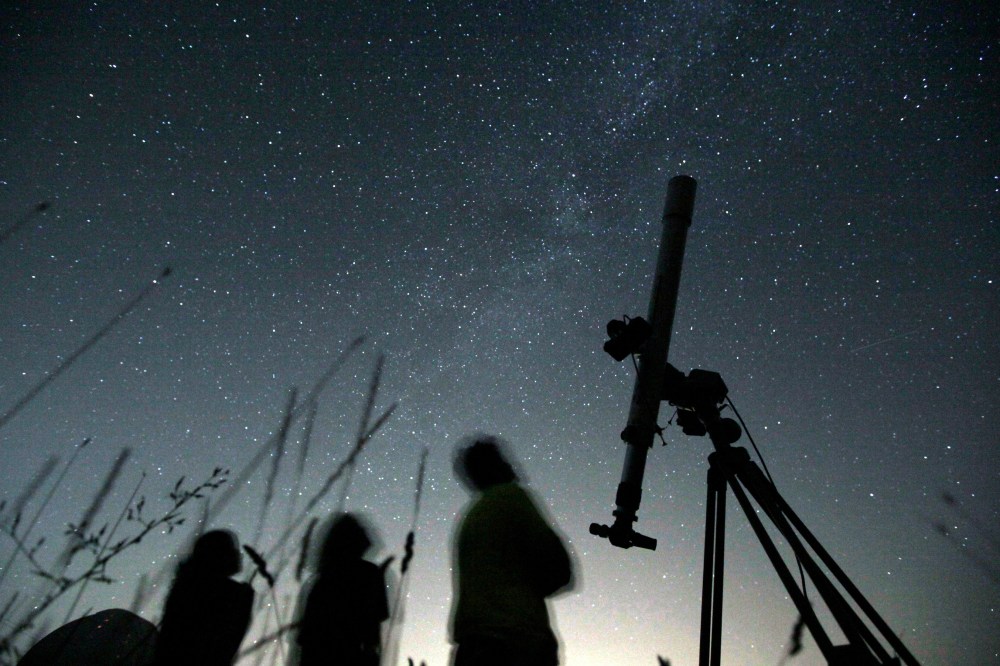
Skygazers with binoculars and small telescopes may be able to spot the asteroid as a small point of light passing harmlessly through the sky. It won’t greet Earth from such a distance again until 2133, according to NASA.
The last time an asteroid similar in size passed safely by Earth from an even closer distance was in 2022, when a space rock called 1994 PC1 made its approach.
NASA, ESA and other space agencies track the paths of asteroids and other space junk so they can keep Earth safe from any possible collisions. Last year, astronomers tracked a smaller asteroid resembling a spinning hockey puck and said there’s no chance of it hitting Earth or the moon.
___
The Associated Press Health and Science Department receives support from the Howard Hughes Medical Institute’s Department of Science Education and the Robert Wood Johnson Foundation. The AP is solely responsible for all content.