After an earthquake, how long can trapped victims survive?

Advertisement

Advertise with us

NEW YORK (AP) — For those trapped in rubble after an earthquake, survival depends on many factors, including weather and access to water and air.

Read this article for free:


or

Already have an account? Log in here »

To continue reading, please subscribe:

Subscribe and receive a limited-edition Free Press branded hat or tote.

Digital Subscription

One year of digital access for only $205*

  • Enjoy unlimited reading on winnipegfreepress.com
  • Read the E-Edition, our digital replica newspaper
  • Access News Break, our award-winning app
  • Play interactive puzzles

*First annual payment billed as $205.00 + GST for one year. This annual subscription will automatically renew at $233.00 + GST every 52 weeks (10% off the regular annual price of $259.35). Offer available to new and qualified returning subscribers only. Cancel any time.

To continue reading, please subscribe:

Add Free Press access to your Brandon Sun subscription for only an additional

$1 for the first 4 weeks*

  • Enjoy unlimited reading on winnipegfreepress.com
  • Read the E-Edition, our digital replica newspaper
  • Access News Break, our award-winning app
  • Play interactive puzzles
Start now

*Your next Brandon Sun subscription payment will increase by $1.00 and you will be charged $17.95 plus GST for four weeks. After four weeks, your payment will increase to $24.95 plus GST every four weeks.

NEW YORK (AP) — For those trapped in rubble after an earthquake, survival depends on many factors, including weather and access to water and air.

If their injuries aren’t too severe, victims can survive for a week or more, assuming the weather isn’t too hot or cold, experts say.

In Venezuela, rescue teams have been racing against the clock to pull survivors from the rubble after two powerful earthquakes shook the northern state of La Guaira last Wednesday. More than 770 buildings were totally or partially collapsed from the earthquakes, and aftershocks continued to shake the region.
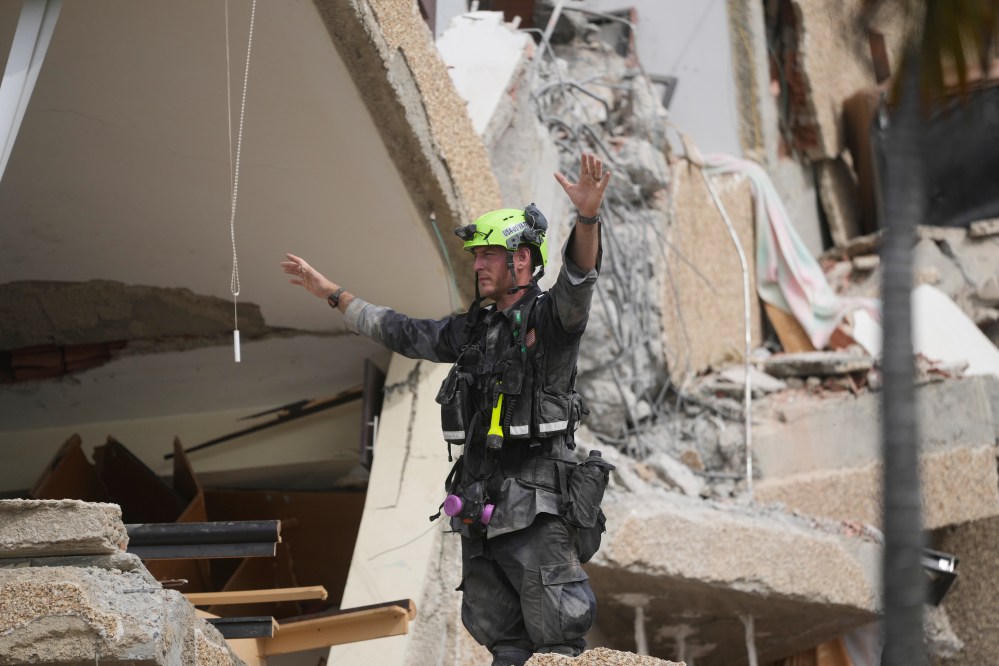
A rescuer from a U.S. search-and-rescue team evaluates access to an earthquake-damaged building in Catia La Mar, Venezuela, Sunday, June 28, 2026. (AP Photo/Fernando Vergara)

Most rescues happen in the 24 hours after a disaster. The chances of survival drop with each day after that, experts say. Most victims are badly injured or buried by falling stones or other debris.

What factors affect earthquake survival?

Trapped victims are more likely to survive if they are in a debris-free pocket that prevents major injury while they await rescue, like under a sturdy desk, said geophysicist Victor Tsai from Brown University. Experts call this a survivable void space.

If fire, smoke or hazardous chemicals were released as a result of the building collapse, they may decrease a person’s survival odds, said emergency response expert Dr. Joseph Barbera, an associate professor at George Washington University.

Beyond that, having air to breathe and water to drink are crucial as the days go on.

“You could survive a while without food,” Barbera said. “You could survive less without water.”

Temperatures where someone is trapped may affect survival, and temperatures outside the rubble can affect rescue missions.

More than 2,600 rescue workers from around the world arrived in Venezuela with trained search dogs and machinery, the government said. And rescue efforts in La Guaira, the hardest-hit area, appeared significantly more organized on Sunday, after residents expressed frustration and anger about the level of response in the days before.

It can be important for survivors to receive vital medical care before they are removed from the rubble, Barbera said. If not, the buildup of toxins from crushed muscles could make them go into shock after they are rescued.

After the 2011 earthquake and tsunami in Japan, a teenager and his 80-year-old grandmother were found alive after nine days trapped in their flattened home. And the year before, a 16-year-old Haitian girl was rescued from earthquake rubble in Port-au-Prince after 15 days.
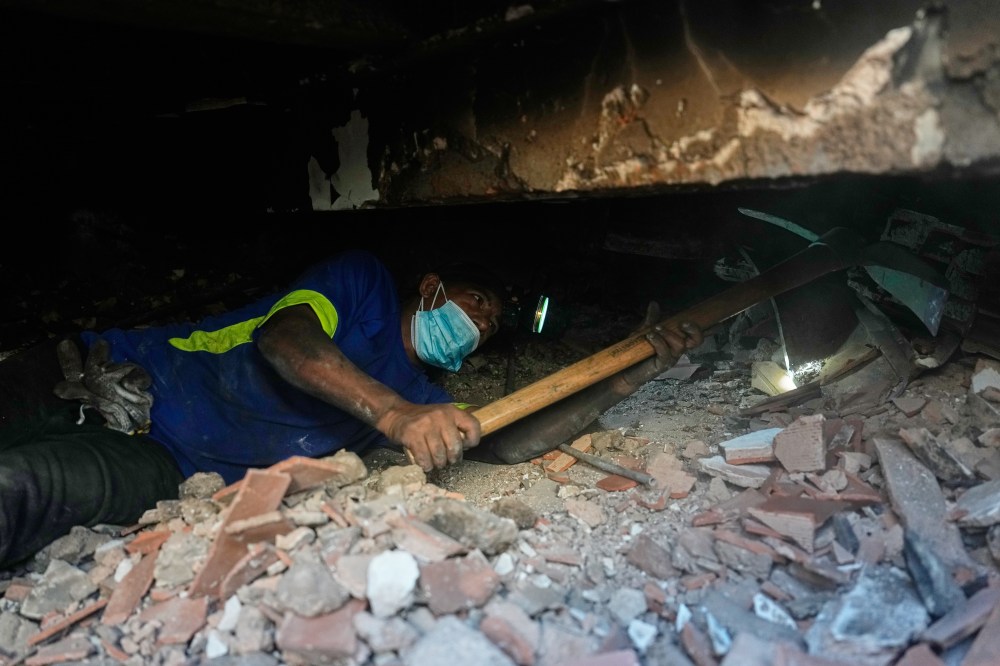
Franklin Rodriguez searches for missing relatives in the rubble of his apartment building, which collapsed in the back-to-back earthquakes that struck La Guaira, Venezuela, Monday, June 29, 2026. (AP Photo/Fernando Vergara)

What to do during an earthquake

The best practices for survival during an earthquake depend on where you are in the world. Building codes in regions with active fault lines are often designed to withstand earthquakes, but that doesn’t hold true everywhere.

In many countries, including the United States, the best practices are to drop, seek cover and hang on unless you are close to a building exit. Seek shelter under a heavy table or near sturdy furniture that may yield a survivable pocket if the roof collapses. Cover your face with cloth or a mask to protect from dust and debris.

If you are trapped in the rubble after an earthquake, save your energy and don’t overexert. Ration food and water, listen for rescue calls and search for something near you to make noise. If you have a phone with you, conserve its battery and try for help in short spurts each day.

—-

The Associated Press Health and Science Department receives support from the Howard Hughes Medical Institute’s Science and Educational Media Group and the Robert Wood Johnson Foundation. The AP is solely responsible for all content.
Report Error Submit a Tip

More Stories

WSO season kicks off with two fateful fifths

Holly Harris 5 minute read Preview

WSO season kicks off with two fateful fifths

Holly Harris 5 minute read Yesterday at 3:57 PM CDT

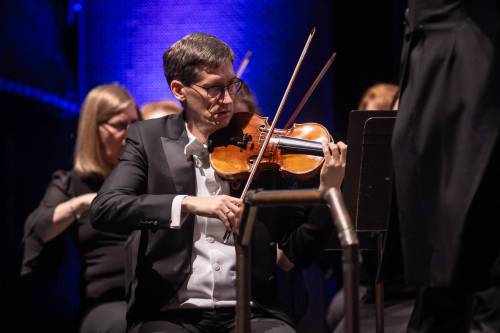
Saturday night’s Masterworks program, titled Beethoven 5 and Tchaikovsky 5 and led by Daniel Raiskin, also officially introduced the WSO’s new composer-in-residence, Kelly-Marie Murphy, to the weekend crowd of 1,720. She was met with enthusiastic applause and cheers upon taking the stage.

Read
Yesterday at 3:57 PM CDT

Restaurants ‘under pressure’

Gabrielle Piché 5 minute read Preview

Restaurants ‘under pressure’

Gabrielle Piché 5 minute read Friday, Sep. 25, 2026

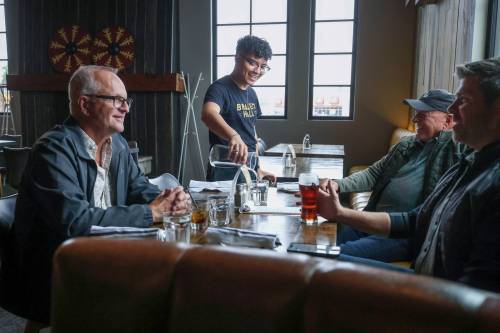
Happy hour outings are on Jackie Piggott’s calendar — but even those are fewer.

She and her husband might visit a restaurant once a month. It’s a change over the past year: earlier, they may go twice, thrice or weekly.

“It’s something that we’ve talked about, my husband and myself, just because the pricing is so expensive,” Piggott said, stopping during a grocery run in St. Vital. “It’s also better for our health.”

She’s in the majority: a new Restaurants Canada report found 80 per cent of Canadians are eating out less frequently because of higher living costs, up from 75 per cent in 2025.

Read
Friday, Sep. 25, 2026

Positive anticipation is growing about major housing developments underway in Winnipeg’s downtown

Gabrielle Piché 10 minute read Preview

Positive anticipation is growing about major housing developments underway in Winnipeg’s downtown

Gabrielle Piché 10 minute read Friday, Sep. 25, 2026

If traffic is light and the wind is down, Somia Sadiq is able to hear the roar of Winnipeg Jets fans twice: first through her window, then on TV.

From her apartment view high above downtown, she can look out at Graham Avenue’s painted pedestrian landscape, see construction cranes and hear the heavy equipment at work as massive housing projects take shape at The Forks, at what used to be Portage Place shopping centre and at the former Hudson’s Bay building.

Sadiq has lived at 300 Main for 2 1/2 years, a few steps from the city’s famous, windy and reopened-to-pedestrians Portage Avenue intersection. At 42 storeys, it’s the tallest building in Winnipeg.

She is among 18,000 downtown residents who will soon be joined by thousands of others attracted to the city’s core by the new wave of major construction projects.

Read
Friday, Sep. 25, 2026

Charges laid after St. Boniface hospital assault

1 minute read Yesterday at 12:40 PM CDT

A man has been charged after a serious assault at St. Boniface Hospital on Saturday.

Just after 1 a.m. Sept. 26, two men were having an argument that escalated to a physical fight in which the victim sustained serious upper-body injuries, the Winnipeg Police Service stated in a news release Sunday.

When police arrived, a 36-year-old man was being detained by security personnel. The incident didn't involve hospital staff and no one else was hurt, the release stated.

James Anthony Junior Clark, 36, was arrested and charged with assault causing bodily harm and two counts of violating a probation order.

Jets place two on waivers

1 minute read Yesterday at 1:12 PM CDT

The Winnipeg Jets are one step closer to being down to numbers.

On Sunday afternoon, centre Danny Zhilkin and defenceman Henry Thrun were placed on waivers.

That decision would suggest  defenceman Tyrel Bauer is in line to break camp with the NHL club for the first time in his career.

The final roster, with a maximum of 23 players, must be submitted on Monday afternoon.

Local Muslims, Indigenous people hold interfaith event

Malak Abas 3 minute read Preview

Local Muslims, Indigenous people hold interfaith event

Malak Abas 3 minute read Yesterday at 6:42 PM CDT

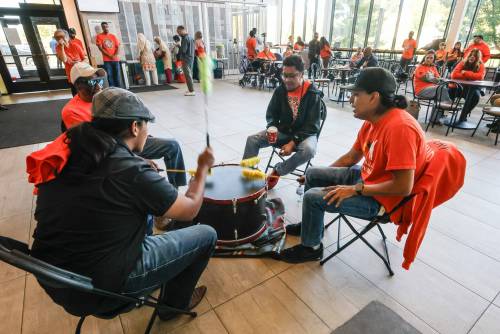
Bannock with wild rice and samosas with halal beef stew were served in equal measure as Indigenous and Muslim Winnipeggers sought common ground at an interfaith event discussing truth and reconciliation Sunday.

The Islamic Social Services Association’s second annual Muslim-Indigenous Solidarity event recognized Orange Shirt Day through conversations with elders, shared prayers and crafting.

Organizer Shahina Siddiqui said many of the people attending the gathering, held at Canadian Mennonite University, share the traumatic impacts of colonialism.

Siddiqui said she herself had attended a Catholic day school in her home country of Pakistan, where she and other students were forced to speak English, and were hurt if they didn’t. Many Muslim-majority countries, she said, have been harmed by colonialism.

Read
Yesterday at 6:42 PM CDT