Cypriot natural gas could start flowing from ExxonMobil’s discoveries by 2033
Advertisement
Read this article for free:
or
Already have an account? Log in here »
To continue reading, please subscribe:

Digital Subscription
One year of digital access for only $205*
- Enjoy unlimited reading on winnipegfreepress.com
- Read the E-Edition, our digital replica newspaper
- Access News Break, our award-winning app
- Play interactive puzzles
*First annual payment billed as $205.00 + GST for one year. This annual subscription will automatically renew at $233.00 + GST every 52 weeks (10% off the regular annual price of $259.35). Offer available to new and qualified returning subscribers only. Cancel any time.
To continue reading, please subscribe:
Add Free Press access to your Brandon Sun subscription for only an additional
$1 for the first 4 weeks*
- Enjoy unlimited reading on winnipegfreepress.com
- Read the E-Edition, our digital replica newspaper
- Access News Break, our award-winning app
- Play interactive puzzles
*Your next Brandon Sun subscription payment will increase by $1.00 and you will be charged $17.95 plus GST for four weeks. After four weeks, your payment will increase to $24.95 plus GST every four weeks.
Read unlimited articles for free today:
or
Already have an account? Log in here »
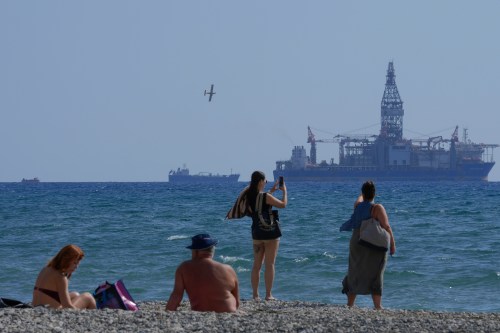
NICOSIA, Cyprus (AP) — Natural gas could start flowing by 2033 out of two undersea deposits discovered by ExxonMobil off Cyprus, a senior executive with the company said Tuesday, helping to turn the east Mediterranean island nation into a new European energy hub.
The largest U.S. oil company and its consortium partner, QatarEnergy, consider the most likely option for getting the gas to market would be conveying it through a pipeline to existing processing facilities in Egypt where it can be liquefied for export, ExxonMobil’s Vice President of Global Exploration John Ardill said.
Other options including building onshore facilities in Cyprus or a floating one in waters over the deposits are considered too costly at this point.
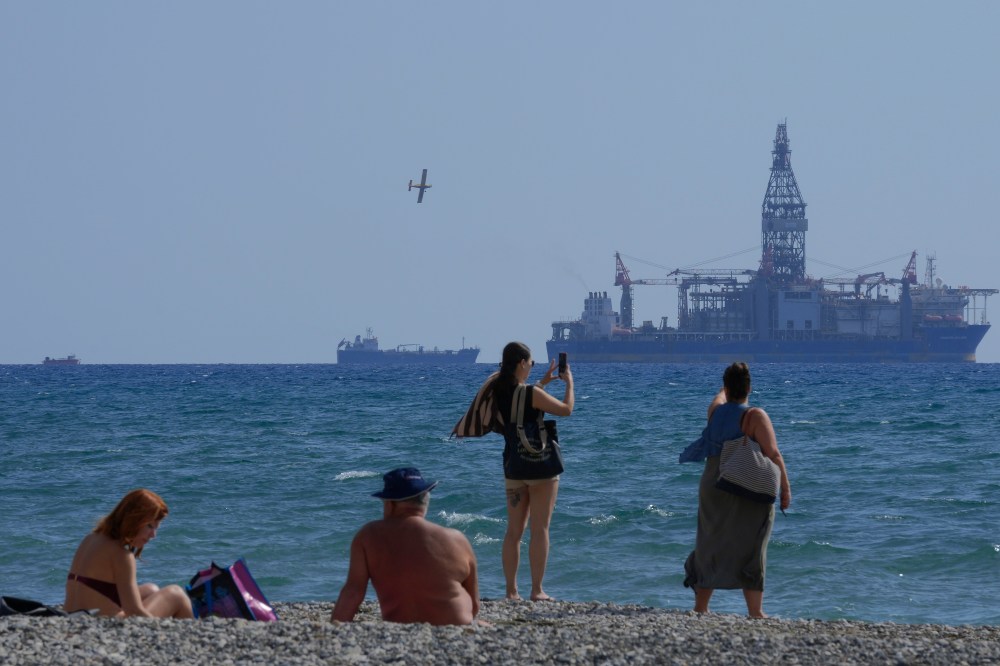
“Everything you’ve seen between the government of Cyprus and the government of Egypt gives us a lot of confidence that there’s good government to government coordination, the agreements in place to leverage that eastern Mediterranean energy hub concept,” Ardill said.
He was speaking after ExxonMobil and QatarEnergy signed a deal with Cyprus declaring the two deposits commercially viable.
The deposits — dubbed Glaucus and Pegasus — are located in Block 10 of Cyprus’ exclusive economic zone (EEZ) and are estimated to hold together roughly 7 trillion cubic feet of gas.
Ardill said the consortium is looking to expand its presence off Cyprus, expressing interest in exploring an area, or block, on the southwestern corner of the EEZ that is adjacent to an area where it already holds drilling licenses.
The consortium will carry out additional drilling at the Pegasus deposit around the end of this year to collect more key data for its development, he added.

“So what we should tell ordinary people is we have been working very diligently together between government and investor to make these discoveries and we’re working very diligently to get the gas flowing for the people of Cyprus,” Ardill said.
Cyprus is trying to position itself as a new energy source for Europe and beyond following the initial discovery of natural gas off its southern shore in 2011.
Apart from ExxonMobil and QatarEnergy, two other consortiums hold exploration licenses in the Cypriot EEZ.
A consortium composed of Italy’s Eni and French TOTAL holds licenses for four blocks where two deposits hold an estimated 5.6 trillion cubic feet of gas combined, while a partnership between Chevron, Dutch Shell and Israeli NewMed is licensed for one bloc where the oldest discovery — Aphrodite — holds approximately 5.6 trillion cubic feet of gas.
Earlier this year, Eni’s Chief Operating Officer Guido Brusco said the company was close to making a final decision on developing the Cronos gas field that could deliver the hydrocarbon to European markets by late 2027 or early 2028.