Supreme Court won’t block Texas from enforcing a law requiring age verification for app downloads
Advertisement
Read this article for free:
or
Already have an account? Log in here »
To continue reading, please subscribe:

Digital Subscription
One year of digital access for only $205*
- Enjoy unlimited reading on winnipegfreepress.com
- Read the E-Edition, our digital replica newspaper
- Access News Break, our award-winning app
- Play interactive puzzles
*First annual payment billed as $205.00 + GST for one year. This annual subscription will automatically renew at $233.00 + GST every 52 weeks (10% off the regular annual price of $259.35). Offer available to new and qualified returning subscribers only. Cancel any time.
To continue reading, please subscribe:
Add Free Press access to your Brandon Sun subscription for only an additional
$1 for the first 4 weeks*
- Enjoy unlimited reading on winnipegfreepress.com
- Read the E-Edition, our digital replica newspaper
- Access News Break, our award-winning app
- Play interactive puzzles
*Your next Brandon Sun subscription payment will increase by $1.00 and you will be charged $17.95 plus GST for four weeks. After four weeks, your payment will increase to $24.95 plus GST every four weeks.
Read unlimited articles for free today:
or
Already have an account? Log in here »
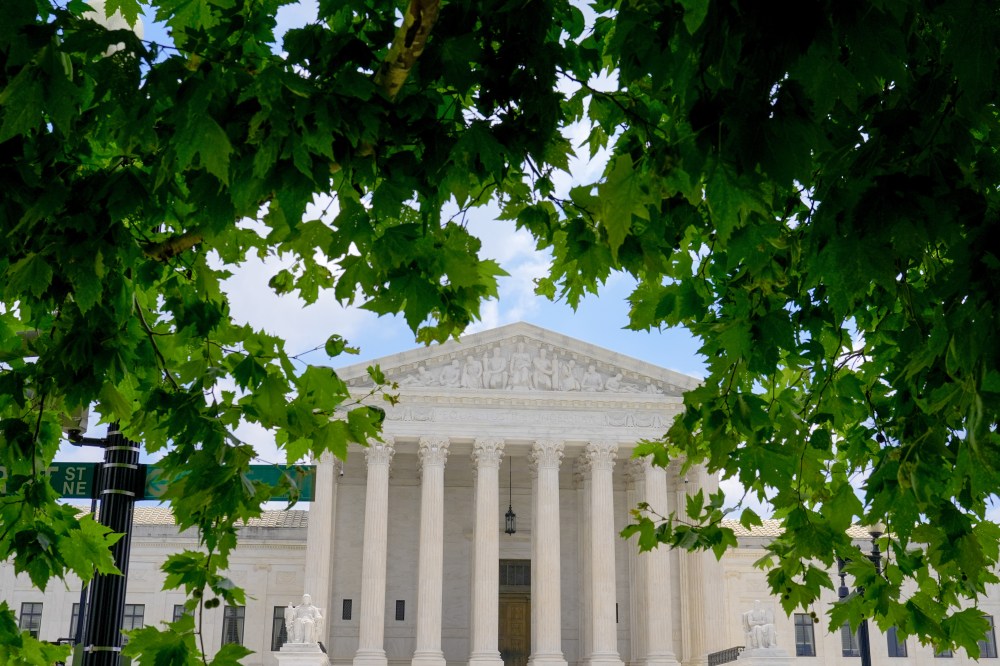
WASHINGTON (AP) — The U.S. Supreme Court on Monday declined to block Texas from enforcing a state law that requires apps stores to verify users’ ages and obtain parental consent for minors seeking to download apps or make in-app purchases on mobile phones.
Justice Samuel Alito, in a pair of one-sentence orders, denied petitions by plaintiffs who claim that the Texas App Store Accountability Act violates users’ constitutional rights to free speech.
Last month, a three-judge panel from the 5th U.S. Circuit Court of Appeals ruled that the law can take effect. The panel suspended a district court’s ruling last December that the law is unconstitutional.
The plaintiffs suing to block the law include the Computer & Communications Industry Association and Students Engaged in Advancing Texas. Texas Attorney General Ken Paxton is a defendant in both cases.
Plaintiffs’ lawyers argued that the law impermissibly seeks to limit access to content protected by the First Amendment, including news and educational material.
“Equity and the public interest support relief because protecting First Amendment rights — and parents’ rights to supervise their children as they see fit, not as the government tells them they should — is always in the public interest,” wrote attorneys for Students Engaged in Advancing Texas.
Attorneys from Paxton’s office argued that the law protects children from “dangerous modern products.”
“A child with access to an app store and a mobile device (such as a tablet or smartphone) can potentially download any number of software applications, potentially agreeing to invasions of the child’s privacy and sale of the child’s data and be exposed to any conceivable content without parental consent or even parental knowledge,” they wrote.