Keeping cool: How Meta plans to cut down on water use at its Alberta data centre
Advertisement
Read this article for free:
or
Already have an account? Log in here »
To continue reading, please subscribe:

Digital Subscription
One year of digital access for only $205*
- Enjoy unlimited reading on winnipegfreepress.com
- Read the E-Edition, our digital replica newspaper
- Access News Break, our award-winning app
- Play interactive puzzles
*First annual payment billed as $205.00 + GST for one year. This annual subscription will automatically renew at $233.00 + GST every 52 weeks (10% off the regular annual price of $259.35). Offer available to new and qualified returning subscribers only. Cancel any time.
To continue reading, please subscribe:
Add Free Press access to your Brandon Sun subscription for only an additional
$1 for the first 4 weeks*
- Enjoy unlimited reading on winnipegfreepress.com
- Read the E-Edition, our digital replica newspaper
- Access News Break, our award-winning app
- Play interactive puzzles
*Your next Brandon Sun subscription payment will increase by $1.00 and you will be charged $17.95 plus GST for four weeks. After four weeks, your payment will increase to $24.95 plus GST every four weeks.
Read unlimited articles for free today:
or
Already have an account? Log in here »
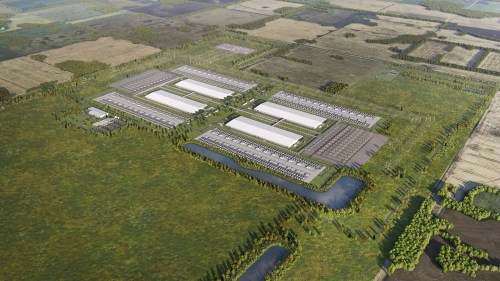
CALGARY – A Meta Platforms Inc. executive garnered applause at a news conference this week after he boasted that a gargantuan data centre planned for north of Edmonton would use less water annually than a typical Alberta golf course.
The tech behemoth was announcing a $13-billion-plus investment in a complex the size of 33 Canadian Football League fields. It will be powered by a new natural gas plant that could eventually produce more electricity than what the City of Edmonton uses.
The data centre in Sturgeon County, like other hyperscale proposals in Canada, is to use what’s known as a closed-loop cooling system to keep servers from overheating. That differs from an evaporative cooling system, which requires enormous amounts of cool water that is not reused.
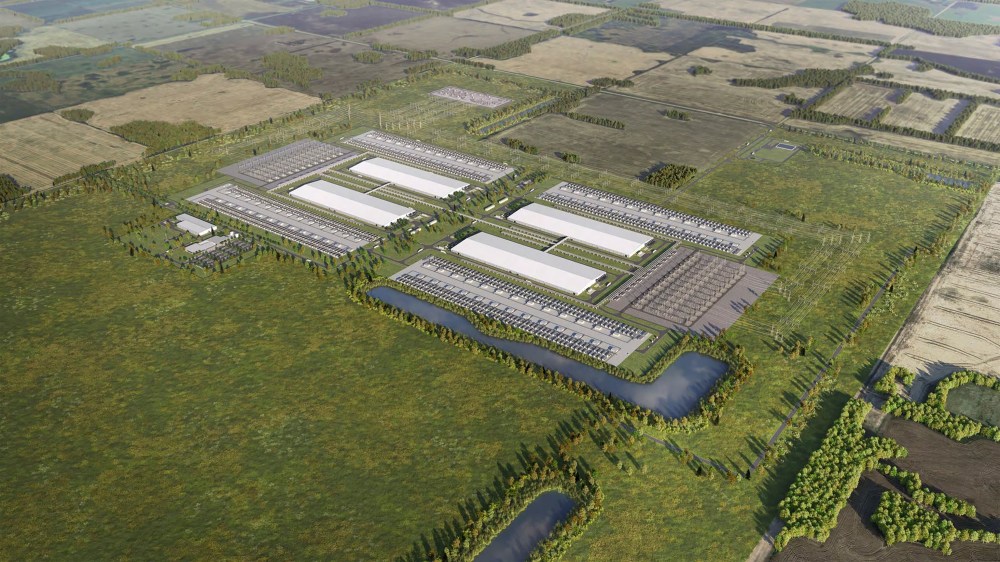
Gary Demasi, vice-president of data centre strategy and development at Meta, told a news conference Wednesday that no water will be needed for regular cooling operations.
“The onsite water use is limited to domestic uses, fire protection systems and some equipment maintenance applications,” he said.
Marina Freire-Gormaly, an associate professor of mechanical engineering at York University, said the closed-loop technique works well in cooler climates like Alberta’s. Data centres in hotter places tend to use evaporative cooling because there’s not as much of a temperature difference between the equipment inside and the air outside.
Meta would likely use a coolant similar to the fluids used in vehicles, which would run through pipes overtop of the hottest parts of the chips and absorb the heat, she said. The loop would then run to the outside of the building, where the air is cooler, and a series of fans would move the heat away. The cooled-down fluid would head back to the servers.
Freire-Gormaly said the closed-loop system would work best in the winter and she’s curious how Meta’s designs would account for how hot it can sometimes get in the Edmonton area during the summer.
A recent blog post from AI chipmaker Nvidia, one of Wall Street’s most valuable names, said its latest servers can use coolant that’s not so cool at all: up to 45 C, which is more sweltering than a hot tub. The fluid exits the server rack at 55 C.
Nvidia said that cooling alone has historically accounted for up to 40 per cent of a data centre’s electricity consumption, so its ability to use higher-temperature coolant marks a great efficiency leap. The coolant Nvidia uses is three-quarters water, one-quarter propylene glycol.
“These newer data centres, they should always use closed-loop cooling,” Freire-Gormaly said.
“These evaporative cooling approaches are really harmful to the environment. And the reason they’re relying on it is because they don’t have that natural temperature difference between the environment and the temperature that they’re trying to cool from.”
For that reason, she sees how Canada can be an attractive location for hyperscalers like Meta to set up shop.
“But I think it’s also important that we realize what power source we’re using.”
It’s not clear what kind of cooling system the adjacent power plant will have and if that component will have its own hefty water footprint, Freire-Gormaly said.
Freire-Gormaly also wonders if the companies might consider ways to use the data centre’s waste heat.
“Why not use that waste heat for things like warming buildings or having a secondary heat transfer loop?”
A study led by University of Cambridge researchers earlier this year looked at what they call the “heat island effect” in areas surrounding AI data centres. The study estimates the land surface temperature increases by an average of 2 C after the start of operations. It found that some increase in temperature could be detected up to 10 kilometres away.
Researchers at York University’s Schulich School of Business have been mapping Canada’s emerging data centre landscape. In paper, currently under review at a peer reviewed journal, they say that as of June of this year, there were 194 data centres operating with a combined capacity of 1.6 gigawatts.
That’s dwarfed by those announced or under construction — 213 planned, accounting for more than 22 gigawatts.
And Alberta is at the epicentre.
That province accounts for 92 per cent of planned new capacity, while it represents 10 per cent of facilities currently active.
“Clearly there is something going on there that’s attracting that development,” said Lyndsey Rolheiser, an assistant professor of urban and real estate economics who co-authored the paper with Alexander Carlo.
“Alberta is not pursuing big taxpayer-funded incentives. They’re relying on their deregulated self-generation energy market to really bring these providers in and that seems to be working.”

Because there’s currently insufficient grid capacity, Alberta is prioritizing projects that contract or build their own power sources, which have virtually all been from natural gas.
Many residents are operating in “information vacuums” so the province needs to be prepared to encounter some backlash and communicate exactly what it’s doing to ensure the appropriate environmental and safety protections are in place, Rolheiser said.
Ali Bayat, a professor of civil and environmental engineering at the University of Alberta, said the province is well-positioned to meet data centre demand from a workforce perspective. Meta has said it expects 3,000 jobs during construction.
“We have an industrial province,” he said. “There is capacity in this province for that line of construction work. Alberta is unique in that regard.”
This report by The Canadian Press was first published July 9, 2026.