China takes a page from SpaceX and recaptures the first stage of a rocket to reuse it
Advertisement
Read this article for free:
or
Already have an account? Log in here »
To continue reading, please subscribe:

Digital Subscription
One year of digital access for only $205*
- Enjoy unlimited reading on winnipegfreepress.com
- Read the E-Edition, our digital replica newspaper
- Access News Break, our award-winning app
- Play interactive puzzles
*First annual payment billed as $205.00 + GST for one year. This annual subscription will automatically renew at $233.00 + GST every 52 weeks (10% off the regular annual price of $259.35). Offer available to new and qualified returning subscribers only. Cancel any time.
To continue reading, please subscribe:
Add Free Press access to your Brandon Sun subscription for only an additional
$1 for the first 4 weeks*
- Enjoy unlimited reading on winnipegfreepress.com
- Read the E-Edition, our digital replica newspaper
- Access News Break, our award-winning app
- Play interactive puzzles
*Your next Brandon Sun subscription payment will increase by $1.00 and you will be charged $17.95 plus GST for four weeks. After four weeks, your payment will increase to $24.95 plus GST every four weeks.
Read unlimited articles for free today:
or
Already have an account? Log in here »
BEIJING (AP) — China successfully recaptured the first stage of a rocket after a launch on Friday in a breakthrough for the country’s space program, state media said.
The first stage of a Long March-10B rocket separated from the second stage after liftoff and returned to a platform in the sea, the official Xinhua News Agency said.
It was the first time China recovered the first stage of a rocket. America’s SpaceX has been doing so for several years to drive down launch costs by reusing the booster that helps lift the satellites or whatever the rocket is carrying into space.
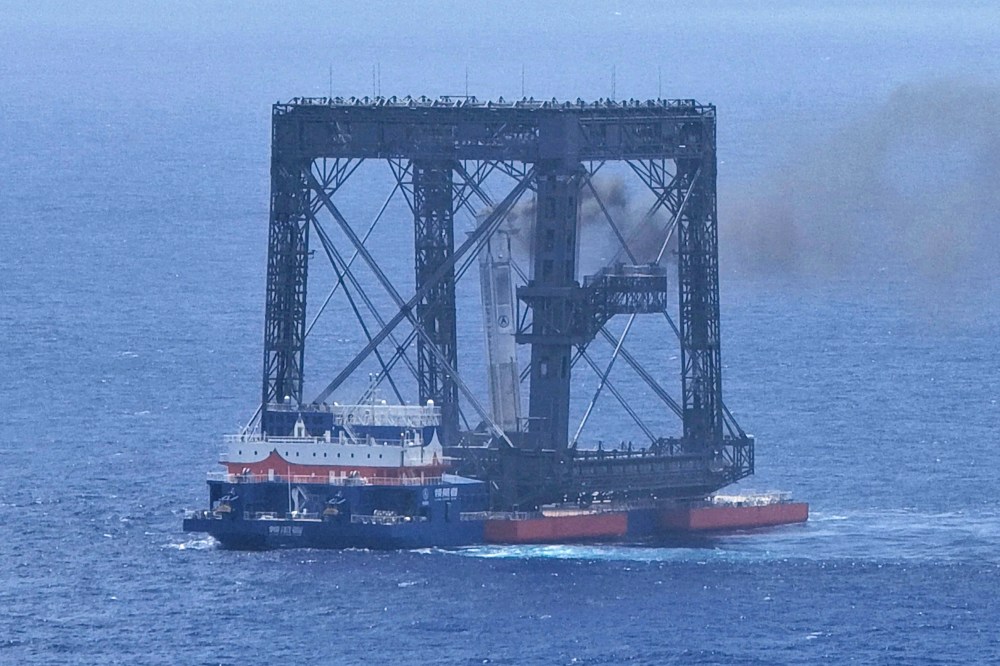
Elon Musk’s SpaceX and Jeff Bezos’ Blue Origin have been recovering their rockets since 2015, saving vast amounts of money by recycling them rather than ditching them after liftoff. SpaceX leads the pack with more than 600 landings of its first-stage Falcon boosters, steering them to ocean barges as well as landing zones near the launch pads. Just this week, SpaceX launched a booster for the 36th time, a new record.
For SpaceX’s bigger and more powerful Starships making test flights out of Texas and soon to expand to Florida, the company is working to capture the returning rockets with giant mechanical arms at the launch pad.
Blue Origin started out by landing its New Shepard boosters in Texas following short flights to the edge of space, and has since recovered its bigger New Glenn boosters on a floating platform off the Florida coast.
Now that China has joined the rocket recycling boom, Japan is up next with a launch and landing attempt this weekend.
The Long March rocket was launched from China’s Hainan Island, a popular beach destination off the country’s southern coast.

The rocket’s reusable configuration can launch a payload of up to 16,000 kilograms (35,275 pounds) into what is called low Earth orbit, Xinhua said.
The maximum payload of the SpaceX Falcon 9 is 22,800 kilograms (50,265 pounds), according to the SpaceX website. The Falcon rockets transport astronauts and supplies to the International Space Station.