Fujitsu and leading Japanese robotics companies to use Nvidia technology in ‘physical AI’
Advertisement
Read this article for free:
or
Already have an account? Log in here »
To continue reading, please subscribe:

Digital Subscription
One year of digital access for only $205*
- Enjoy unlimited reading on winnipegfreepress.com
- Read the E-Edition, our digital replica newspaper
- Access News Break, our award-winning app
- Play interactive puzzles
*First annual payment billed as $205.00 + GST for one year. This annual subscription will automatically renew at $233.00 + GST every 52 weeks (10% off the regular annual price of $259.35). Offer available to new and qualified returning subscribers only. Cancel any time.
To continue reading, please subscribe:
Add Free Press access to your Brandon Sun subscription for only an additional
$1 for the first 4 weeks*
- Enjoy unlimited reading on winnipegfreepress.com
- Read the E-Edition, our digital replica newspaper
- Access News Break, our award-winning app
- Play interactive puzzles
*Your next Brandon Sun subscription payment will increase by $1.00 and you will be charged $17.95 plus GST for four weeks. After four weeks, your payment will increase to $24.95 plus GST every four weeks.
Read unlimited articles for free today:
or
Already have an account? Log in here »
TOKYO (AP) — Japanese communications company Fujitsu is leading a major push in artificial intelligence using Nvidia’s technology, bringing together what it said was the best in Japan’s manufacturing prowess in robotics with AI.
The technology area known as “physical AI” refers to smart, futuristic robots that can think on their own, not just follow programmed directions, to work safely alongside people in factories, homes and hospitals.
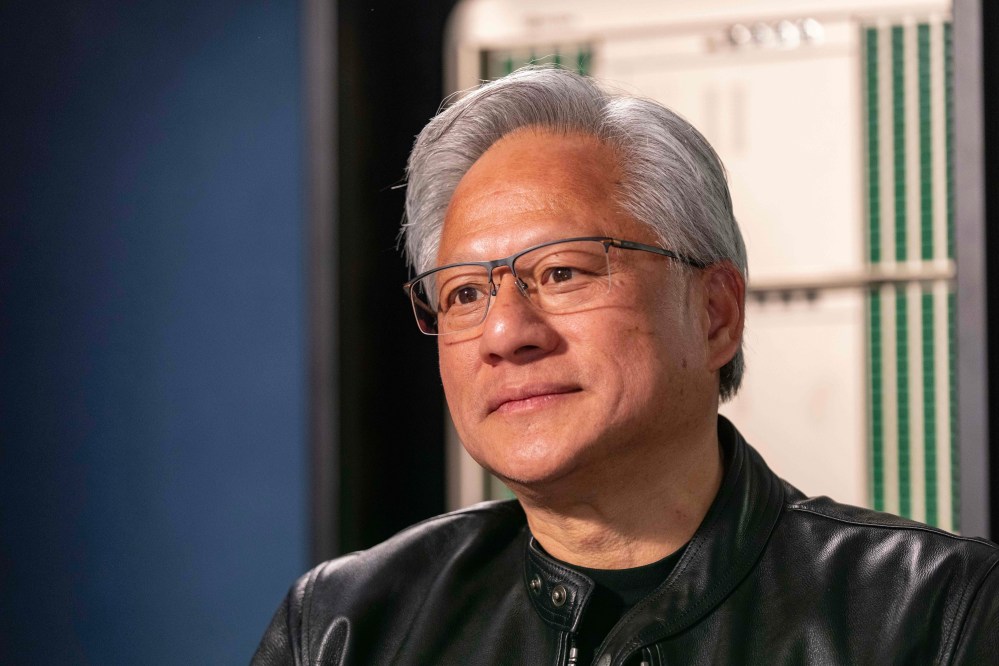
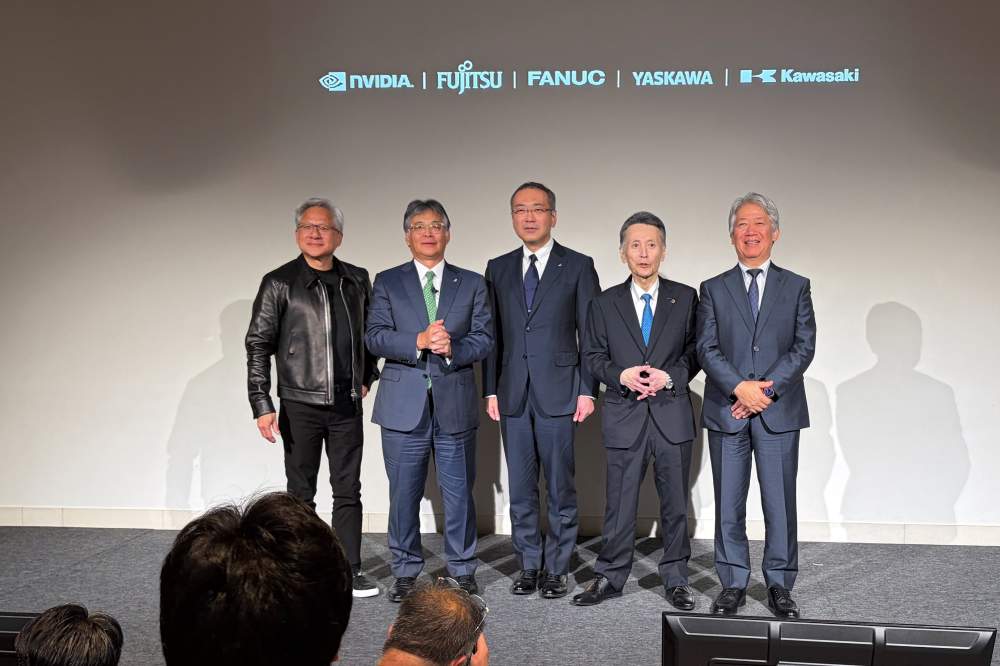
The initiative was announced in Tokyo on Thursday by Nvidia Corp. Chief Executive Jensen Huang and Fujitsu Chief Executive Takahito Tokita, along with the CEOs of Japan’s top makers of industrial robots, Fanuc Corp., Yaskawa Electric Corp. and Kawasaki Heavy Industries.
The latest announcement comes on top of a deal announced by Nvidia and Fujitsu last year.
The executives expressed hopes that the robots can address the nation’s acute labor shortage. Japan is among the most rapidly aging societies in the developed world and the smart robots could help take care of the elderly living alone, they said.
Huang said physical AI was a good fit for Japan because of the country’s reputation for manufacturing quality because robots that move independently could potentially be dangerous.
“Japan’s excellence is a philosophy, a way of life. ‘Made in Japan’ means the highest quality, the highest precision. Japan sets the standard for the state-of-the-art in modern manufacturing,” he said.
Huang listed Japan’s prized concepts in fine manufacturing such as “kaizen,” which means “continuous improvement.”
The companies did not give a specific time frame for the arrival of such robots in daily life. They stressed efforts were underway with what they called the first phase of the collaboration coming later this year.
There has been no decision on setting up a joint venture, although that could come later, they said.

Japan has acknowledged it has fallen behind some nations, including China and the U.S., in AI, and has been eager to play catch-up.
The government of Prime Minister Sanae Takaichi recently announced a plan to drum up more than 370 trillion yen ($2.3 trillion) in public and private investment in various technology fields by 2040, including physical AI, semiconductors and data centers.
Silicon Valley-based Nvidia, which offers an open-source technology, has been aggressive in forging various ties in Japan, including with leading banks, automaker Toyota Motor Corp., video game maker Sega and national research institute Riken.
___
Yuri Kageyama is on Threads: https://www.threads.com/@yurikageyama