Cyberattacks on Minnesota water systems investigated as officials warn about Iranian hackers

Advertisement

Advertise with us

Authorities were working Thursday to find the source of cyberattacks that targeted over 30 water systems in Minnesota and came amid warnings that Iranian hackers have been focused on such systems.

Read this article for free:


or

Already have an account? Log in here »

To continue reading, please subscribe:

Subscribe and receive a limited-edition Free Press branded hat or tote.

Digital Subscription

One year of digital access for only $205*

  • Enjoy unlimited reading on winnipegfreepress.com
  • Read the E-Edition, our digital replica newspaper
  • Access News Break, our award-winning app
  • Play interactive puzzles

*First annual payment billed as $205.00 + GST for one year. This annual subscription will automatically renew at $233.00 + GST every 52 weeks (10% off the regular annual price of $259.35). Offer available to new and qualified returning subscribers only. Cancel any time.

To continue reading, please subscribe:

Add Free Press access to your Brandon Sun subscription for only an additional

$1 for the first 4 weeks*

  • Enjoy unlimited reading on winnipegfreepress.com
  • Read the E-Edition, our digital replica newspaper
  • Access News Break, our award-winning app
  • Play interactive puzzles
Start now

*Your next Brandon Sun subscription payment will increase by $1.00 and you will be charged $17.95 plus GST for four weeks. After four weeks, your payment will increase to $24.95 plus GST every four weeks.

Authorities were working Thursday to find the source of cyberattacks that targeted over 30 water systems in Minnesota and came amid warnings that Iranian hackers have been focused on such systems.

Minnesota IT Services said state officials had yet to identify who was behind the attacks that took place Sunday and Monday. There were no reports that residents had been impacted by the attacks, though one city asked residents to conserve water for a couple hours while they tried to determine what was wrong.

The FBI, which is investigating, has not publicly identified a culprit and a spokesperson declined to say Thursday who the bureau thought might be responsible. The FBI, Cybersecurity and Infrastructure Security Agency and other agencies warned in an advisory last week that Iranian hackers have been targeting water and wastewater systems and the operational controls other critical infrastructure sectors.
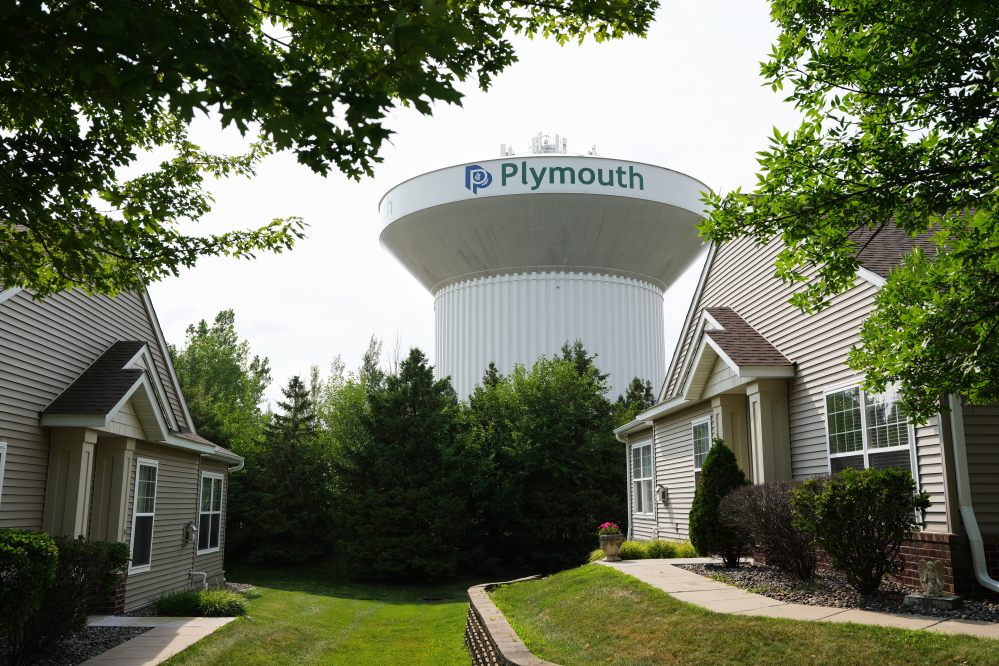
A water tower is seen Thursday, July 30, 2026, in Plymouth, Minn. A cyberattack targeted the operating technology at over 30 water systems in Minnesota, including Plymouth's, earlier this week, state officials said. (AP Photo/Ellen Schmidt)

Digital warfare has become ingrained in military conflict, and local water plants or healthcare facilities often lack the funds and know-how to install the latest software patches or take other security steps. That has made them a favorite target, both because of the relative ease of penetrating them and because of the panic such disruptions can cause.

Iran has the “geopolitical motivations” and a recent history of targeting water systems, said Cynthia Kaiser, the former deputy assistant director of the FBI’s cyber division who has been closely monitoring threats to critical infrastructure from hackers linked to the country.

“I think most credible researchers and responders would be right to treat it like it’s Iran until proven otherwise,” added Kaiser, who is now the senior vice president of Halcyon’s Ransomware Research Center. “When it walks like a duck and talks like a duck, it’s really important to call it out.”

Iran’s interest in the operations of water systems inside the U.S. dates back years. In 2016, the Justice Department charged a group of Iranian hackers in connection with a cyberattack targeting a small dam near New York City.

Minnesota IT Services said that as of Thursday, there were no active requests from Minnesota communities for residents to modify usage of their drinking water. The state agency said most of the confirmed attacks involved technology that water systems use to remotely monitor and control equipment. It said that being impacted meant investigators confirmed there was malicious activity involving the system’s technology and didn’t mean every impacted community had their water service disrupted.

The state agency said there are similarities among the incidents, including timing and the types of technology used, but investigators haven’t determined if the same culprit was behind each one.

For a few hours on Monday, the city of Braham asked residents to minimize water use as they tried to determine why the water plant was offline. The city of about 1,700 people, located about 70 miles (113 kilometers) north of Minneapolis, said in a news release that the water plant outage was due to a cyberattack, but it didn’t cause any issue with water quality.

The city said the attackers shut down the operating controls that shut down the well and water treatment plant. That left the city for a time only able to provide residents with the water held in the water tower.

In Plymouth, a city of about 80,000 located outside of Minneapolis, officials said on social media that their water infrastructure communications had been restored by Tuesday afternoon following a cyberattack. The city said crews were able to continue operating the system during the outage and it didn’t have any impact on water levels or quality.
Report Error Submit a Tip

More Stories

Brandon meat packer thriving on its own

Abiola Odutola 3 minute read Preview

Brandon meat packer thriving on its own

Abiola Odutola 3 minute read Saturday, Oct. 3, 2026

BRANDON — Canada Packers has strengthened its business and laid the foundation for future growth during its first year as an independent company, its president says.

The Brandon-based pork producer, separated from Maple Leaf Foods in October 2025, established its own leadership, strategy, systems, culture and identity while continuing operations across its hog production farms and regional hog barns in southern and eastern Manitoba.

The company’s first year was focused on building a successful standalone business while continuing to serve customers, communities and shareholders, president Dennis Organ said.

“Market conditions over the past year have been more challenging than we anticipated when we became a separate entity,” he said in an email. “Despite that, we continued to execute against our priorities, including increasing processing volumes, maintaining disciplined operations and strengthening the business.”

Read
Saturday, Oct. 3, 2026

Wasteful operations should be held accountable

Barry E. Prentice 5 minute read Preview

Wasteful operations should be held accountable

Barry E. Prentice 5 minute read 2:00 AM CDT

Rising water bills are a top-of-mind issue for residents of Winnipeg going into the fall election. Management of the water and waste system is under question, with citizen’s groups, as well as the Free Press, calling for proper oversight of rates (Time for the PUB to review Winnipeg water rates, Editorial, Sept. 26).

The need to increase rates to build the North End sewage plant is understandable. Siphoning off utility proceeds to make up other tax revenue shortfalls is another matter. But it is not the only questionable practice. If there was Public Utilities Board oversight of Winnipeg’s water and sewer rates, it would certainly be asking why the city is spending more than $3 million annually to operate the 164-kilometre-long, Greater Winnipeg Water District railway (GWWD) on ratepayers’ behalf.

The GWWD has come to the attention of the Railway Relocation Study, led by Lloyd Axworthy. All existing rail lines within the city are under review, as is the feasibility of a new railway bypass.

The GWWD is an example of a railway that has outlived its usefulness and sits on a pocket of land close to downtown that could be converted to higher-value uses.

Read
2:00 AM CDT

Letters, Oct. 5

7 minute read 2:01 AM CDT

Fighting the good fight

Re: Transit, roads and city council’s priorities (Oct. 2)

Many thanks to Erna Buffie for once again speaking up for transit.

When will Winnipeg finally make the shift from a car-dependent culture to a greener and more efficient way?

‘Amazing honour’: Winnipeg distribution centre continues award-winning ways for McKesson Canada

Aaron Epp 5 minute read Preview

‘Amazing honour’: Winnipeg distribution centre continues award-winning ways for McKesson Canada

Aaron Epp 5 minute read 6:00 AM CDT

After a three-year absence, the trophy is back in Winnipeg.

Last week, McKesson Canada named its 120,000-square-foot pharmaceutical distribution centre in the northwest part of the Manitoba capital its Distribution Centre of the Year. The award recognizes the facility’s role in helping essential medications reach communities across the province and some of Canada’s remote regions.

This is the fourth time the Winnipeg facility has earned the company-wide award since it opened five years ago. McKesson previously honoured the centre in 2021, 2022 and 2023. The recognition comes with a trophy, as well as a banner that was hung from the rafters on Thursday.

More than 100 employees work across the centre’s day-and-night operations, processing between 80,000 and 100,000 medication units daily. Last year, the centre distributed more than 21 million medication units while maintaining more than 99 per cent accuracy.

Read
6:00 AM CDT

Six high school hockey programs ceased operations following new Hockey Manitoba policy

Joshua Frey-Sam 7 minute read Preview

Six high school hockey programs ceased operations following new Hockey Manitoba policy

Joshua Frey-Sam 7 minute read Friday, Oct. 2, 2026

She lived the best of both worlds.

For the last three years, the 17-year-old wore a sweater for two different hockey programs — her high school team and AAA club in the Manitoba Female Hockey League — and was preparing to flourish in both colours again this winter.

Recently, however, the blue-liner was disappointed to learn she is no longer eligible to play her Grade 12 season with her school owing to a new policy imposed by Hockey Manitoba that bans players from participating in the Manitoba Women’s High School Hockey League if they are rostered on a U18 AAA team.

The rule applies to all athletes who play for both Winnipeg-based and rural AAA teams.

Read
Friday, Oct. 2, 2026

Broadening prediction-market gambling a bad idea

Editorial 4 minute read Preview

Broadening prediction-market gambling a bad idea

Editorial 4 minute read Saturday, Oct. 3, 2026

Let’s make a prediction: sooner or later, when Canadian governments find a way to take their own cut of the action, prediction-contract gambling on everything from sports to entertainment to political decisions is going to come to Canada.

And that’s a horrible, dangerous, pernicious idea.

Unless you have particular access to information — either inside information or strategic information based on skills or education — you’re not likely to make money at it. In fact, structurally, you’re likely to lose. In prediction markets, you basically pay an amount, plus fees from the company involved, to bet on whether something will or will not happen within a certain time frame. The amount you pay for your contract depends on how other people are also betting.

As Wealthsimple describes it, “You buy whichever side you think is right. Prices move with demand, so if the market leans towards one outcome, the more that side costs. If a lot of people are backing the TSX to finish above 38,000, yes gets more expensive and no gets cheaper.”

Read
Saturday, Oct. 3, 2026