The president says the U.S. doesn’t need anything from Canada. Exports say otherwise.
Advertisement
Read this article for free:
or
Already have an account? Log in here »
To continue reading, please subscribe:

Digital Subscription
One year of digital access for only $205*
- Enjoy unlimited reading on winnipegfreepress.com
- Read the E-Edition, our digital replica newspaper
- Access News Break, our award-winning app
- Play interactive puzzles
*First annual payment billed as $205.00 + GST for one year. This annual subscription will automatically renew at $233.00 + GST every 52 weeks (10% off the regular annual price of $259.35). Offer available to new and qualified returning subscribers only. Cancel any time.
To continue reading, please subscribe:
Add Free Press access to your Brandon Sun subscription for only an additional
$1 for the first 4 weeks*
- Enjoy unlimited reading on winnipegfreepress.com
- Read the E-Edition, our digital replica newspaper
- Access News Break, our award-winning app
- Play interactive puzzles
*Your next Brandon Sun subscription payment will increase by $1.00 and you will be charged $17.95 plus GST for four weeks. After four weeks, your payment will increase to $24.95 plus GST every four weeks.
Read unlimited articles for free today:
or
Already have an account? Log in here »
OTTAWA – “WE DON’T NEED CANADA, THEY NEED US!” U.S. President Donald Trump’s social media post this week was a continuation on a theme he’s maintained throughout the trade war: that his country doesn’t need anything from Canada.
Experts — and exports — say that’s not the case.
Ontario Premier Doug Ford has urged the federal government to use some exports as leverage at the negotiating table — and after Trump’s latest escalation, he called on Prime Minister Mark Carney to cut off the supply of things like oil and gas, potash and critical minerals.
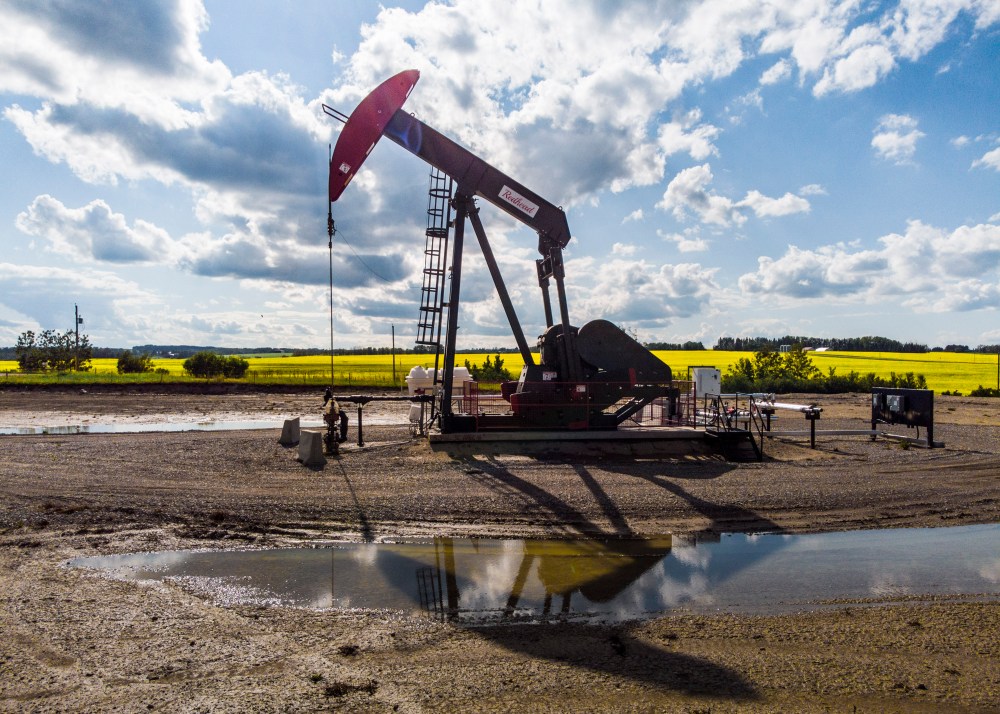
So far, Canada has been unwilling to take that step.
To understand what the U.S. does need from its northern neighbour, look no further than the list of items the Trump administration has consistently carved out of its own tariff regimes.
Energy
Trump’s first volley in the trade war was in February 2025, just 10 days after his inauguration. The executive order he signed would impose a 25 per cent tariff on everything coming from Canada with the exception of energy, which was subject to a 10 per cent rate.
Those wider tariffs were later paused after Canada threatened to retaliate — but the administration had made it plain that it didn’t want the cost of Canadian energy to rise by 25 per cent.
Pipelines carry more than four million barrels of Canadian crude into the United States each day, representing about 90 per cent of all Canadian oil exports worth some $126 billion in 2025.
That makes up around 63 per cent of American crude imports, according to the U.S. Energy Information Administration.
An International Energy Agency analysis from 2025 says Midwestern U.S. refineries are optimized to handle the heavy crude coming from Canada, and both the shipping infrastructure and the refineries themselves cannot easily pivot to other sources.
Nearly all of Canada’s $12.5-billion worth of natural gas exports in 2025 were also sent stateside.
Electricity
A number of Canadian provinces sell electricity to their American neighbours, including Ontario, Quebec, British Columbia, Manitoba and New Brunswick.
Total electricity exports to the U.S. were valued at $3.3 billion in 2025. More than half of that comes from Ontario and Quebec, and the provinces have jurisdiction over power generation and supply.
Ford imposed a 25 per cent surcharge on exports of electricity from Ontario in March 2025 and threatened to cut off the power entirely to some 1.5 million American homes in response to Trump’s tariffs.
That prompted a meeting between Ford and U.S. Commerce Secretary Howard Lutnick in Washington, D.C., and the export charge ultimately lasted just one day.
On Wednesday, Ford was asked whether he was still considering cutting off electricity exports. The premier told reporters that “everything is on the table,” but said he would need other premiers to be in lockstep because he wouldn’t be able to go it alone.
Critical minerals
During the latest round of trade talks, the American negotiators reportedly pushed to have a right of first refusal on Canadian critical minerals.
Canada is home to 34 critical minerals, which are component parts in everything from cellphones to electric vehicle batteries. They’re also increasingly important in making drones and satellites for the defence sector.
Other major global suppliers of critical minerals include China and Russia, and Western allies including the U.S. are looking for alternatives.
A number of these critical minerals are of key interest to the Americans.
Aluminum
At a rally for a Republican gubernatorial candidate in Oklahoma this week, Trump told supporters his country “desperately needs aluminum.”
“We don’t have it. We get it all from Canada, for the most part, and we need it badly,” he said.
After the U.S. imposed steep tariffs on Canadian aluminum — starting at 25 per cent and then jumping to 50 per cent — exports to the U.S. were cut by half between July 2024 and July 2025, according to the Bank of Canada.
But the U.S. depleted its inventories in the ensuing months, and the central bank says exports have rebounded somewhat.
It’s not just that the U.S. is Canada’s biggest customer: Canada supplies more than half of the aluminum used in the United States across sectors like manufacturing, auto-making and defence, many of which are part of the escalating tariffs.
Potash
More than 86 per cent of all the potash imported by the U.S. comes from Saskatchewan.
It’s used to make vital fertilizers for the agricultural sector, and prices have been rising in recent months, causing concern for farmers on both sides of the border. It’s also a product that has no substitutes.
As with energy, Trump initially planned to tariff potash at 25 per cent but he quickly revised that down to 10 per cent. Later, he determined that potash exports compliant with the Canada-U.S.-Mexico Agreement on trade, or CUSMA, were exempt entirely.
On Monday, Trump told reports he might hit the sector with “very severe tariffs” as a means to try to boost American production.
But in the recent announcements of new tariffs on Canadian goods, the U.S. specifically excluded potash.
Uranium
Canada is the second-largest supplier of uranium in the world, behind Kazakhstan, with most of the country’s deposits and all of its active production located in northern Saskatchewan.
Saskatchewan uranium is particularly high grade and is used mainly to generate nuclear power.
The United States, as the world’s leading producer of nuclear power, also relies almost entirely on imports — and its single-largest supplier is Canada, from which it imported more than 33 per cent of all uranium used in 2024.
Trump’s tariffs did initially apply to uranium, but now imports that are compliant with CUSMA are tariff-free.
Why isn’t Canada using these exports as leverage?
Despite Ford’s tough talk, the notion of imposing export taxes or reducing exports to the Americans hasn’t gained widespread support among premiers.
New Brunswick Premier Susan Holt said this week she was not prepared to stop sending electricity to Maine, which mostly supplies customers with limited other options.
Alberta Premier Danielle Smith is a staunch opponent of any sort of export tax or restriction on energy.
Saskatchewan Premier Scott Moe said Wednesday that his government “cannot and will not support” any kind of export tax on potash, oil or any other natural resources coming from that province.
“Canadians would lose jobs immediately. We as a nation would lose investment immediately,” Moe said.
Fen Osler Hampson, a professor of international relations at Carleton University, said using these exports as leverage would be a big escalation in the trade war.

For one thing, he said, Canada’s complaint with the Trump administration is that it’s refusing to follow the rules and abide by existing trade agreements including CUSMA.
“Now, if we go and say, ‘OK, you don’t play by rules, we’re not going to play the rules,’ then there are no rules,” Hampson said.
As Carney has worked to sell Canada as a reliable trading partner around the world, he’s emphasized the importance of trust.
“Being a reliable supplier is important,” he told reporters who asked about restricting energy exports on July 29.
This report by The Canadian Press was first published Aug. 26, 2026.
Related Articles
Discoverability, not French-language labels, the issue in' trade talks: LeBlanc

Advertisement Advertise With Us
Advertisement Advertise With Us